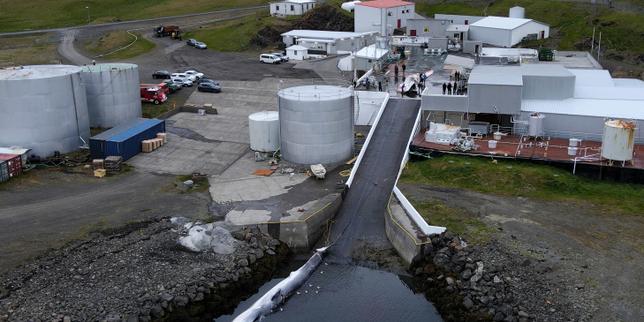
The debate over commercial whaling in Iceland isn't just about environmental ethics. It is a fierce clash over national identity, economic survival, and global reputation. When the single remaining whaling company in the country, Hvalur hf., sent its ships back out to sea to hunt fin whales, it triggered immediate outrage and deep social division across the island.
For years, the practice has hung over Iceland like a dark cloud. While a tiny minority clings to the tradition of hunting these massive marine mammals, the rest of the country looks on with frustration or active opposition. The political tension reached a turning point when the government announced plans to introduce a permanent legislative ban on commercial whaling. Yet, the current transition period allows the slaughter of dozens of endangered rorquals to continue, leaving activists and citizens caught in a frustrating limbo.
The Economic Reality Behind the Harpoons
Let's look at the numbers. Whale meat hasn't been a staple of the Icelandic diet for generations. Most locals don't eat it. Instead, almost the entire catch gets exported to a single market: Japan.
So why does the industry persist? It survives purely on political stubbornness and legacy. The company driving the hunt, Hvalur hf., commands immense historical influence, but its economic footprint on modern Iceland is practically negligible. Tourism—built heavily on whale watching and pristine natural landscapes—brings in vastly more revenue than the declining whaling sector ever could.
When you weigh a dying, niche industry against the global image of a progressive Nordic nation, the math doesn't add up. Most economists and business leaders in Reykjavik know this. They've been pushing to scrap the licenses for years, pointing out that the international PR damage far outweighs any short-term profit.
Why Public Opinion Shifted Rapidly
Public sentiment in Iceland flipped dramatically over the last decade. Younger generations view the practice as an anachronism that belongs in a history book, not in the modern oceans. Animal welfare organizations like IFAW have kept constant pressure on lawmakers, documenting the brutal reality of the hunts and broadcasting it to an increasingly receptive public.
Social friction peaks every summer when the harpoons start flying. Protests erupt in the capital, international petitions circulate by the hundreds of thousands, and the country's cultural image takes another hit. People are tired of seeing their home labeled alongside Japan and Norway as the last holdouts of an outdated blood sport.
The Road to a Permanent Ban
The upcoming legislative push to outlaw commercial whaling permanently changes the entire equation. If the coalition government successfully pushes the bill through parliament, it will isolate Tokyo and Oslo even further on the global stage, leaving them as the lone defenders of commercial whaling.
Critics argue that the government's timeline is too slow, pointing out that dozens of vulnerable fin whales can still be killed under existing quotas before the ban officially takes effect. That loophole remains a bitter pill for conservationists who wanted an immediate, unconditional halt rather than a phased exit.
The era of commercial whaling in the North Atlantic is drawing to a close. The debate is no longer about if the practice will end, but how quickly Iceland can clean up the final chapter of this controversial legacy and move forward. Stop pretending this is a vital cultural tradition. It's a dying industry on its final legs.