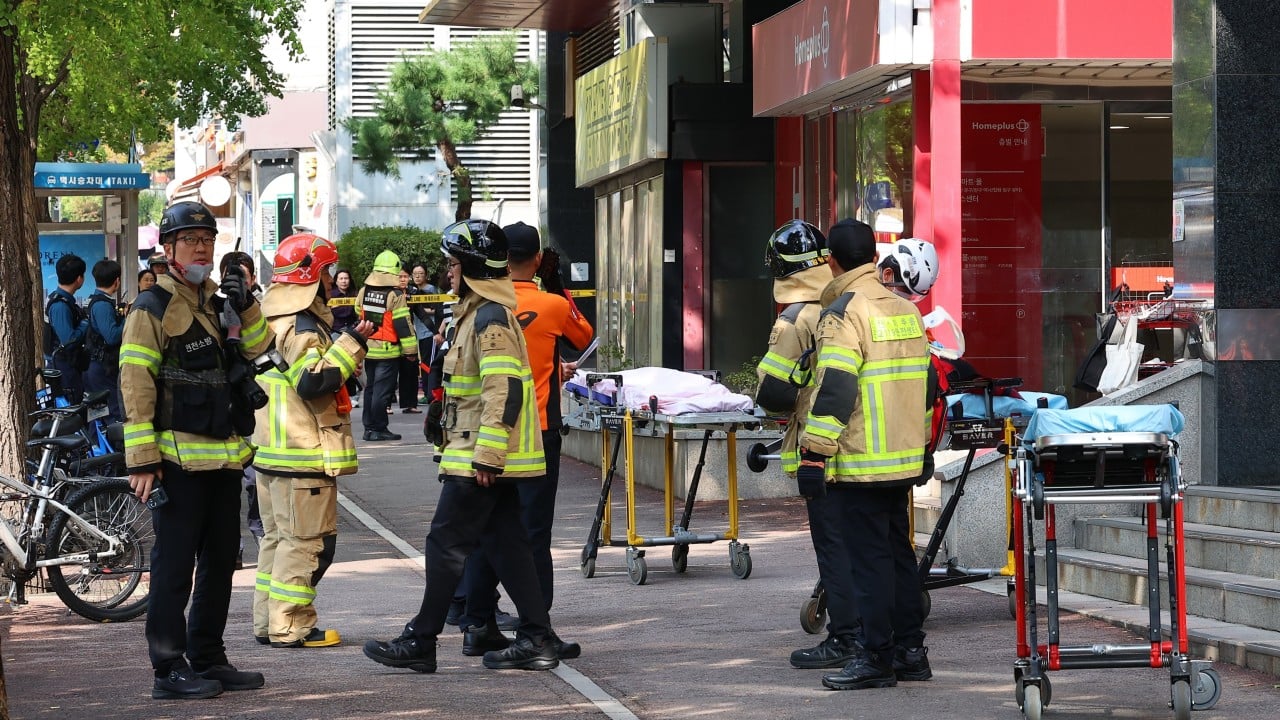
Eight innocent shoppers got hurt on an ordinary Tuesday afternoon in Incheon. A 59-year-old man strapped knives to his hands, walked through a multi-story commercial complex, and went on a violent rampage across several floors. Six women and two men sustained injuries before brave bystanders stepped up, tackled the attacker with chairs, and held him until police arrived. One young woman in her twenties suffered cardiac arrest and had to undergo emergency surgery for life-threatening wounds.
This horrifying event in South Korea's western port city immediately sparks urgent questions. How did an individual flagged by the justice system execute a multi-level attack unchecked? Why are public spaces facing these sudden bursts of violence?
The Breakdown of the Incheon Attack
The assault took place at a popular commercial building housing a discount supermarket chain outlet in Incheon, just west of Seoul. Eyewitness reports detail a chaotic scene. The suspect moved deliberately across multiple floors with blades bound directly to both of his hands.
Emergency responders rushed to the scene alongside local police and firefighters. They treated the wounded on-site before transferring victims to nearby hospitals. While most injuries were non-fatal, the condition of the young female victim remains critical. Quick intervention by everyday shoppers prevented a much higher body count. Bystanders used chairs to pin and subdue the assailant, taking a massive personal risk to protect others in the facility.
Flaws in the Electronic Monitoring System
The most unsettling aspect of this case isn't just the violence itself—it's the administrative failure preceding it. South Korean media and the Justice Ministry confirmed that the suspect was a 59-year-old man wearing an electronic monitoring ankle bracelet. He had a severe history of violent crime, including a four-year prison sentence for attempted murder dating back to 2015, alongside documented struggles with mental illness and alcohol addiction.
Even more troubling is the timeline provided by officials. Just hours before the attack, the suspect met with his probation officer and attended a mandatory counseling session. Officials reported no warning signs during that meeting. The tracking device showed no tampering attempts, and GPS signals functioned normally.
Yet, the system failed to flag the looming threat. The Justice Ministry issued a public apology following the incident and promised a complete review of its electronic monitoring protocols. Critics are pointing out a glaring gap in how authorities manage high-risk offenders who finish their sentences but remain volatile. A tracking anklet tells you where someone is, but it doesn't stop them from picking up a weapon and walking into a crowded supermarket.
A Troubling Pattern of Public Violence
South Korea has long prided itself on being one of the safest countries in the world, with low rates of violent crime and widespread street safety. However, recent years have chipped away at that sense of security.
In 2023, the country reeled from a series of high-profile stabbing rampages in public transit hubs and shopping districts that left multiple people dead and wounded. More recently, in May, a 17-year-old girl was fatally stabbed in Gwangju by a man in his twenties. These incidents trigger intense national debates about public safety, mental health support, and the adequacy of criminal punishments.
When random violence strikes grocery stores and shopping malls, it shatters public trust. People go about their daily routines expecting basic safety. When that fails, the psychological fallout ripples across the entire nation.
Where Safety Policies Must Change
Fixing this issue requires looking past routine bureaucratic apologies. Real reform demands stricter risk assessments for offenders released back into society, better integration between mental health treatment programs and parole offices, and faster emergency response protocols inside private commercial complexes.
Shopping centres and public retail outlets need clearer emergency blueprints. Waiting for police to arrive while an attacker moves through floors is a recipe for disaster. Trained security personnel and better real-time alert systems inside large commercial hubs are mandatory if authorities want to prevent future tragedies.
If you manage a public space or follow security trends, pay close attention to how local municipalities respond to these failures. Demand accountability from oversight agencies. Security isn't just about locking doors after a crisis hits—it's about catching the cracks in the system before a knife is ever lifted.
South Korea Mall Horror | Police Detain Suspect
This video provides real-time news coverage and details regarding the police response and the suspect's detention following the Incheon shopping center stabbing.
http://googleusercontent.com/youtube_content/1