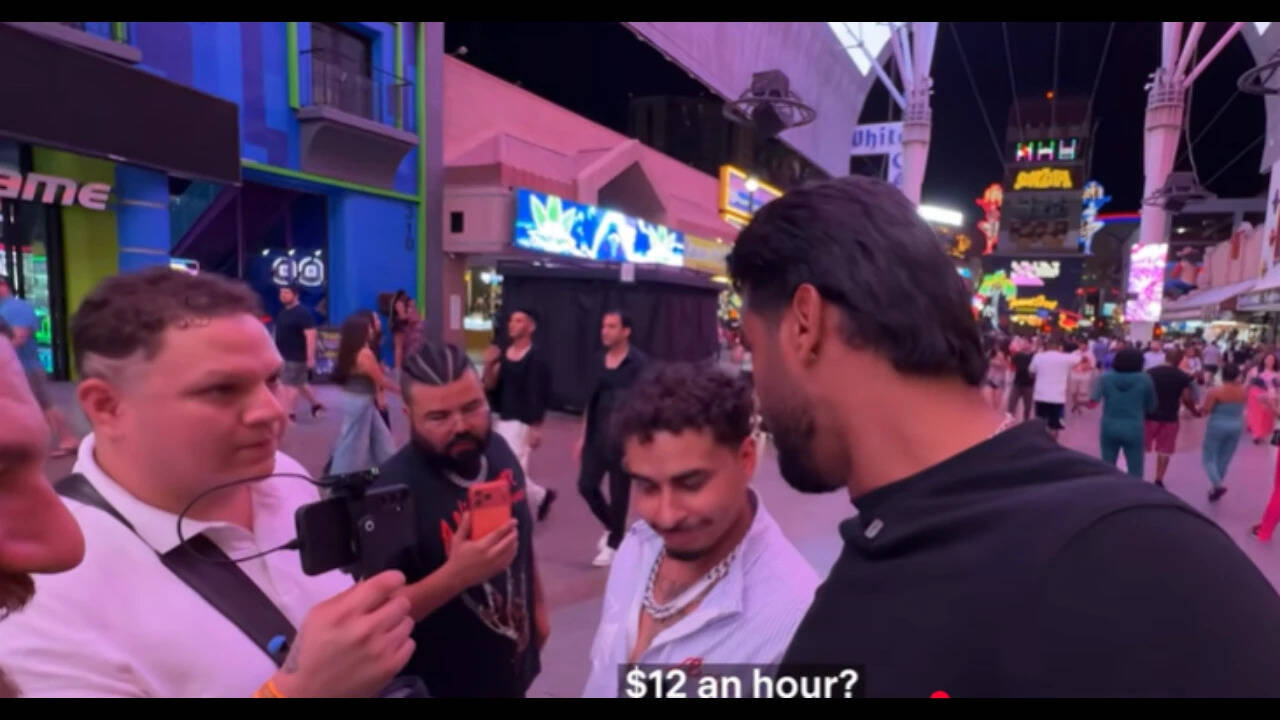
Walking down the neon-lit strip of Las Vegas should feel like an escape, but for Indian travel vlogger Paramvir Singh Beniwal, it turned into an unwelcome masterclass in casual racism. When a group of local streamers approached him under the guise of casual friendliness, things quickly turned sour. They weren't fans. They were looking for content, and they planned to use him as the punchline.
The Setup Behind the Las Vegas Confrontation
Content creation can attract a strange crowd. Online spaces often reward shock value, provocation, and tired stereotypes. In Beniwal's case, the group of hecklers thought they had an easy target. One member of the group claimed ownership of dozens of convenience store franchises across the country and smugly offered Beniwal a job at a 7-Eleven.
It wasn't a random joke. It was a calculated microaggression designed to weaponize a lazy trope about South Asian immigrants and employment. The group was actively livestreaming the encounter, hoping to humiliate him for their audience.
Beniwal didn't flinch. Recognizing what was happening, he pulled out his own phone and started recording the interaction to protect himself and flip the narrative.
Turning the Tables on Online Harassers
Instead of getting defensive or angry, Beniwal delivered a sharp comeback that left the trolls scrambling. Looking straight at them, he fired back, "You guys look too poor for me to work for you guys."
The tables turned instantly. The ringleader, clearly drunk and rattled on his own stream, tried to recover by bragging about hourly wages, claiming twelve dollars an hour adds up over a month. Beniwal didn't let up. He pointed directly at the man's flashy fake necklace, telling him to invest his money into a real chain instead of a fake one.
That single line hit a nerve. The hecklers realized their public stunt had completely backfired. They weren't bullying a quiet tourist; they were getting publicly dismantled on camera.
Why Facing Soft Racism Head-On Works
Beniwal later admitted that he's largely immune to the low-tier, repetitive internet racism that targets Indians—the constant jokes about driving cabs, working convenience store registers, or lacking basic hygiene. He expected it, which meant it didn't hurt him. Instead, he felt a strange sense of satisfaction because it gave him a direct microphone to call out online bullies in real-time.
Too many people advise ignoring trolls, pretending they don't exist, or walking away quietly. Sometimes, walking away is smart. But watching a creator stand their ground and expose bigots on their own turf changes the dynamic entirely. It strips away the power bullies think they hold behind a camera lens or a keyboard.
If you ever find yourself facing public harassment or online bad actors trying to provoke a reaction for clout, don't give them the satisfaction of silence. Document everything, call out the absurdity directly, and refuse to play the victim.