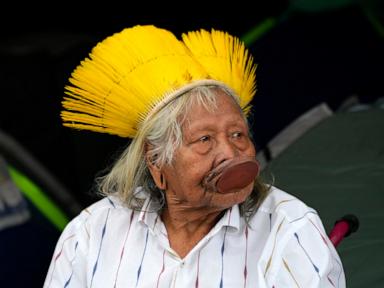
At ninety-four years old, iconic Indigenous leader Raoni Metuktire is facing his final battle at home in the Brazilian heartland. The Raoni Institute confirmed that the legendary Kayapo chief is receiving palliative care following a diagnosis of digestive system cancer. It marks a sobering chapter for a man who spent decades standing as a human shield for the Amazon rainforest.
If you've followed environmental politics over the past half-century, you already know his face. That iconic lip plate, the bright yellow-and-red feathered headdress, and his fierce, unyielding gaze became global symbols of resistance against deforestation. Now, as medical teams manage his comfort in Mato Grosso state, the global community is forced to confront what happens when the old guard fades.
The Diagnosis That Shocked the Amazon
The health crisis started quietly behind the scenes. In June, Chief Raoni suffered a severe intestinal obstruction that required emergency hospitalization in Sao Paulo. Surgeons operated successfully to clear the blockage, but post-operative examinations delivered devastating news. Doctors identified a cancerous tumor in his digestive system.
Given his advanced age and the severe physiological toll of aggressive oncology treatments, medical specialists recommended shifting goals entirely. They opted against invasive interventions. Instead, his care team prioritized comfort, dignity, and proximity to his loved ones.
People often misunderstand what palliative care actually means. It is never a surrender or an absence of medical help. The Raoni Institute made this distinction clear to the public. The current care plan focuses intensely on controlling pain, managing symptoms, ensuring proper hydration, and maintaining physical therapy.
Bridging Modern Medicine and Indigenous Tradition
What makes Chief Raoni's current medical setup unique is how it honors his heritage. Modern clinical teams aren't working in isolation. The care strategy actively integrates spiritual support and traditional Indigenous practices. Traditional healers work side-by-side with specialized nurses and physicians in Peixoto de Azevedo, blending Western science with ancestral wisdom.
This hybrid approach matters. For a man who dedicated his entire existence to protecting tribal culture and sovereignty, dying surrounded by his community under the guidance of both doctors and traditional practitioners offers a rare form of dignity.
A Lifetime on the Global Stage
You cannot overstate Raoni's impact on international environmentalism. Back in the 1970s, during Brazil’s military dictatorship, he rose to prominence by organizing resistance against the construction of a destructive trans-Amazonian highway. He didn't just fight locally; he took his message straight to the world.
In 1989, he partnered with British musician Sting to tour seventeen countries. That high-profile campaign blasted the reality of Amazonian deforestation into living rooms across Europe and North America. It proved that a tribal leader from the deep interior could command the attention of world leaders and celebrities alike.
Even into his nineties, he refused to slow down. As recently as April, he attended the Free Land Camp in Brasilia, standing tall as Brazil's largest annual gathering of Indigenous peoples. He remained a vocal critic of destructive industrial policies and a tireless advocate for land demarcation rights.
What Happens When the Voice Fails
Raoni's illness leaves a massive vacuum. The Amazon faces unrelenting pressures from illegal mining, land grabbing, and agricultural expansion. While younger generations of Indigenous activists are stepping up with incredible courage and modern digital savvy, losing a figure of Raoni's stature changes the political dynamics on the ground.
He served as a unifying moral authority across different tribes and political factions. When he spoke, international politicians listened because his authenticity was unquestionable.
Right now, the immediate focus remains on his comfort. His family and community have asked for privacy and respect during a deeply personal transition. As the world watches, the best way to honor his legacy is to pay attention to the ongoing struggles of the Indigenous communities he spent a lifetime defending. Protect the land, support local sovereignty, and remember the giants who paved the way.


