Seventeen ships and aircraft are scouring the choppy waters of the Java Sea right now. They're looking for 129 people still missing after the Virgo Transport 8 ferry overturned.
If you've followed maritime safety issues in Southeast Asia, this heartbreaking disaster feels entirely too familiar. Indonesia relies heavily on passenger ferries to connect its massive archipelago of over 17,000 islands. But when rough weather hits these vital sea lanes, tragedy strikes fast.
Here is what happened, why the search is so difficult, and what it reveals about ongoing transit challenges in the region.
What Went Wrong on the Virgo Transport 8
The disaster unfolded quickly on a Sunday morning. The 119-meter (390-foot) ferry was traveling from Surabaya in East Java to Banjarmasin on Borneo Island. On board were 243 people listed on the official manifest, alongside 89 vehicles.
Rough seas battered the vessel with waves reaching up to three meters high. Around 2 a.m., the captain issued a distress call warning that the ship was listing badly. Contact vanished shortly after. Two hours later, authorities confirmed the worst: the ferry had overturned in the Masalembo waters, about 148 kilometers from Banjarmasin.
Survivors have shared harrowing accounts of the chaos. Ahmad Saudi, a bus driver on the ship, noted that common areas and hallways were crammed because cabins were entirely full. When the ferry began listing rapidly, passengers scrambled to higher ground. Saudi believes the vessel's balance may have been heavily compromised by heavy trucks loaded onto one side. Another survivor, Faisal, recounted how he and 14 others clung to a small portion of the hull remaining above water, reciting prayers while waiting for help.
Inside the Massive Search and Rescue Operation
National Search and Rescue Agency chief Mohammad Syafii scaled up operations significantly. Hundreds of personnel, including military and police units, are utilizing advanced tools to locate survivors.
Rescuers deployed specialized underwater teams and navy-operated thermal drones to scan the upside-down hull and surrounding depths. Transport Minister Dudy Purwagandhi confirmed that aerial tracking showed the ship floating upside down rather than sinking completely, giving emergency teams a central target zone.
So far, rescue crews and passing tugboats have successfully saved 108 people and recovered six bodies. Yet, uncertainty remains a massive hurdle. Passenger manifests in Indonesia frequently differ from the actual number of people on board. This discrepancy makes tracking the exact number of unaccounted-for passengers incredibly stressful for families waiting at ports in Banjarmasin and Surabaya.
Safety Standards Under the Microscope
This tragedy highlights deep-seated safety challenges within regional maritime transit. Built in Japan back in 1987, the Virgo Transport 8 operated there for decades before being sold to an Indonesian company. Critics argue that older vessels require strict regulatory oversight, yet enforcement remains inconsistent across domestic routes.
Worryingly, this incident marks a grim streak for regional transit. It is the third major ferry accident in the Asia-Pacific area within a single week, following deadly ferry fires near Bali and the Philippines.
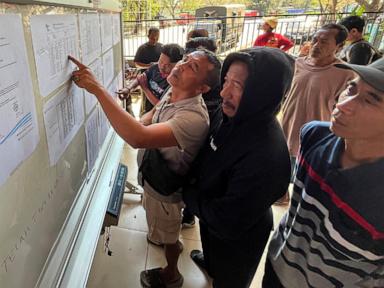
Families continue to crowd port command centers, desperately checking updated survivor lists. Authorities insist they remain hopeful, but time is running out.
Check local emergency bulletins for live updates if you are tracking relief efforts or searching for affected loved ones.