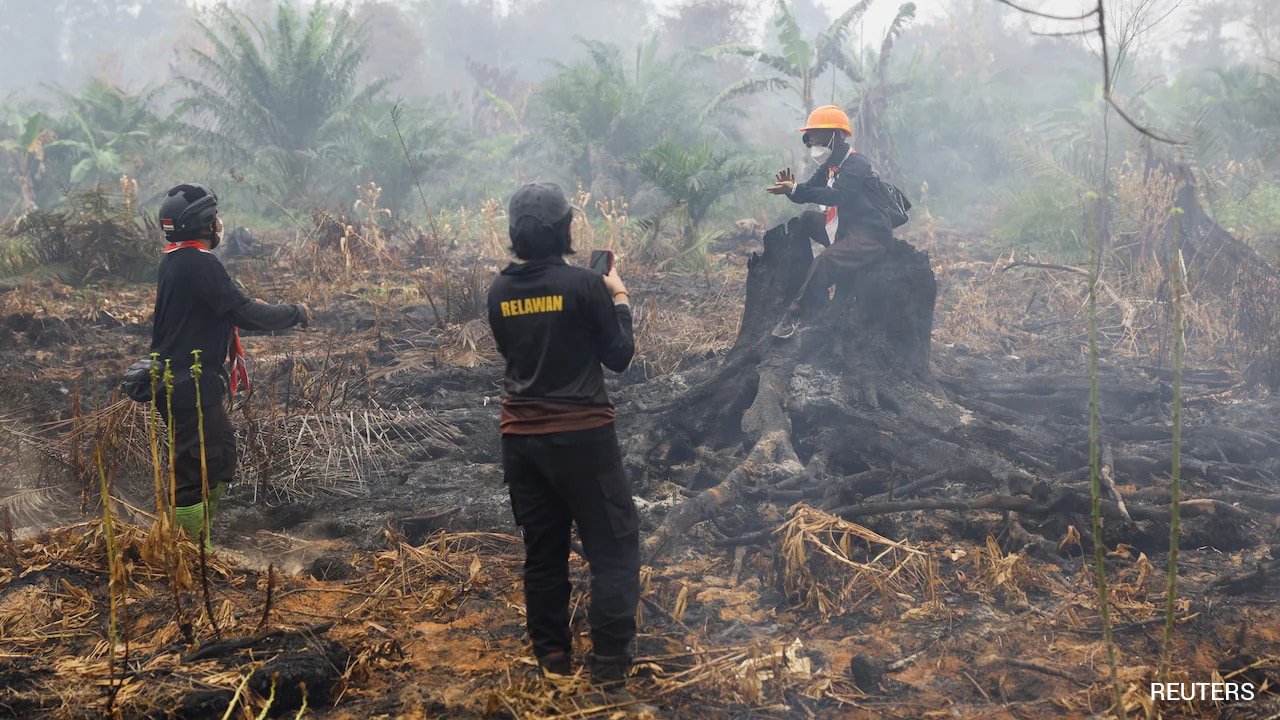
Every year, parts of Southeast Asia turn into a hazy, smoke-choked endurance test. Right now, Indonesia is facing its most brutal wave of forest and peatland fires in eleven years. If you are waiting for relief, you might have to wait a while. Forestry officials recently warned that Indonesia wildfires could rage all the way through early November.
That is weeks longer than initially expected. Why? Blame a super El Nino weather pattern that has baked the region's forests and fields into a tinderbox.
The Real Cost of Delayed Rain
Weather patterns rarely care about schedules. Indonesia's state meteorological agency recently revised its seasonal forecasts. The monsoon rains, which usually arrive to snuff out the flames, are delayed. They are now expected to hit in late October or early November instead of September.
That single-month shift changes everything.
Forestry Minister Raja Juli Antoni has been vocal about the crisis. He urged farmers and corporations to drop the practice of slash-and-burn land clearing. During a severe drought, a single spark on dried-out peatland turns into an uncontrollable underground inferno. Peat fires are notoriously difficult to douse because they smolder beneath the surface long after surface flames look extinguished.
Health Risks and Regional Haze
The smoke does not respect national borders. Transboundary haze has already drifted across the Malacca Strait, pushing air quality in neighboring Malaysia and Singapore into unhealthy territory.
At home, the human cost is mounting fast. In just the first nine days of September, reported cases of wildfire-related respiratory illnesses more than doubled across seven affected provinces, soaring past 113,000 cases. Residents in West Kalimantan are bearing the brunt of the toxic air, straining local clinics and hospitals.
Fighting a Super El Nino Disaster
Jakarta isn't just watching the smoke roll in. The government has mobilized more than fifty aircraft for aggressive water-bombing and cloud-seeding missions to force artificial rain from the clouds. International help has also arrived. Japan deployed three heavy-lift CH-47 Chinook helicopters to assist local crews on the ground in hotspots across Borneo and Sumatra.
Yet, technology and foreign aid can only do so much against a climate phenomenon this massive. Until the skies finally open up with legitimate monsoon downpours, millions of people across the region are stuck living behind air purifiers and masks.