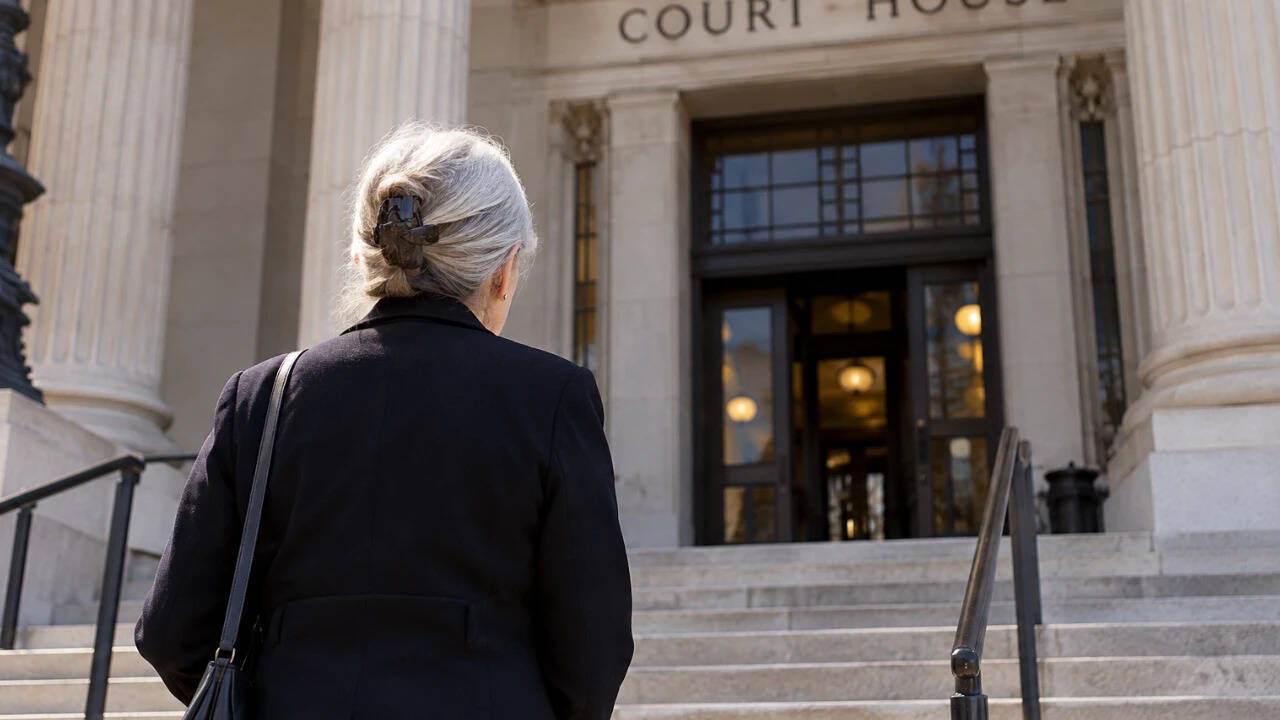
The ongoing constitutional clash between the White House and the nation's central bank just entered dangerous territory. President Donald Trump established a specialized committee of inquiry targeting Federal Reserve Governor Lisa Cook, setting off an immediate counter-offensive from her defense team. Abbe Lowell, representing Cook, did not mince words. He blasted the White House panel as a partisan setup designed to bypass statutory protections and force a loyalist into a crucial central bank seat.
Central bank independence isn't an abstract academic debate. It is the bedrock of global financial stability. When political actors try to dismantle structural firewalls at monetary institutions, markets notice, bond yields react, and investors panic. This escalation follows months of legal trench warfare that already reached the Supreme Court in Trump v. Cook, making this latest procedural maneuver a high-stakes stress test for institutional checks and balances.
Why the White House Target Landed on Lisa Cook
The administration's focus on Lisa Cook isn't happening in a vacuum. Ever since Cook took her seat on the Board of Governors, tensions have run hot between executive pressure for lower borrowing costs and the Fed's statutory mandate to manage inflation and employment independently.
The core accusation centers around historical mortgage applications filed back in 2021, prior to her confirmation to the central bank. Accusations emerged alleging irregularities regarding primary residence declarations across two properties. Cook’s legal representation has firmly rejected any intentional wrongdoing, pointing out that tax assessors and legal reviews have found no substantive violations. Yet, the White House bypassed traditional investigative channels, establishing an internal committee featuring political appointees like National Economic Council Director Kevin Hassett.
When political aides sit in judgment of an independent central banker, you have to ask a basic question. How can anyone expect an objective outcome from a panel handpicked by the president who has spent over a year trying to fire her?
The Legal Counter Punch from Abbe Lowell
Abbe Lowell's response was swift and uncompromising. In formal correspondence delivered to the administration, Cook's legal team dismantled the timeline and objectivity of the newly formed inquiry.
The White House demanded Cook's physical attendance at a closed-door hearing scheduled for November 5, 2026. Lowell fired back with a logistical and constitutional impossibility. Cook will be overseas fulfilling her institutional obligations at critical international monetary and financial policy conferences. Furthermore, Lowell argued that any legitimate proceeding cannot be rushed to accommodate a political calendar, suggesting that the earliest possible review date should follow the Federal Reserve’s scheduled policy meeting on December 8-9.
By highlighting scheduling conflicts and questioning the panel's fundamental bias, the defense strategy is clear. They are refusing to legitimize a forum that looks less like a due process hearing and more like a predetermined political exit strategy.
The Broader Threat to Monetary Policy Independence
This fight goes far beyond one governor's office in Washington. The Federal Reserve functions effectively precisely because it is insulated from short-term political cycles. If a president can unilaterally form panels, launch inquiries into pre-confirmation paperwork, and dictate removal terms outside statutory "for cause" definitions, the entire architecture of American monetary governance changes overnight.
Think about what happens next. If central bankers have to look over their shoulders at potential political retribution every time they vote on interest rates, monetary policy stops being data-driven. It becomes election-driven. That is a recipe for runaway inflation and destroyed market credibility.
The Supreme Court previously ruled that Cook could remain in her role while broader litigation moves forward, signaling that arbitrary executive dismissals face severe legal hurdles. Yet, the administration is testing the limits of that ruling through administrative investigations and internal committee hearings.
As November 5 approaches, the standoff deepens. Cook's team is digging in its heels, refusing to bow to pressure from a partisan panel. The outcome of this fight will define the limits of executive power over independent agencies for generations. Keep a close eye on upcoming legal filings and international monetary forums. The independence of the dollar is riding on the result.