Pope vehicles have changed radically over the past one hundred years, transforming from high-society status symbols into mobile stages designed for human connection. Right now, a brand-new exhibition inside the Vatican Museums is putting that exact evolution on full display.
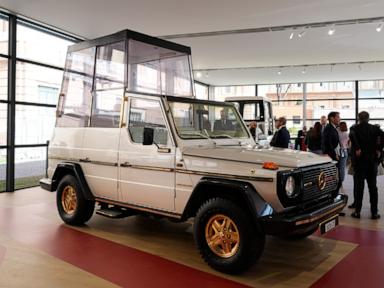
Opened in the Giardino Quadrato glass pavilion, the "A Century of the Popemobile" exhibition showcases eight distinct vehicles that tell the story of the Holy See's nearly century-long partnership with Mercedes-Benz. If you've ever wondered how papal transport shifted from enclosed luxury limousines into open-air glass bubbles and modern electric SUVs, this collection provides the exact roadmap.
From Royal Carriage to Apostolic Ministry
The partnership began back in 1930 when Pope Pius XI received a Mercedes-Benz Nürburg 460. Back then, motor vehicles weren't built for interacting with crowds. They were designed for representation—gilded, heavy, and meant to project formal authority rather than pastoral warmth.
Over the decades, the engineering philosophy shifted dramatically. Sandro Barbagallo, the curator of the Vatican Museums' historical collections, notes that these machines evolved into instruments of ministry. Instead of simply moving the pontiff from point A to point B safely, the modern popemobile allows the Pope to greet, bless, and lock eyes with thousands of pilgrims lining public streets.
Standout Vehicles in the Exhibition
The current exhibition highlights key milestones in automotive design tailored specifically for the Vatican:
- Mercedes-Benz Nürburg 460 (1930): The historic vehicle handed to Pope Pius XI that kicked off the entire relationship.
- Mercedes-Benz 300 d Pullman Landaulet (1960): Used by Pope John XXIII and Pope Paul VI during major diplomatic outings.
- Mercedes-Benz 600 Pullman Landaulet (1965): A massive, custom-built ceremonial transport that defined an era of high-profile pontifical travels.
- Mercedes-Benz 230 G (1980): The iconic boxy G-Class variant recognized as the world's first true "Popemobile," built for Pope John Paul II.
The collection also touches on the stark security realities that changed vehicle design forever. Following the tragic 1981 assassination attempt on Pope John Paul II in Rome, engineers introduced heavy bulletproof glass modifications—famously nicknamed the "sardine can" enclosures—which completely changed how popes interacted with outdoor crowds until open-air configurations returned in safer or controlled environments.
The Shift Toward Electric Mobility
Technology keeps moving forward, and the Vatican's garage is no exception. Recent years brought a major shift toward sustainability, highlighted by fully electric transport configurations like the specially configured Mercedes-Benz G 580.
These modern electric editions feature specialized engineering, such as height-adjustable swiveling central seats that let the pontiff pivot to face crowds directly, combined with zero-emission drivetrains. It's a clear nod to environmental stewardship meeting centuries-old religious traditions.
If you are planning a trip to Rome, the exhibition is free with standard admission to the Vatican Museums and runs through January 31, 2027. Check official museum booking portals early to secure entry slots, as crowds flocking to see these mechanical artifacts continue to grow.