Two major deadlines are colliding in Baghdad right now, and the outcome is going to shape the entire Middle East. By September 30, the decades-long United States military deployment in Iraq will officially conclude. At the same time, the Iraqi government has tried to link this departure to an ultimatum for non-state armed groups to lay down their weapons.
Spoiler alert: it's not going to happen.
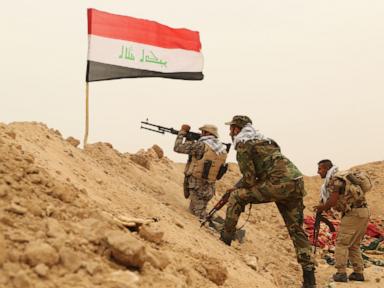
If you're wondering what the post-withdrawal landscape looks like, look no further than the stubborn reality on the ground. Iran-backed militias have made it crystal clear that their heavy arsenals aren't going anywhere. While small factions might hand over old rifles to save face, powerful groups like Kataib Hezbollah, Harakat al-Nujaba, and Kataib Sayyid al-Shuhada are holding firm. They aren't surrendering a thing.
The Core Dilemma Behind the September 30 Deadline
Why are these groups defying Baghdad's demands? To understand the current stalemate, you have to look past the official press releases and examine how power actually functions in Iraq.
The U.S. military presence has been winding down since Washington and Baghdad agreed to close the mission in 2024, following years of shifting dynamics since the 2003 invasion and the subsequent fight against the Islamic State group. With ISIS reduced to scattered sleeper cells, the justification for a permanent American footprint evaporated—especially as bases in the northern Kurdish region faced repeated attacks following the outbreak of wider regional conflicts involving the U.S., Israel, and Iran.
A U.S. military official confirmed that the final hundreds of troops stationed in northern Iraq will clear out by September 30, redeploying mostly to Jordan and other regional locations alongside air defense systems and heavy hardware.
The central government in Baghdad thought this exit could serve as leverage to force armed factions under direct state command. Prime Minister Mohammed Shia al-Sudani's administration wants these militias to dissolve their independent units, hand over "dynamic weapons" like long-range missiles and drones to the Popular Mobilization Forces (PMF) leadership, and integrate fully into the regular army.
It sounds tidy on paper. In reality, it's a pipe dream.
What Analysts and Insiders Know
If you talk to regional experts who watch Iraqi politics closely, they will tell you the September 30 deadline is more of a political talking point than an enforced reality. As analyst Sajad Jiyad noted during an Atlantic Council discussion, no one realistically expects these heavily armed factions to disarm by the end of the month.
Instead of unconditional surrender, militia officials are setting their own rigid terms. They want the government to bring the Kurdish peshmerga forces under strict central military control first. They also demand the expulsion of Iranian Kurdish dissident groups and the Kurdistan Workers' Party (PKK) from northern bases.
Only after those conditions are met are they willing to discuss "regulating" weapons rather than surrendering them.
"There is absolutely no decision among the factions to surrender weapons, and we have not surrendered any weapons," an official with one of the Iran-backed groups admitted anonymously.
The Regional Chessboard and Iran's Leverage
You can't talk about Iraq's militias without talking about Tehran. Iran's influence network inside Iraqi institutions isn't packing its bags on September 30. With ongoing friction across the region, Iran views these aligned paramilitary networks as vital strategic leverage.
Even though Iraqi government spokesperson Sabah al-Numan insists that dialogues are ongoing and that security files will be sorted out once international coalition forces fully withdraw, the power balance tells a different story. The state's leverage is limited. Many of these militias are already technically part of the PMF, an umbrella organization officially tied to the state, yet they routinely operate outside central command.
Kurdish leadership in the north is understandably anxious about the security vacuum left behind. They have already faced threats and attacks targeting energy infrastructure and political offices.
What Happens Next
When American forces finish packing up their gear and head toward the border, Iraq won't magically transform into a centralized security utopia. The central government will have to navigate a delicate, high-stakes dance with heavily armed groups that hold more localized firepower than regular army units in certain regions.
Economic ties and diplomatic channels will replace boots on the ground, but security will remain fractured. If you're tracking Middle Eastern stability, keep your eyes on how Baghdad attempts to enforce—or quietly compromise on—its own disarmament ultimatums once the calendar flips past September.
US troops leave Iraq as militias signal weapons staying
This video provides a quick visual summary of the final U.S. troop withdrawal from Iraq and the ongoing defiance of Iran-backed militias regarding their weapons.


