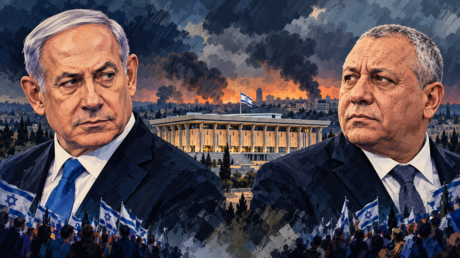
Israel just voted in its highest turnout in over two decades, and the country is right back where it started: completely stuck.
With the ballots still being counted from the first national election since the October 7 attacks, neither Prime Minister Benjamin Netanyahu’s right-wing bloc nor the centrist opposition led by former military chief Gadi Eisenkot has secured the 61 seats needed for a majority in the 120-seat Knesset. Partial results show Netanyahu's Likud bloc hovering around 54 seats, while Eisenkot’s camp trails near 49, leaving Arab-led parties holding roughly 17 seats and all the leverage.
If you're wondering how Israel plans to break this gridlock, the short answer is that it's going to get messy before it gets clear. Here is how this political stalemate actually plays out and why the traditional coalition playbook no longer works.
The Arab Vote Dilemma That Breaks the Opposition
For years, Israeli politics operated on a rigid binary. Netanyahu refuses to partner with Arab-led parties, branding any reliance on them as dangerous or illegitimate. On the other side, centrist challengers like Eisenkot want Netanyahu out of power so badly that they have to answer a brutal question: are they willing to cross a Rubicon that past Zionist leaders avoided?
Eisenkot has left the door cracked open to working with Arab factions, but under strict conditions. He wants them to explicitly recognize Israel as a Jewish state and condemn Hamas. Meanwhile, Arab lawmakers know they have historic momentum. With voter turnout surging in Arab communities, leaders of parties like the Joint List and Ra'am aren't about to hand over their votes for free. They want a real voice, an end to discriminatory policies, and a seat at the table that actually yields results for their constituents.
Left-leaning figures like Yair Golan are screaming from the rooftops that the opposition needs to stop being afraid and build a majority with Arab parties. But the catch is obvious. If Eisenkot leans too heavily into an alliance with Arab lawmakers, he risks alienating nationalist defectors within his own shaky coalition. Netanyahu knows this trap intimately, and he's already baiting the opposition with accusations of treason and subversion.
The Specter of Round Six and Caretaker Paralysis
If nobody can stitch together 61 seats, Israel doesn't just pause. President Isaac Herzog will eventually step in, consult the party heads, and task someone with forming a government. But if those weeks of horse-trading fail, the country faces a dismal repeat of the 2019-2022 saga, when Israelis were forced to the ballot boxes five times in rapid succession.
Nobody wants another election, especially after a grueling post-war cycle and record-shattering turnout. Yet, stalemate suits Netanyahu just fine. As long as coalition talks drag on or collapse entirely, he stays put as prime minister in a caretaker capacity. That keeps him in the driver's seat, shields him temporarily from political exile, and gives him time to peel defectors away from Eisenkot's camp.
At the same time, diaspora voters who flew back home just to cast anti-government ballots won't keep catching flights back to Tel Aviv every few months if the country keeps spinning its wheels. Netanyahu is banking on voter fatigue wearing out the opposition first.
Washington and the Push for Unity
You can't talk about Israeli coalition math without factoring in external pressure. Washington has little appetite for endless political instability in its closest Middle Eastern ally, particularly while regional tensions involving Iran, Lebanon, and Gaza remain red hot.
American diplomats and regional power brokers are quietly pushing for a national unity government. A power-sharing arrangement between Likud and the centrist opposition would bypass the toxic debate over Arab party participation entirely, locking out the far-right elements like Itamar Ben-Gvir while stabilizing the cabinet.
The problem? Eisenkot has vowed he won't serve under a prime minister currently on trial for corruption and facing intense public anger over the security failures of October 7. Netanyahu, meanwhile, treats political survival as an art form and won't step down voluntarily.
What Happens Next
Israel's political center of gravity has shifted, but the entrenched tribalism of its parties hasn't budged an inch. Whether Eisenkot risks breaking political taboos to court Arab lawmakers or Netanyahu manages to bully his way into another caretaker stalemate, the outcome will define the country's trajectory for years.
Take a close look at how the final votes trickle in from the army reserves and absentee ballots. That final tally won't just crown a winner; it will determine whether Israel finally shatters its political paralysis or doubles down on it.