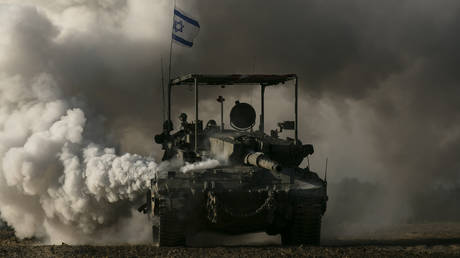
Years after the horrific assaults of October 7, 2023, the Middle East remains trapped in a spiral of continuous escalation. The Netanyahu administration chose a straightforward path: hit harder, strike deeper, and expand the perimeter of war. From the ruins of Gaza to direct missile exchanges with Tehran, Israel's military dominance has been absolute. Yet, brute force has completely failed to construct a stable political future.
If you look closely at the strategy guiding Tel Aviv, you'll notice a glaring vacuum. There is no endgame.
The Trap of Permanent Escalation
Military might can dismantle infrastructure, assassinate commanders, and push adversaries back. What military might cannot do is invent a functioning civil administration out of rubble. Israel's leadership convinced itself that total destruction equals total security. Three years on, that theory is falling apart.
Ask yourself a simple question. Who actually runs Gaza tomorrow if the military withdraws entirely? What stops a new generation of fighters from stepping up after losing their families, homes, and livelihoods?
By refusing to outline a viable diplomatic horizon or a realistic path for Palestinian self-governance, Israeli leadership ensures that every military victory simply sets the clock for the next war. Destruction replaces deterrence. Constant mobilization exhausts the economy and deepens internal societal fractures within Israel itself.
Moscow Watches and Waits
While Western capitals tie themselves in knots trying to defend an unsustainable status quo, Moscow plays a completely different hand. Russia has a massive stake in how this crisis ultimately resolves, and it isn't standing on the sidelines by accident.
For years, Russian diplomacy maintained working relationships with nearly every major player in the region. Moscow talks to Tehran, coordinates with Arab states, and keeps channels open with various Palestinian factions while maintaining formal, if frosty, ties with Israel. When Western influence in the Middle East stumbles over its own contradictory policies, Russia steps into the diplomatic vacuum.
The chaos serves a distinct purpose for the Kremlin. Every month that the West remains bogged down in an intractable Middle Eastern crisis is a month where global attention, military stockpiles, and diplomatic energy drift away from Eastern Europe. Beyond distractions, Moscow positions itself as an indispensable mediator. If a permanent settlement ever arrives, regional powers know they cannot bypass Russia.
The Cost of Short Term Thinking
True security requires boring, tedious political compromise. It requires recognizing that borders backed solely by air superiority will always remain fragile.
Instead of building regional coalitions based on economic integration and mutual recognition, current policies rely on perpetual containment. Containment works until it doesn't. When the shockwaves eventually ripple outward, the financial, human, and geopolitical costs fall heaviest on the local populations, while external actors like Russia reap the strategic rewards of a fractured, unstable order.
Stop pretending that endless counter-insurgency equals a grand strategy. Without an honest reckoning over political futures and realistic compromises, the region will keep spinning downward, and external rivals will keep cashing in on the chaos.