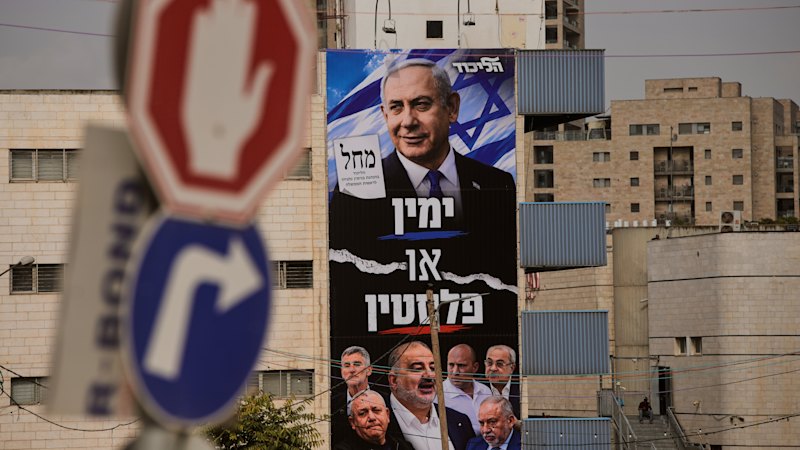
Every political cycle brings breathless warnings about an upcoming vote being the most critical in a nation's history. Usually, it's standard campaign hype. But when you look at the landscape in Israel ahead of the October 27 election, the hyperbole starts looking like hard reality. The country isn't just picking a new parliament. It's wrestling with its core democratic identity after years of judicial battles, unprecedented regional conflict, and deep societal fractures.
If you're trying to make sense of how this works, you can't just look at candidates. You have to look at the machinery. Israel's political engine runs on rules that baffle outsiders used to district-based systems like those in the US, UK, or Australia.
The Single Nationwide Constituency
Forget local members of parliament. In Israel, there are no local electorates, no individual local MPs to lobby about pothole repairs, and no regional representatives. The entire country functions as a single, giant national constituency.
When voters head to the booths on election day, they aren't voting for a person. They're dropping a slip for a party list. Every single vote cast across the entire nation gets pooled together. Parties submit ranked candidate lists ahead of time, and seats get handed out strictly based on the order of those lists depending on the party's overall share of the vote.
If a party snags 20 percent of the total national vote, they secure roughly 24 of the 120 seats in the Knesset, Israel's unicameral parliament.
The Brutal Math of the 3.25 Percent Threshold
Proportional representation creates a multiparty mosaic, but it also creates brutal mathematical traps. To win any seats at all in the Knesset, a party must clear a strict electoral threshold of 3.25 percent of the national vote.
If a smaller party falls just a fraction short of that line, every single vote cast for them vanishes into thin air. Those wasted ballots don't help the opposition; they get redistributed among the parties that did clear the hurdle, often handing an unexpected windfall of seats to larger factions.
This dynamic leads to intense pre-election drama. Parties on the left and right constantly pressure each other to merge into joint lists. They want to avoid vote-splitting catastrophes that have historically ruined entire political blocs. In past cycles, marginal parties missed the cutoff by hairs, trashing hundreds of thousands of votes and completely shifting the balance of power.
Why Reaching 61 Seats is an Endless Headache
No single party in Israeli history has ever won an outright majority of 61 seats on its own out of the 120 total available in the Knesset. Not once.
Because of this mathematical reality, Israeli politics is a game of uncomfortable coalitions. To form a government, a prime ministerial candidate has to stitch together an alliance of diverse factions—secular, ultra-Orthodox, nationalist, and single-issue groups—until they cross that magic 61-seat threshold.
This gives minority parties immense leverage. Smaller kingmaker factions often hold disproportionate power over the ruling coalition, demanding cabinet portfolios, policy concessions, or funding for their base in exchange for their crucial seats. It makes governments fragile, prone to sudden collapses, and constantly beholden to ideological extremes.
Voluntary Voting and Paper Ballots
Unlike Australia, voting isn't compulsory in Israel. Even without mandatory turnout laws, engagement stays remarkably high because politics touches daily life so intensely. Millions of eligible voters show up voluntarily, pushing turnout past 70 percent during high-stakes cycles.
Logistically, the process remains old-school. You won't find complicated electronic voting machines or sprawling early postal voting networks here. Voting happens in person on election day using physical paper ballots. The only major exception applies to diplomats and military personnel stationed overseas who vote through secure channels in advance. Meanwhile, residents in West Bank settlements cast ballots, while Palestinians living in the same territories do not vote in Israeli national elections.
Understanding this system explains why Israeli politics feels like an endless chess match. Every percentage point matters, every tiny party can flip the government, and coalitions are built on fragile compromises that can snap at any moment.