Football stops in an instant. One moment, Ford Field is roaring through a tight divisional battle; the next, total silence descends as a player lies motionless on the turf.
During Detroit's hard-fought 19-15 victory over the Minnesota Vikings, All-Pro linebacker Jack Campbell went down after colliding with tight end T.J. Hockenson early in the fourth quarter. What looked like a routine defensive effort turned into a frightening medical emergency, leaving teammates visibly shaken and sending shockwaves through the entire franchise.
Let's look at what actually happened on the field, the immediate response from the locker room, and why neck injuries remain the most terrifying reality in modern football.
The Play That Stilled Ford Field
The incident occurred on the first play of the fourth quarter. Hockenson hauled in a reception, and a swarm of Detroit defenders converged to bring him down. Eric O'Neill, Chuck Clark, and Campbell collapsed into a high-impact collision.
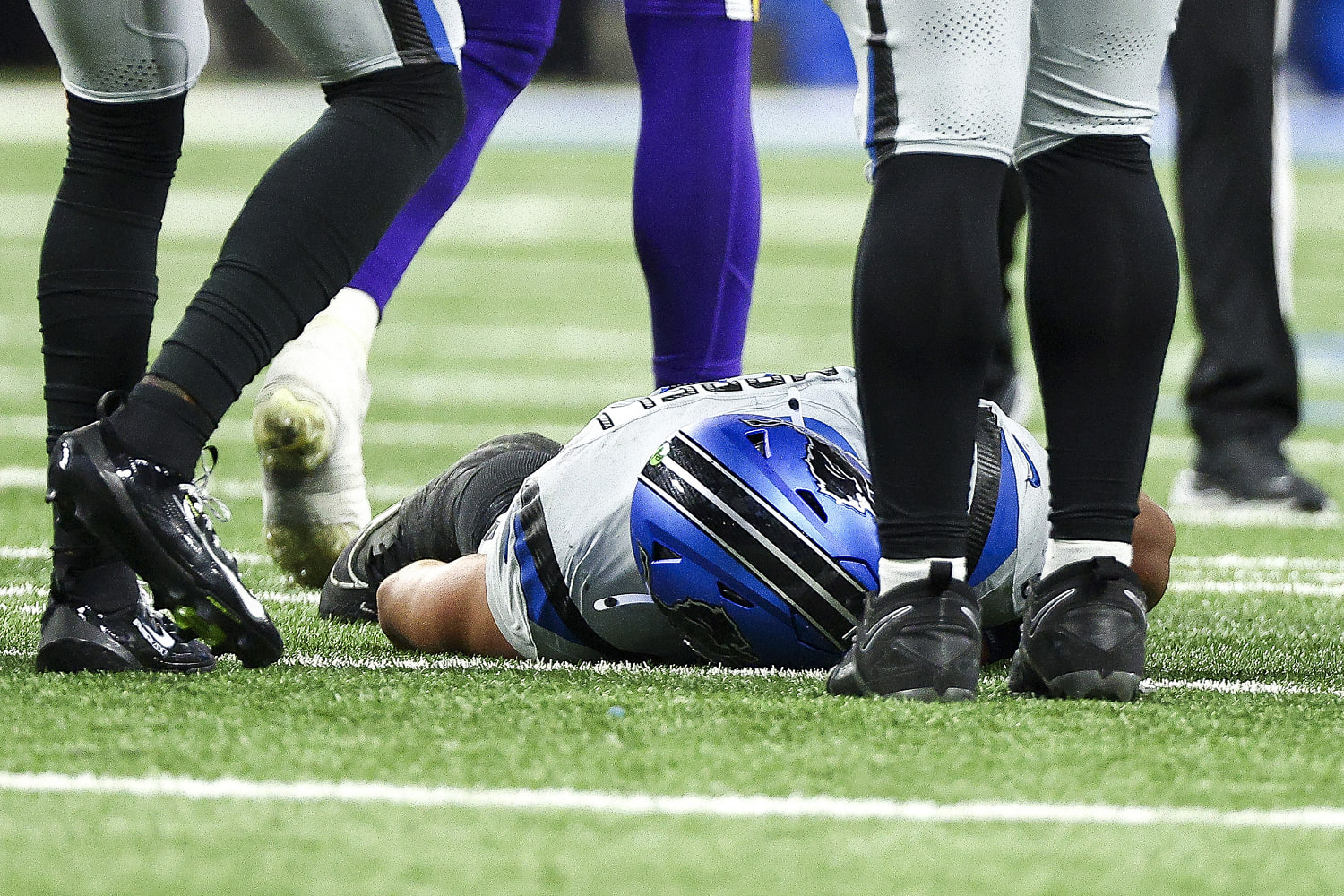
Campbell took the worst of it. His head struck Hockenson's thigh awkwardly, absorbing a severe blow that twisted his neck and sent him straight to the turf face down. He didn't move.
Medical personnel sprinted onto the field immediately. Players from both teams dropped to one knee, a universal sign of respect and concern that instantly changes the mood of any stadium. For nearly ten agonizing minutes, trainers and physicians tended to the 26-year-old linebacker, stabilizing him before strapping him to a backboard.
When the medical cart finally rolled toward the tunnel, Campbell was alert and breathing, but he didn't gesture to the crowd. The gravity of the moment hung heavily over the stadium. The Lions later confirmed that Campbell spent the night at a local hospital for continued evaluation and monitoring of a serious neck injury.
Realities of the Locker Room Response
You can coach scheme, you can practice tackling angles, and you can game-plan for weeks. Nothing prepares a team to watch a teammate lie motionless.
Quarterback Jared Goff captured the emotional toll in his postgame comments. He noted how quickly a violent sport reminds everyone that players are husbands, fathers, and human beings first. Defensive leader Aidan Hutchinson and head coach Dan Campbell were visibly emotional after the game, with Dan Campbell leading the team in a quiet prayer during the post-game locker room address.
When a foundational piece of your defense—an elite player who racked up over 150 tackles and earned All-Pro honors—leaves the field on a stretcher, football stats completely vanish from your mind.
What Comes Next for the Defense
From a purely operational standpoint, losing an anchor like Campbell changes everything for Detroit's defensive structure. He's the green-dot communicator, the guy who reads keys, sets the front, and cleans up the middle of the field.
Yet, strategy takes a backseat when medical uncertainty is involved. The immediate focus rests entirely on his neurological safety, spine health, and recovery timeline. Medical professionals will run comprehensive imaging and monitoring before clearing him for any football activity.
Football is brutal, fast, and unforgiving. When scares like this happen, it forces everyone involved—fans, players, and coaches alike—to confront the genuine physical cost of the game.
Keep Jack Campbell and his family in your thoughts as the organization provides further medical updates.