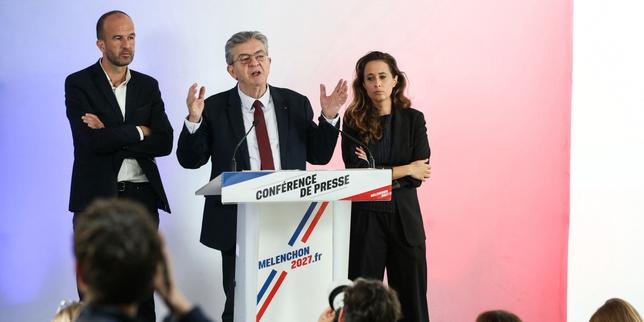
You don't need a degree in geopolitics to spot a flawed argument, but watching senior political figures bend logic to fit a preconceived narrative never gets less exhausting. Jean-Luc Mélenchon recently decided to connect the dots on the war in Ukraine in a way that left defense experts shaking their heads. According to the leader of La France Insoumise, the growing Russian threat across Europe is somehow linked to the long-range strikes carried out by Kyiv inside Russian territory.
Let's break that down. It's an argument that flips cause and effect on its head, blaming the victim for escalating a conflict they never asked for in the first place. When you examine what's actually happening on the ground, the narrative falls apart completely.
The Core Fallacy of Blaming Ukrainian Self-Defense
The central claim relies on the idea that if Ukraine simply stopped hitting military targets, logistics hubs, and oil refineries deep inside Russia, Moscow would back down and European security would stabilize. History tells us precisely the opposite. Russia didn't need any provocation to launch its full-scale invasion, and it certainly doesn't need an excuse to ramp up hybrid warfare across the continent.
When Kyiv targets Russian oil infrastructure, it's not doing it for fun. It's trying to choke off the financial engine funding Vladimir Putin's war machine. Conflating these strategic military maneuvers with an increased threat to Europe ignores a fundamental reality. Putin's aggression isn't a reaction to Western weapons or Ukrainian drones; it's an expansionist project that predates these tactics by years.
Why Long-Range Strikes Matter for Kyiv
If you're fighting an existential war against an adversary with vastly superior numbers and endless stockpiles of artillery, you can't just fight with your hands tied behind your back. Sitting passively behind defensive lines while missiles rain down on apartment buildings and hospitals in Kharkiv or Kyiv is a recipe for total defeat.
Ukraine's long-range drone and missile capabilities are an absolute necessity. They disrupt supply lines, neutralize bomber aircraft before they can launch glide bombs, and force the Kremlin to actually feel the economic and logistical weight of the war it started. Pretending that Ukraine should unilaterally disarm its strike capabilities in the name of peace is completely detached from the brutal realities of modern warfare.
The Political Calculus Behind the Rhetoric
Why would a prominent French politician push this specific narrative? Domestic political maneuvering often plays a heavy role. By framing the conflict through an anti-NATO or anti-escalation lens, certain political factions try to appeal to voters weary of inflation, energy crises, and international entanglements. It sounds appealing on a campaign poster to promise that avoiding action will keep you safe.
Reality is much harsher. Appeasement doesn't stop an aggressor; it merely buys them time to rearm. When political leaders in Paris or Berlin echo talking points that place moral equivalence between an unprovoked invader and a sovereign nation fighting for its survival, they send a dangerous signal to Moscow.
What Real Deterrence Looks Like
If Europe wants to genuinely reduce the Russian threat, the solution isn't telling Ukraine to stop defending itself. The solution is doubling down on military support, reinforcing critical infrastructure against cyber and hybrid attacks, and making it unequivocally clear that borders cannot be redrawn by force.
You can't negotiate with someone who views your existence as a negotiable item. Ukraine understands this better than anyone, which is why they continue to press forward despite the political noise coming from Western capitals.
Stop pretending this conflict is a two-way misunderstanding. It's an illegal war of conquest, and the only way it ends is when the cost of continuing the aggression becomes too high for the Kremlin to bear.