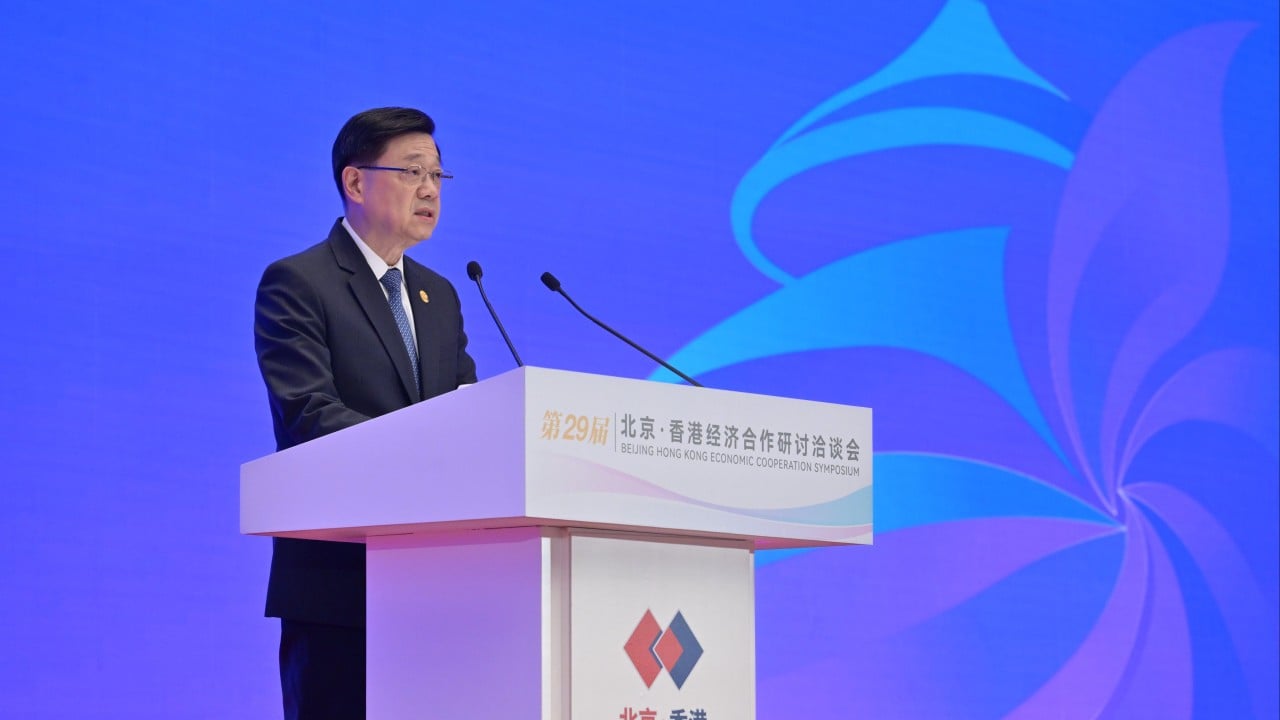
Hong Kong Chief Executive John Lee kicked off a four-day diplomatic and economic tour to Beijing and Shanghai, aiming to tighten financial bonds and push technological cooperation under the framework of the national 15th Five-Year Plan. If you look past the usual diplomatic handshakes, this trip exposes a very practical playbook. Hong Kong isn't just sending pleasantries north; it's positioning itself as the primary operational launchpad for mainland enterprises trying to navigate a tricky global trade environment.
Let's break down what's actually happening on the ground and why this mission matters for regional commerce.
Why This Trip Changes the Economic Equation
Most casual observers treat these high-level visits as routine administrative travel. They're missing the point. Lee's itinerary centers on two heavy-hitting events: the 29th Beijing-Hong Kong Economic Cooperation Symposium and the ninth China International Import Expo (CIIE) in Shanghai.
The timing lines up directly with China's broader economic blueprint. Under the theme "Beijing-Hong Kong Together into the 15th Five-Year Plan," the focus sits squarely on practical, execution-heavy integration. Hong Kong wants to capture new capital streams by doubling down on what it does best: acting as an international financial intermediary and a two-way conduit for global investment.
The Three Core Priorities Driving the Agenda
Lee laid out three distinct areas of collaboration during his keynote address at the symposium in Beijing. He's not speaking in vague abstractions; he's targeting specific sectors where both economies complement each other directly.
1. Advancing Two-Way Financial Opening Up
Capital flow remains Hong Kong's bread and butter. Lee emphasized that the city acts as the most convenient international financing platform for Beijing-based corporations. Instead of dealing with fragmented foreign markets, mainland firms can use Hong Kong's deep pools of global liquidity, cross-border fund management tools, and wealth management networks.
Beyond traditional banking, both sides are pushing hard into green finance and offshore renminbi business. As global investors demand sustainable portfolios, Hong Kong provides the regulatory bridge and credibility to market green bonds internationally.
2. High-Tech and Innovation Synergy
You can't talk about modern economic development without touching innovation and technology (I&T). Lee pointed to artificial intelligence, robotics, and life sciences as prime areas where Beijing and Hong Kong can merge their strengths.
Beijing brings massive research horsepower and heavy industrial backing. Hong Kong brings international academic standards, intellectual property protection, and an open gateway to foreign talent. Projects tied to the Northern Metropolis initiative are meant to serve as physical anchors for this tech exchange, creating internationalized spaces for research and education.
3. Helping Mainland Enterprises Go Global
Domestic competition on the mainland is fierce, forcing thousands of domestic companies to look outward. Lee stressed that Hong Kong's global network—spanning over 50 cities and extending heavily into Belt and Road Initiative markets across Southeast Asia, the Middle East, and Central Asia—gives mainland firms an immediate operational advantage.
Rather than starting from scratch in unfamiliar overseas markets, Chinese enterprises can use Hong Kong professional services, legal frameworks, and marketing networks to scale globally. It turns local companies into international players with minimum friction.
Shifting Focus to Shanghai and the CIIE
After wrapping up his meetings in the capital, Lee heads south to Shanghai for the ninth China International Import Expo. The CIIE acts as a massive shop window for foreign and domestic trade.
In Shanghai, the objective shifts toward physical commerce, supply chain resilience, and visiting Hong Kong-based business booths showcasing local ingenuity. Lee's schedule includes addressing a subforum at the Hongqiao International Economic Forum and holding direct talks with municipal leaders in Shanghai to tighten the financial corridor linking the two financial powerhouses.
What Comes Next for Businesses
If you run a business or manage investments in the region, ignore the political packaging and look at the structural shifts. The integration between Hong Kong and mainland economic hubs is accelerating down specific channels: green bonds, AI infrastructure, and international expansion services.
Watch for new regulatory alignments in cross-border data sharing and tech talent mobility over the next year. Companies positioned to use Hong Kong as a dual-purpose platform—bringing foreign capital in while pushing mainland operations out—will capture the upside of this policy push.