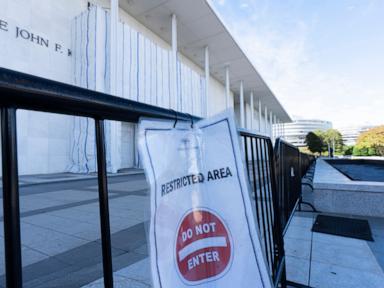
Buildings don't just fall apart overnight, and neither do institutional excuses. When leadership at the John F. Kennedy Center for the Performing Arts suddenly pulled the plug on its own maintenance plans months ago, nobody expected it to trigger an explosive whistleblower complaint on Capitol Hill. Yet here we are.
Former employees recently dropped a formal letter to Congress claiming that current management intentionally sat on critical roofing repairs. The kicker? Those exact same structural failures are now being used as the primary justification to shut down the iconic Potomac River landmark entirely.
If you're trying to figure out how a multi-million-dollar cultural hub turned into a political chess match, you have to look past the dramatic headlines and examine the paper trail.
The Whistleblower Claims and Congressional Fallout
The core of the dispute centers on executive director and chief operating officer Matt Floca, appointed under the Trump administration's ongoing efforts to reshape Washington institutions. According to internal documents submitted by whistleblower attorney David Seide, Floca ordered a funded plan to fix leaking roof overhangs to a halt back in April.
Lawmakers received a different story until recently. Management pointed to acute safety hazards—accelerating structural decay and a partial ceiling collapse in the Grand Foyer—as an emergency rationale for closing the main facility.
The timeline doesn't add up for critics on Capitol Hill. Senator Sheldon Whitehouse didn't mince words, accusing leadership of hoarding congressionally appropriated funds—including money secured via the summer 2025 federal spending package—while conveniently blaming prior administrations for deferred maintenance.
Management Counters the Allegations
Floca and his team pushed back hard against the allegations of negligence. Their defense? Cost and scope.
Management claims that canceling the original design phase wasn't about ignoring the problem. Instead, initial contractor quotes came in at nearly triple the expected price tag, prompting a pivot toward a broader, more comprehensive overhaul. A project manager submitted a $250 million renovation proposal in June containing $14 million specifically earmarked to target structural leaks alongside HVAC and theater upgrades.
Officials insist they didn't realize how far the water damage had spread inside the roof overhangs until summer inspections revealed deeper interior rot. In their view, shifting gears wasn't a delay; it was a necessary pivot to prevent wasting money on a band-aid fix.
The Broader Political Battlefield
You can't separate this engineering dispute from the wider war over the Kennedy Center's identity and governance. The venue has spent months trapped in high-stakes legal battles involving federal judges, executive branch mandates, and contested building signage.
When U.S. District Judge Christopher Cooper blocked plans to restore former President Trump's name to the exterior and ordered strict 30-day notices for any major physical alterations or demolitions, the friction intensified. The subsequent vote by the Trump-aligned board to indefinitely shutter the main building for repairs felt less like routine facility management and more like a high-stakes standoff.
When money, politics, and historic concrete collide, ordinary maintenance gets weaponized. Whether the latest revelations prove administrative mismanagement or just a messy procurement pivot, the public remains locked out while Washington fights over the ruins.