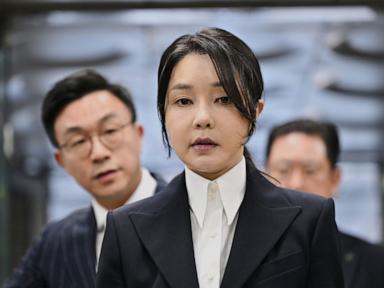
In a high-stakes legal twist, the Seoul High Court just trimmed former South Korean first lady Kim Keon Hee’s prison sentence from seven years down to five.
If you’ve been following the ongoing legal sagas surrounding ousted President Yoon Suk Yeol and his inner circle, this update isn't entirely shocking, but it is deeply revealing about how bribery and influence-peddling cases play out in South Korean judiciary halls.
The court threw out specific corruption charges, notably dropping the count involving a luxury watch allegedly given by businessman Seo Seong-bin. Seo had reportedly sought government backing for his robotic dogs business. While the lower Seoul Central District Court originally deemed the watch an illegal favor in June, appellate judges took a different stance. They ruled that prosecutors failed to establish a direct quid pro quo showing the timepiece was handed over explicitly in exchange for government favors.
That single evidentiary gap shaved two years off her sentence. Yet, the court didn't let Kim off easy. Judges upheld the bulk of her other bribery convictions, painting a vivid picture of political influence bartered for luxury items.
Inside the Bribes and Luxury Goods
Beyond the dropped watch charge, the appellate court left little room for doubt regarding Kim’s broader pattern of accepting lavish gifts in exchange for influence.
The charges upheld by the court detail an astounding collection of luxury items and backroom arrangements:
- A Van Cleef & Arpels necklace and fine jewelry: Valued at over 100 million won (roughly $73,500), given by Seohee Construction Chairman Lee Bong-kwan in 2022 to secure a coveted government post for his son-in-law.
- A Christian Dior handbag: Received from Pastor Choi Jae-yong, who sought entry into civilian diplomatic delegations and government-funded initiatives.
- A solid gold turtle: Accepted from Lee Bae-yong, former chief of the National Education Commission, who was lobbying to secure that high-level administrative appointment.
- Cash and political funding: Involving additional payments totaling tens of millions of won linked to various business entities seeking executive intervention.
This latest ruling isn't even Kim's only prison term. In a separate April appellate ruling, she received four years over charges involving illicit gifts from the Unification Church alongside a scheme to manipulate stock prices. She is currently appealing that decision as well.
Why the Prosecution Is Pushing Back
The reaction from special prosecutor Min Joong-ki’s legal team was immediate and vocal. Kim Han-soo, speaking on behalf of the investigative team, voiced sharp skepticism over the high court's reasoning regarding the luxury watch.
"It's difficult to accept that a first lady's acceptance of a watch worth tens of millions of won from a businessman with pending business matters does not constitute a crime," Kim told reporters outside the courthouse.
Special prosecutors plan to appeal the sentence reduction directly to the Supreme Court. Meanwhile, Kim's defense lawyers announced their own intent to push for a complete acquittal at the highest court, claiming prosecutors failed to prove guilt beyond a reasonable doubt across the remaining counts.
The Broader Fallout for South Korea
This sentence reduction happens against a backdrop of severe political upheaval in Seoul. Yoon Suk Yeol was removed from office in April 2025 following his ill-fated, brief attempt to impose martial law in December 2024. Arrested in July 2025, Yoon is currently fighting multiple legal battles of his own, including an appeal against a life sentence for rebellion.
Under current liberal President Lee Jae Myung—who won the emergency election following Yoon's removal—special prosecutors have been handed broad mandates to investigate every corner of the former administration.
For everyday South Koreans, Kim Keon Hee’s case represents much more than a collection of designer bags and gold trinkets. It highlights systemic issues surrounding political access, public trust, and the accountability of political elites.
If you want to track how this case develops further, keep an eye on two crucial upcoming milestones:
- The Supreme Court Filings: Watch whether the Supreme Court agrees to re-examine the evidentiary standard required for bribery under South Korea's Ethics Act.
- Yoon Suk Yeol’s Rebellion Appeal: The outcome of the former president's parallel trials will heavily dictate whether any executive pardons or clemency considerations ever surface down the line.
The saga is far from over, but for now, five years remains the benchmark sentence for the former first lady.