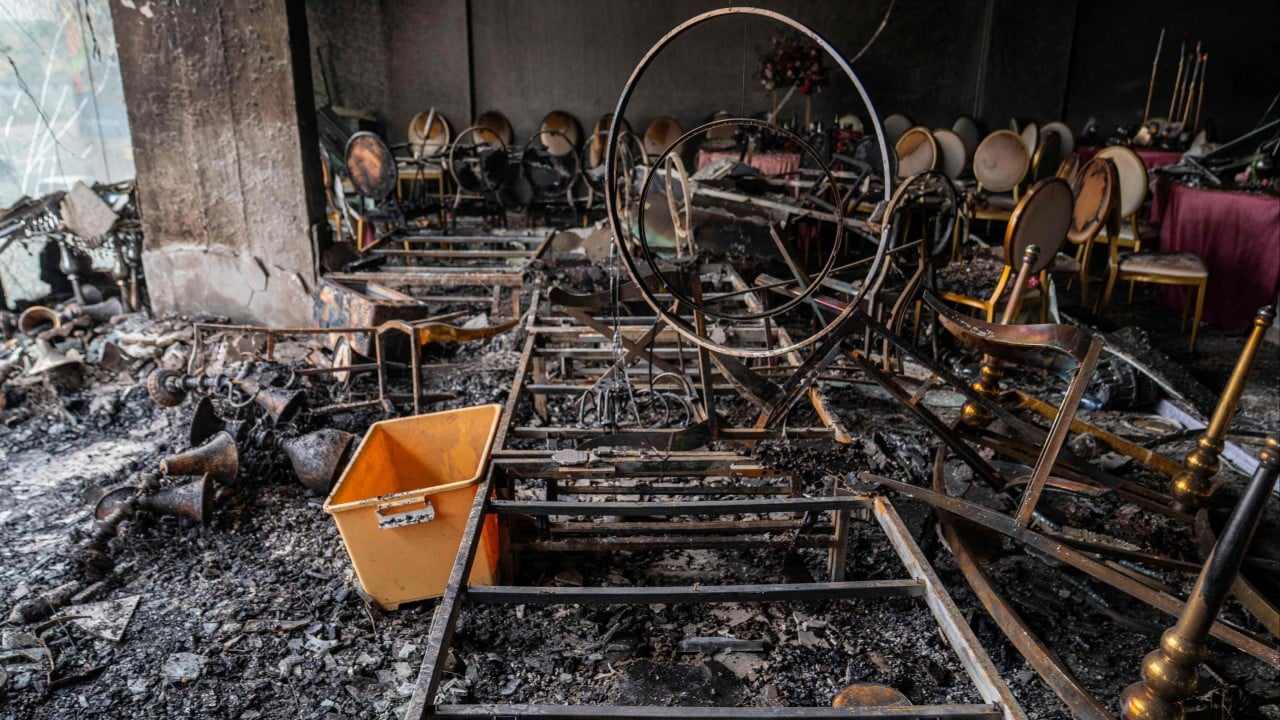
Celebrations are supposed to be safe spaces. Nobody walks into a wedding reception expecting a funeral. Yet, tragedy struck in Kinshasa when a joyful gathering turned into a nightmare. At least 22 people lost their lives in a sudden blaze at a wedding venue in the Democratic Republic of Congo's capital. Several others sustained injuries. It's a horrific reminder of how quickly negligence turns lethal.
The incident took place in the Lingwala commune. Flames swept through the building late Friday night and into Saturday morning. Panic set in immediately. Guests scrambled for safety. But the architecture itself fought against them.
The Trap of Poor Infrastructure
When panic meets bad design, disaster follows. Lingwala Mayor Norbert Mushinga inspected the charred remains and pointed out glaring safety failures. The venue lacked proper layout compliance. Hallways were far too narrow. The emergency exits were restricted or hard to reach.
Guests found themselves trapped. Everyone rushed toward safety at the same time. The restricted pathways created a deadly bottleneck.
This isn't an isolated problem. Across many rapidly growing urban centers, event spaces pop up without strict code enforcement. Owners convert ordinary buildings into party halls. They skip fire-resistant materials. They ignore capacity limits. They block exits to maximize seating.
It’s easy to blame the fire alone. But the fire didn't kill 22 people. The lack of infrastructure did.
What Authorities Are Doing Now
Governments often react only after bodies are counted. Interior Minister Jacquemain Shabani stepped in quickly following the tragedy. He directed provincial governors across the country to launch immediate safety inspections of all public event venues.
Orders were given to shut down non-compliant establishments. But policy shifts on paper don't instantly fix urban safety on the ground. Corruption, lax oversight, and economic pressures often mean venues operate in gray zones for years.
The Bigger Lesson for Event Safety
You might be wondering what this means for everyday people attending large gatherings. We tend to assume public venues have done their due diligence. We trust building owners. We trust local permits.
That trust is often misplaced.
If you're attending or planning a large event in densely populated urban venues, you need to look out for yourself. Check the layout.
- Locate every exit immediately upon arrival.
- Notice if hallways are narrow or cluttered with equipment.
- Avoid crowded spaces where crowd management looks chaotic or nonexistent.
- Trust your instincts. If a room feels like a structural trap, walk away.
Change won't happen overnight. Until authorities enforce strict structural standards and hold venue operators accountable, safety remains an individual responsibility. Do not wait for a tragedy to care about where you stand.
More on the Kinshasa wedding fire
This video provides visual coverage and details regarding the tragic wedding venue fire in Kinshasa, DR Congo.
http://googleusercontent.com/youtube_content/1