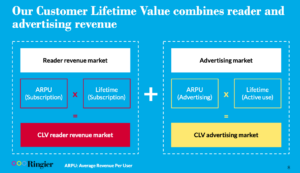
Most publishers are burning money by obsessing over raw pageviews. Anonymous visitors bounce, block ads, and offer zero deterministic data for advertisers. Ringier's recent push toward direct user authentication exposes a glaring truth. Logged-in users aren't just slightly better; they completely transform digital monetization economics.
The Anonymous Traffic Trap
You've seen the dashboard metrics soar. Traffic spikes, programmatic ad impressions multiply, yet revenue barely moves. Why? Because anonymous browsers are ghosts. You don't know their intent, their life stage, or their purchasing power. Advertisers know this, which is why programmatic CPMs for untracked cookies continue to slide.
Publishers relying entirely on open-web impressions are playing a rigged game against privacy regulations and ad blockers. Third-party cookies are dying out, and relying on probabilistic guesswork is a recipe for margin erosion.
What Ringier Got Right With First-Party Data
Ringier realized that survival requires owning the user relationship. By shifting focus toward authenticated ecosystems—moving away from fragmented shared setups like OneLog toward direct ownership—they locked down deterministic first-party data.
When a user logs in, the value proposition flips instantly:
- Deterministic targeting: Advertisers pay a massive premium for verified socio-demographic and intent data rather than guessed parameters.
- Higher engagement loops: Authenticated users consume more pages, return more frequently, and show significantly lower churn.
- Direct feedback loops: Editorial teams stop guessing what works and start analyzing actual behavior patterns tied to real profiles.
The Real Economics of Authentication
Let's look at the math without corporate spin. An anonymous reader is worth pennies per thousand impressions. A authenticated user with a verified profile unlocks rich contextual and behavioral segments.
Brands aren't buying banner space anymore. They're buying audience segments they can actually trust. When prediction accuracy checks on targeted segments hit high marks—like Ringier's Blick brand scoring over 92 points in independent checks—advertisers notice. They shift budgets from scattered programmatic networks to walled gardens of quality journalism.
How to Fix Your Publishing Strategy Now
Stop chasing empty clicks. If you're running a media property or content platform, take these immediate steps:
- Audit your registration walls: Make signing in frictionless by offering clean social logins and clear value exchanges.
- Bundle utility with content: Give users a reason to stay logged in beyond reading articles—save preferences, newsletters, or exclusive perks.
- Restructure your ad sales: Pitch verified first-party segments directly to brands instead of dumping inventory into low-yield ad exchanges.
The publishers winning right now aren't the ones with the highest traffic. They're the ones who actually know who is reading their work.