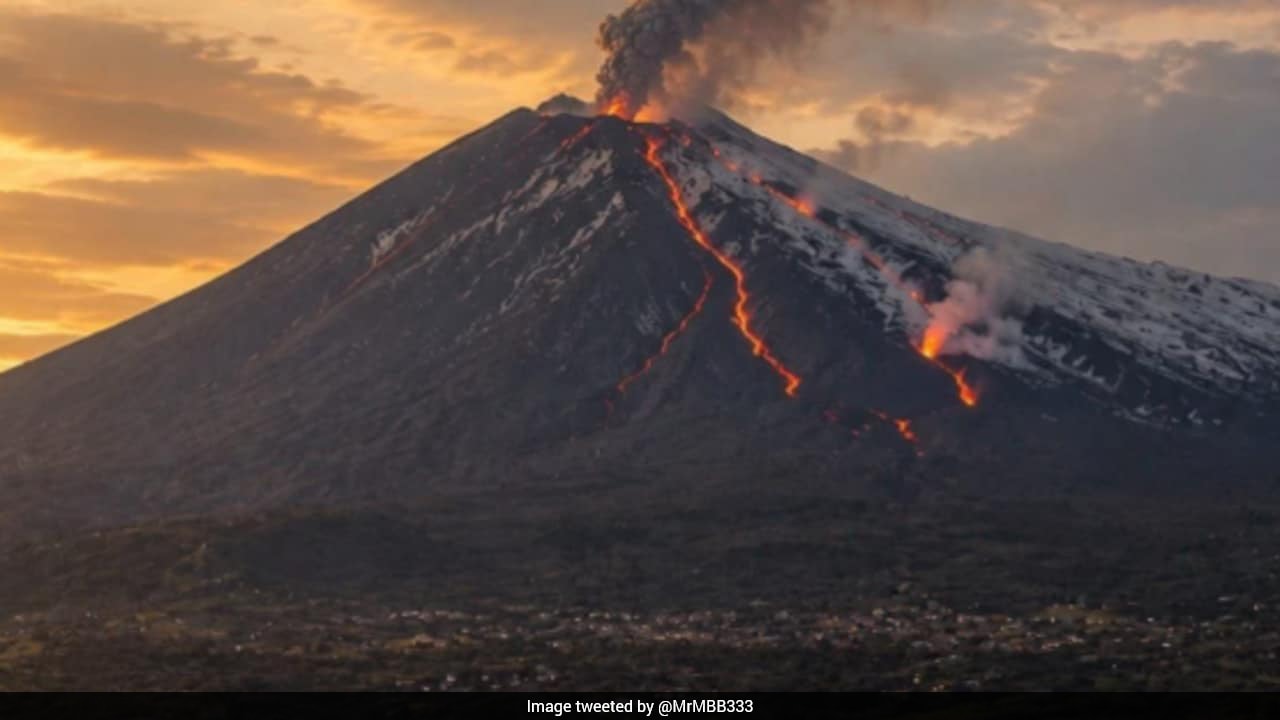
The allure of Mount Etna is undeniable. It’s Europe’s highest active volcano. It’s a literal mountain of fire sitting right on the coast of Sicily. Most people visit to take photos or hike the lower slopes. But when a 29-year-old American tourist recently died after being struck by lightning while attempting to reach the summit in a restricted zone, it served as a brutal reminder of a simple truth. Volcanoes aren't amusement parks. They don't care about your bucket list.
Honestly, people treat hiking Etna like a walk in a local city park. I’ve seen tourists head up there in sandals or light jackets, completely ignoring the fact that the summit sits nearly 3,350 meters above sea level. When you are on a volcano of that scale, the weather doesn't just change; it attacks.
The Reality Of High Mountain Weather
The mistake this tourist made was twofold. First, he was in a restricted area. Second, he was attempting to summit during a thunderstorm. The Civil Protection agency in Italy has been screaming this for years: the jump from sea level to high mountain climate happens fast.
You get warm, humid air coming in off the Mediterranean. It hits the cold, jagged slopes of the volcano. The result? Rapid condensation, massive clouds, and violent electrical storms. Above the tree line, there is zero cover. You become the tallest object on the mountain. In a lightning storm, that makes you a target.
It’s worth noting that lightning is statistically a bigger killer on Etna than actual volcanic activity. We fixate on the lava and the ash clouds because they make great news footage. But it’s the quiet, sudden atmospheric changes that actually end lives.
Why Restricted Zones Are Not Optional
We love to push boundaries. We see a sign that says "Do Not Enter" or "Access Forbidden" and we think it’s just bureaucratic red tape meant for the timid. That’s a dangerous mindset.
On an active volcano like Etna, restricted zones exist for three primary reasons:
- Structural instability: Parts of the mountain are basically piles of loose ash and unstable basalt. One wrong step can lead to a slip or a rockfall.
- Gas emissions: Vents often release toxic concentrations of sulfur dioxide and other gases that you can't always smell until your lungs start burning.
- Unpredictable eruption patterns: Even when the mountain seems "calm," seismic activity can shift rapidly.
When you ignore these restrictions, you aren’t just risking a fine. You are removing yourself from the reach of organized rescue. If you get hurt in a sanctioned area, helicopters can find you. If you go rogue in a high-risk zone during a storm, you’re basically on your own until the weather clears—which might be hours, or even days.
How To Actually Stay Safe On A Volcano
If you’re planning a trip to hike a volcanic peak—not just Etna, but any high-elevation volcano—do yourself a favor and follow these rules. Don’t gamble with nature.
Check The Forecast Twice
Don't look at the weather for Catania or the coastal towns. Look for the weather at the summit elevation. If the forecast mentions "thunderstorms" or "high wind," cancel the hike. It isn't worth dying for a view.
Hire A Local Guide
I know, guides are expensive. They also know the mountain’s moods better than any app. They know where the currents shift and where to hide if things go south. If you’re not an experienced mountaineer, you shouldn't be up there without a local professional. It’s that simple.
Respect The Gear
High-altitude hiking requires specialized equipment. You need high-traction boots, layered moisture-wicking clothing, and a shell that can actually handle sudden precipitation. If you're hiking in jeans and sneakers, you’ve already failed the safety check.
Know When To Turn Back
The summit will still be there next year. If you see dark clouds gathering or you notice the hair on your arms starting to stand up, get down immediately. Do not try to "tough it out" or "rush to the top" to grab one last photo.
Volcanic summits are harsh, unforgiving environments. They are not designed for human comfort. Respect the mountain’s power, heed the warnings of local authorities, and leave the heroics at home. If you want a view of the eruption, do it from the safety of the base or a designated viewing platform. Don't become a statistic.