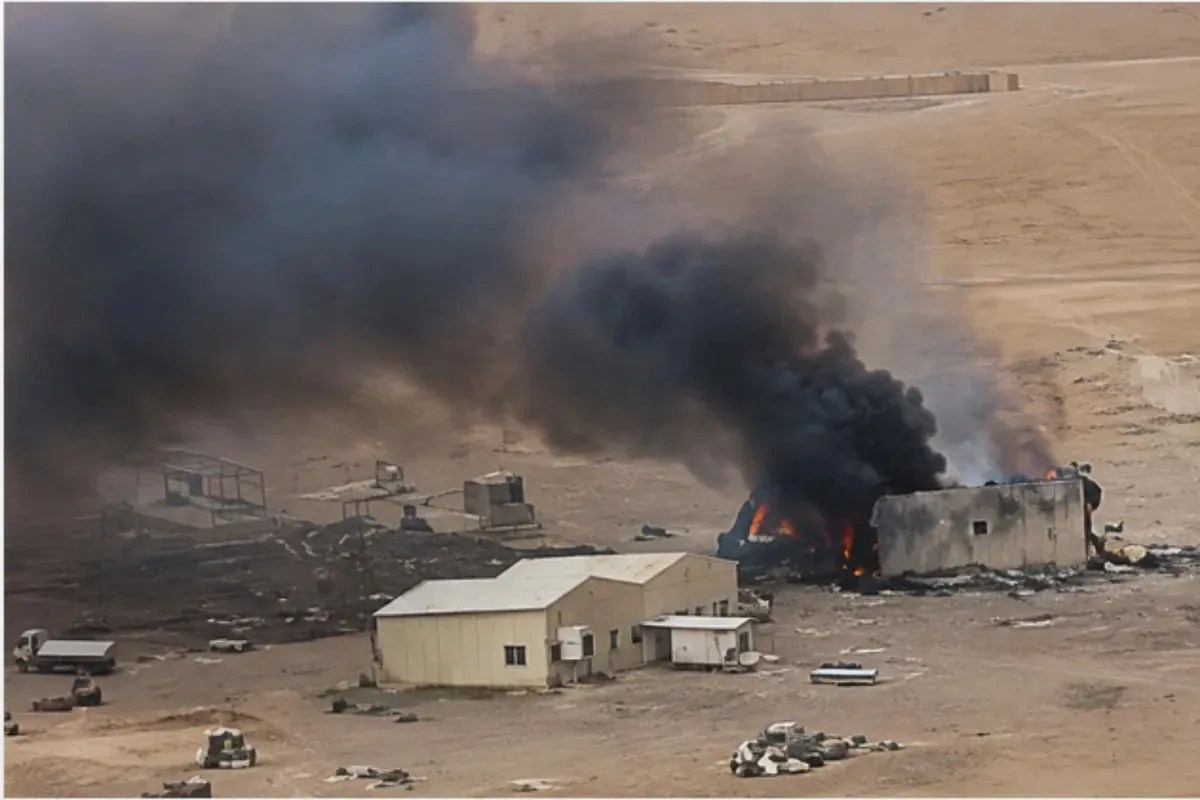
A Russian drone strike narrowly missed a high-profile diplomatic transport carrying former British Prime Minister Boris Johnson and former Swedish Prime Minister Carl Bildt. It happened just outside the Yahodyn railway station near the Ukraine-Poland border.
If you think this was just another routine explosion in a war zone, look closer. Ukraine's state rail operator, Ukrzaliznytsia, explicitly stated that the diplomatic carriage was the intended target. Only a dynamic schedule shift—pulling the train out ahead of time—prevented a catastrophic international incident.
Let's break down what actually happened, why international security protocols are changing overnight, and what this near miss reveals about the trajectory of the conflict.
The Anatomy of a Near Miss at Yahodyn Station
The timeline tells a chilling story. Johnson, Bildt, and various European security advisors had just wrapped up their attendance at the annual Yalta European Strategy conference in Kyiv. They boarded a specially chartered diplomatic train meant to whisk them back toward the Polish border.
Because Ukrainian intelligence and rail operators constantly monitor airspace threats, schedules are fluid. The diplomatic transport departed Yahodyn station ahead of its original schedule. Minutes later, a Russian drone slammed into the station infrastructure, heavily damaging a stationary locomotive sitting right where the VIP transport had been.
Former CIA Director David Petraeus was stuck at the very same station on a separate train when the explosion hit. He and his team had to evacuate as the aerial vehicle detonated nearby.
No casualties were recorded on the trains, largely thanks to swift evacuation protocols. But the margin for error was measured in minutes.
Why Targeting Railways is Putin s New Obsession
Railways are the literal lifeblood of Ukraine. With Ukrainian airspace effectively closed to commercial and civilian aviation since 2022, trains carry everything: foreign dignitaries, humanitarian aid, grain, munitions, and ordinary citizens fleeing the east.
Moscow knows this. Over the past few weeks, Russia has scaled up operations targeting logistics and civilian infrastructure hubs, hitting train stations in places like Lutsk and the Kyiv region.
The weekend of the Yahodyn attack saw an absolute surge in drone volume. The Ukrainian air force reported that Moscow launched over 800 drones in a massive single-weekend barrage. Utilizing rainy, overcast weather that makes visual tracking harder for interceptor pilots, Russia is probing deep into western Ukraine, testing the limits of western-supplied air defense systems near NATO's doorstep.
Hitting a train carrying western leaders isn't just a military statement. It's psychological warfare.
The Immediate Fallout and Western Reactions
Boris Johnson didn't mince words after the attack. Taking to social media platform X, he wrote: "I don't know what warped logic drove Putin to blow up a stationary Ukrainian locomotive on the Polish border this morning". He emphasized that this represents the daily reality ordinary Ukrainians face on civilian transport networks.
Carl Bildt shared video footage of the smoking wreckage near the Yahodyn-Dorohusk border crossing, praising the efficiency of the local safety and evacuation systems that kept casualties at zero.
Meanwhile, Polish authorities scrambled aircraft and placed air defenses on high alert. Prime Minister Donald Tusk called an emergency security meeting because a separate Russian drone struck a commercial truck less than a mile from sovereign Polish territory, forcing the temporary closure of the border checkpoint.
When a war zone's shrapnel lands a stone's throw from a NATO member state, the risk of miscalculation skyrockets.
What This Means for Future Diplomatic Missions
For months, foreign politicians, defense officials, and journalists have treated Ukraine's rail network as a relatively safe corridor. World leaders routinely take the overnight "Rail Force One" from Poland straight into Kyiv for photo ops and strategic talks.
That era of comfortable wartime tourism is effectively over.
Security protocols are tightening drastically. Future delegations will face longer delays, stricter radio silence, and even more unpredictable routing. Intelligence agencies will think twice before recommending rail transit through western hubs if automated drone swarms can pinpoint stationary targets this close to the European Union border.
Ukraine's leadership is using the incident to renew urgent demands. Ukrainian Foreign Minister Andriy Sybiha framed the strike as "Putin's terror knocking directly on the doors of the EU and NATO," urging allies to unleash harsher sanctions and deliver advanced air defense assets immediately.
The rails are still running, but the margin for survival has shrunk to almost nothing.