When a sudden roar echoes down a Himalayan valley, mountaineers and locals know seconds matter. That terrifying sound recently signaled catastrophe in north-central Nepal, where a massive landslide blocked the Budhi Gandaki River near Chumchure village. The resulting flash flood tore through valleys, destroying infrastructure, wiping out bridges, and cutting off isolated mountain communities during peak trekking season.
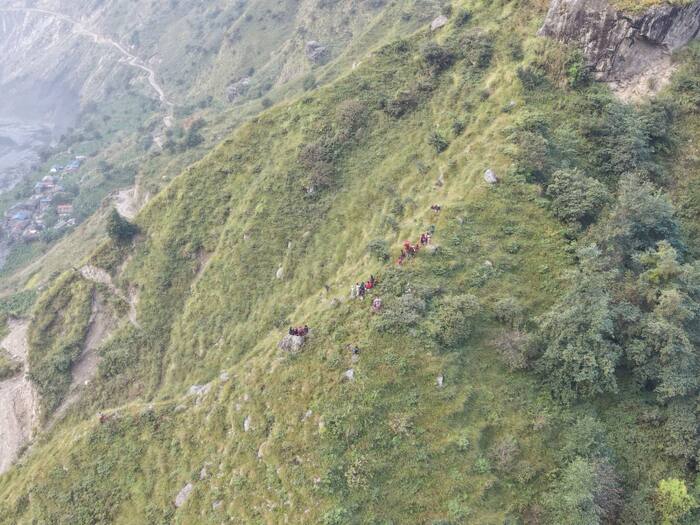
Nepalese military rescuers fought through severe weather to reach marooned survivors. Helicopters and ground crews pushed food, medical supplies, and tents into terrain completely severed by raging waters. While initial reports confirmed that an early warning system prevented mass casualties, at least five people remain missing, and hundreds more required emergency evacuation.
The Anatomy of a Himalayan Flash Flood
Natural disasters in the high mountains rarely happen in isolation. Sunday's disaster began when tons of earth gave way, creating a temporary barrier across the Budhi Gandaki River. When that natural dam burst, a wall of water rushed down steep ravines.
Dharmendra Kumar Mishra, the chief government administrator for the Gorkha district, coordinated immediate response efforts. Over 200 people were pulled to safety on Monday alone. The destruction left behind is staggering:
- Five crucial bridges wrecked or washed away.
- Construction sites for three local hydropower plants heavily damaged.
- Dozens of residential houses and hillside farms buried or swept downstream.
High winds later forced military pilots to temporarily ground rescue helicopters. Teams relied on trucks where roads remained passable, but for dozens of remote settlements, air transport is the only lifeline left.
Stranded Tourists and the Peak Trekking Season
October brings clear skies, crisp air, and thousands of international visitors to Nepal's famous mountain paths. This flash flood hit right in the heart of that rush.
Among those caught in the chaos was Chinese tourist Weiwei Zhao. She and a companion turned back early due to heavy snowfall, avoiding the worst of the rushing water. She described hearing a sound like an earthquake right before the muddy torrent tore through her path.
According to Nepal's National Disaster Risk Reduction and Management Authority, nine foreign nationals were among those airlifted out of danger zones. Local officials continue sweeping the valleys to account for independent trekkers who might be stranded without communication gear.
A Nation Still Healing from Earlier Tragedies
This latest crisis hits close to home for a country already exhausted by severe weather. Just months prior, a devastating flood swept through the Nepal-China border region, claiming over 1,400 lives and leaving thousands missing. Prime Minister Balendra Shah's administration had only recently wound down emergency search operations in early October to focus on rebuilding infrastructure.
Mountain infrastructure remains fragile. Steep topography, melting glaciers, and shifting monsoon patterns make regions like Gorkha perpetual hazard zones.
What Happens Next on the Ground
Emergency responders face a grueling weeks-long recovery window before winter weather closes high-altitude passes entirely.
Military engineers are currently prioritizing temporary footbridges to reconnect isolated agricultural hamlets. Meanwhile, disaster management authorities are urging all trekking agencies to check real-time river gauges and weather bulletins before sending groups up narrow river corridors.
Relief distribution will continue via air drop until heavy machinery can clear blocked mountain passes. If you are planning high-altitude travel in the region, monitor local advisories closely and register your itinerary with local authorities.