Hundreds of workers remain trapped underground in Nepal, and the rescue operations are moving at a crawl. Why? Heavy mud, trapped water, and blocked hydropower tunnels are making it nearly impossible for heavy machinery to get inside.
Prime Minister Balendra Shah addressed parliament to explain the grim reality on the ground. Floods across the Bhote Koshi-Trishuli corridor have pumped massive walls of mud, silt, and debris directly into vital hydropower structures. With the overall disaster death toll topping 1,100 and nearly 4,000 people missing, time is running out.
Inside the Flooded Corridors
Engineering underground rescue work is a nightmare under the best conditions. When those tunnels fill with wet, heavy soil, they turn into concrete-like traps.
Consider the scale of the crisis. At the Upper Trishuli-1 project, more than 557 people are still missing. Over at the 60-megawatt Upper Trishuli-3A project, 42 individuals are believed trapped inside an underground powerhouse.
Rescuers can't just send crews rushing in with shovels. The structural integrity of these tunnels is compromised. The space is too tight for large excavators, and the mud has to dry and settle enough to prevent secondary collapses. Prime Minister Shah noted that teams are waiting on weather improvements so conditions stabilize enough for safe entry.
Bureaucratic Friction and Technical Blind Spots
Families are furious about the slow pace, and they have every right to be. Critical days ticked by before government officials actually let local hydropower experts join the operational response.
Developers like Giriraj Adhikari, managing director of Upper Trishuli-1, pointed out that private engineering teams should have been deployed on day one. Instead, red tape kept industry experts out of the loop until days into the crisis. At the Langtang Khola site, promoter Vijay Mohan Bhattarai noted that only a single company representative was allowed on location initially.
When seconds matter, keeping the people who built and understand the infrastructure out of the command center is a catastrophic mistake.
The Grim Aftermath and Accountability
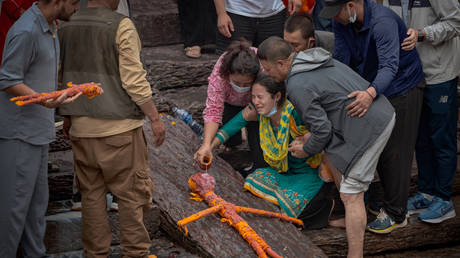
The humanitarian toll is staggering. Morgues across the Himalayan nation hold a total capacity of just 350 bodies. Because that limit was blown past instantly, authorities are forced to perform mass burials for unidentified victims. They are collecting DNA samples and adding identification markers first, but families are left holding symbolic funerals because they may never recover the actual remains.
Meanwhile, the government is looking outward for accountability. Foreign Minister Shisir Khanal has approached the UN-backed Fund for Responding to Loss and Damage, demanding financial assistance. He called the aid a moral liability rather than charity. Nepal generated virtually none of the emissions driving these catastrophic climate shifts, yet it's paying the ultimate price.
The recovery will take months. The immediate focus remains on clearing the sludge from those subterranean networks, but the hard questions about emergency response protocols and infrastructure safety in a changing climate are just beginning.