We tend to think of the Netherlands as a giant sponge that has spent centuries winning a war against drowning. The entire national identity rests on keeping the North Sea at bay, engineering towering dikes, and reclaiming fertile polders from the waves. For generations, the core philosophy was simple: you manage water by draining it, moving it, and fighting off floods.
That mindset is completely breaking down.
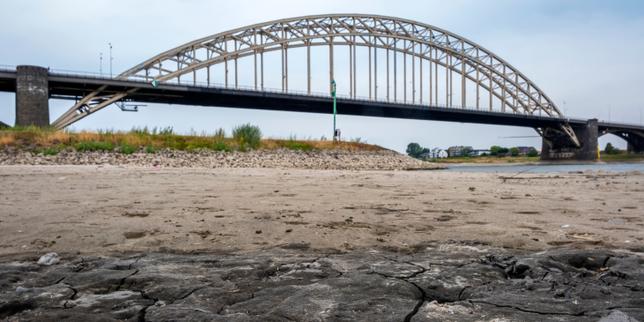
When you look closely at recent climate shocks across Europe, a bitter paradox emerges. The nation famous for having too much water is suddenly running dry. Prolonged dry spells and shrinking river discharges from the Rhine are exposing a profound vulnerability that traditional Dutch water management was never built to handle. You're watching a masterclass in adapting to the wrong crisis.
The Irony of the Polder Model Under Siege
For decades, Dutch water governance operated like an immaculate machine. Regional water boards, or waterschappen, focused almost exclusively on drainage and flood protection. If water levels rose too high, pumps kicked in. If fields grew soggy, intricate canal networks channeled the moisture away toward the sea.
Nobody planned for a scenario where the canals run empty.
When summer heatwaves bake Western Europe, the Rhine and Meuse rivers shrink upstream in Germany and Switzerland. Less water flows across the Dutch border. At the same time, falling river levels allow saltwater from the North Sea to push further inland up the estuaries, contaminating agricultural soil and drinking water reserves with salt. Farmers in provinces like Zeeland and South Holland are finding out the hard way that saline groundwater destroys crops just as effectively as a flood.
Why Traditional Engineering Is Failing
You can't build a higher dike to stop a drought. That is the fundamental realization shaking Dutch policymakers right now. The infrastructure that made the Netherlands an economic powerhouse is optimized for a one-way flow: out.
Reversing that flow requires an entirely different playbook. Water managers are forced to ration supplies, close locks to keep saltwater out, and desperately hoard freshwater in shallow inland lakes like IJsselmeer. But storing water takes space—a luxury in one of the most densely populated nations on earth.
- Agricultural irrigation gets restricted just as crops need moisture most.
- Shipping lanes on the Rhine shallow out, forcing cargo vessels to carry half-loads and disrupting supply chains into Central Europe.
- Groundwater levels drop so severely that wooden pile foundations beneath historic inner-city buildings begin to rot as oxygen hits wood that was submerged for centuries.
The Cost of Ignoring Soil Subsidence
The crisis goes deeper than parched pastures. Centuries of artificial drainage have caused the nation's peat soils to oxidize and compact. As the land sinks relative to sea level, the hydrological balance becomes exponentially harder to maintain.
When heavy rains finally arrive after a prolonged dry period, baked clay soils can't absorb the moisture fast enough. Instead of soaking into the aquifers, rainwater runs off rapidly, causing flash urban flooding while deeper layers remain bone dry. It is a terrifying double whammy: dry topsoil cracking open while low-lying urban areas struggle with sudden localized deluges.
Rethinking the Future of European Water
The Dutch situation offers a sobering lesson for the rest of the continent. Climate volatility doesn't care about your historical strengths. A country that wrote the textbook on flood defense is now scrambling to write a new one on water retention.
Fixing this isn't just about technical tweaks. It requires giving land back to nature, allowing rivers to meander naturally, and accepting that fighting every natural fluctuation is a losing battle. The illusion of absolute control is fading fast. If the nation of water can run dry, nowhere is safe from the new climatic reality.