Entire communities don't just vanish overnight; they are systematically erased by bulldozers, explosives, and changing military maps. If you look at southern Lebanon right now, the physical geography you studied on maps a year ago is gone. New boundaries have been carved out by force, shifting lines of control that dictate who can walk down a street, who can farm their ancestral land, and who will never see their home again.
Months of heavy bombardment followed by post-ceasefire demolitions have left roughly six percent of Lebanon under direct Israeli military control. What used to be bustling border towns are now silent, flattened ghost towns.
Inside the Occupied Zone
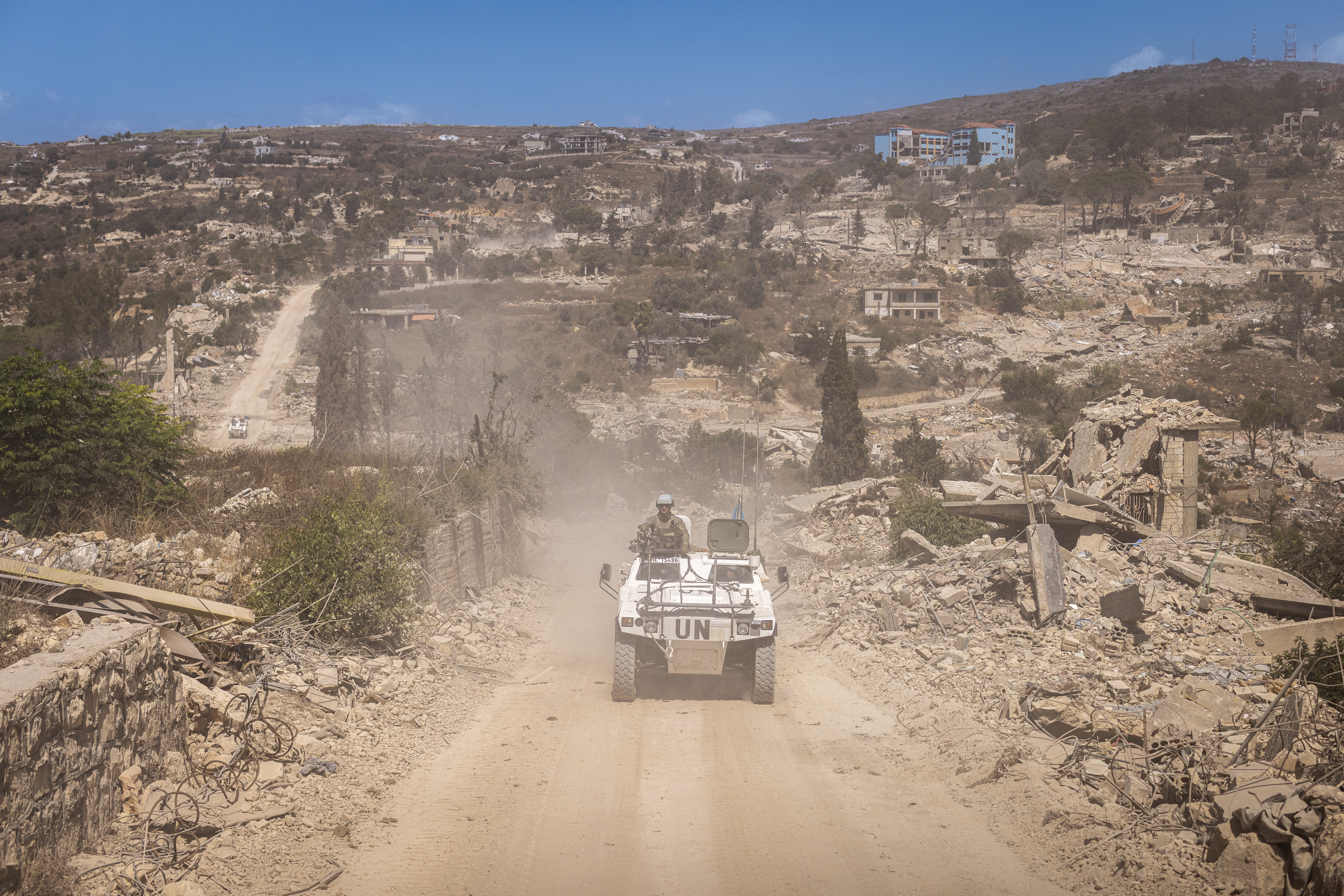
When you ride with United Nations peacekeepers patrolling these newly minted frontlines, the scale of destruction hits you immediately. Finnish and French quick reaction forces navigate twisted, cratered paths that heavy military traffic has beaten down. They check for unexploded ordnance and roadside bombs just to secure a basic route.
The visual markers of a foreign occupation are unmistakable. Hebrew road signs have appeared. New military flags fly over rubble. Entire villages have been pushed into piles of concrete by heavy machinery.
The Israeli military defends these actions as necessary security measures against Hezbollah. Yet, the execution tells a different story about permanence. More than twenty thousand homes have been leveled, often during lulls when ceasefires were supposed to be holding.
The Shifting Role of UNIFIL
For nearly fifty years, the United Nations Interim Force in Lebanon has maintained a presence along this border. Today, that mission faces an expiration date. Pressured by geopolitical shifts and mounting restrictions, UNIFIL’s long-term viability is collapsing.
Peacekeepers spend their days documenting craters, artillery strikes, and drone activity overhead, relaying data back to headquarters and the Lebanese Armed Forces. But their freedom of movement has been heavily contested. While some eastern sectors have seen tentative reopenings after intense negotiations, the broader reality is that peacekeepers are operating on borrowed time before their mandate dissolves entirely.
Why the Displaced Cannot Return
More than 300,000 people have been driven out of southern Lebanon. They are stuck in limbo. Returning home isn't just a matter of packing a bag; there is literally nothing left to return to. Water grids, electricity networks, and residential blocks have been reduced to dust.
Even outside the immediate zone of occupation, the threat of drone strikes and lingering artillery keeps people away. Farmers face a secondary crisis: chemical contamination and heavy metals seeping into the soil from heavy munitions, threatening the agricultural backbone of the region.
The new lines of southern Lebanon are not temporary ceasefire markers. They are permanent scars reshaping the map of the Middle East, leaving a trail of displaced families and shattered infrastructure in their wake.
Scientists studying environmental fallout of Israeli strikes ...
This short video highlights how the environmental damage and soil contamination in southern Lebanon add a lasting layer of crisis to the physical destruction of the region.
http://googleusercontent.com/youtube_content/1