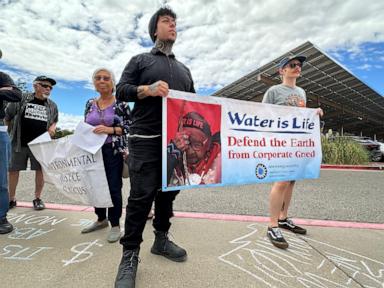
You wake up one morning to the heavy hum of construction equipment down the street. Months later, you realize a massive facility packed with thousands of servers and backup diesel generators is moving into your backyard. You never got a notice. You never attended a hearing. Under an ongoing regulatory push by the Environmental Protection Agency, this nightmare scenario might soon become standard practice for communities across America.
The agency is moving forward with a proposal to eliminate mandatory federal requirements for public notice and comment periods on minor air pollution permits. While the rule itself applies broadly to smaller industrial sources like auto repair shops, landfills, and laundromats, its implications for the booming artificial intelligence and cloud computing sector are massive. Critics, industry watchers, and former regulators are sounding alarms. They argue that stripping away the federal baseline for public participation strips local residents of their right to know what is being built right next to them.
What the EPA Proposal Actually Changes
Let's look at the mechanics of the rule. Under the existing framework of the Clean Air Act, the federal government mandates a baseline public notification process for minor New Source Review (NSR) air pollution permits. States must give residents a chance to look at what facilities want to emit and offer feedback before permits are issued.
The proposed change eliminates that federal mandate entirely. Instead, individual states get to decide how or if they want to run public participation programs for minor pollution sources.
EPA Administrator Lee Zeldin defends the plan as an effort to cut red tape, speed up energy development, and advance state-level autonomy. The agency argues that the Clean Air Act doesn't strictly require these federal notice rules for minor sources, and that state regulators know best how to handle their own permits.
Agency spokespeople have pushed back hard against claims that the rule is designed to hide data center construction. They note that the proposal doesn't single out data centers or alter underlying federal emission standards. Facilities still have to meet legal air quality targets, regardless of whether a public hearing happens.
The Real Problem With Data Center Secrecy
If the emission standards stay the same, why are local communities and environmental lawyers panicking? The answer comes down to enforcement, oversight, and geography.
Many states—particularly across the South and the Midwest—maintain minimal public notice requirements for minor sources unless federal rules force their hand. If the federal floor disappears, residents in those states could find themselves completely in the dark. Companies seeking to bypass local pushback can look for jurisdictions with lax notification standards to fast-track their infrastructure.
Mike Koerber, a former deputy director of the EPA's air quality office, points out that this creates a fragmented landscape. Citizens in one state will have full transparency and oversight, while residents next door might watch massive computing complexes and their associated onsite generators pop up without a single public meeting or warning.
AI data centers aren't passive office buildings. They require extraordinary amounts of electricity, often driving the installation of heavy onsite backup generators powered by fossil fuels. These engines pump out nitrogen oxide, carbon monoxide, and other pollutants that contribute to local smog and ozone formation. They also draw immense volumes of water for cooling and create persistent low-frequency noise.
When you remove public notice requirements, you remove the primary mechanism for catching errors in a facility's math. Independent watchdogs and local residents often spot flaws in emissions calculations or point out unmonitored local impacts that busy state bureaucrats miss. Without that local friction, permits breeze through quietly.
The Clash Over Artificial Intelligence Infrastructure
This regulatory battle sits right at the intersection of a massive national priority and intense local backlash. President Donald Trump and other prominent political figures have championed data centers as vital weapons in the global race for artificial intelligence dominance. Proponents argue that communities that block or slow down these projects will fall behind economically. They point to local tax revenues that fund public schools and ease the burden on local homeowners.
On the other side, voters are growing increasingly skeptical. Recent polling shows many Americans believe the rapid expansion of artificial intelligence will do more harm than good to the economy and the environment. Local political campaigns across the country are already pivoting around data center proliferation, turning zoning boards and county commission seats into frontline battlegrounds.
The EPA's plan to give states absolute control over minor source transparency feeds directly into this tension. Industry advocates welcome the predictability and speed. They argue that mandatory public comment periods are frequently weaponized by opponents to stall projects indefinitely through litigation and procedural delays.
Navigating the Shifting Permitting Landscape
If you live in a growing tech hub or a rural county targeted for new infrastructure, you can't rely on federal safety nets to keep you informed anymore. The burden of tracking industrial expansion is shifting squarely to local watchdogs.
Here is what you need to do if you want to stay ahead of development in your area:
- Monitor state environmental agency calendars directly. Because state rules vary widely now, check your local department of environmental protection or equivalent state agency website for weekly public notice bulletins regarding minor air permits.
- Engage with local zoning and planning boards early. Data centers require local land use approvals, rezoning, and utility connections long before air permits are finalized. Pay attention to local municipal meeting agendas.
- Form or join regional coalitions. Groups like the Southern Environmental Law Center and the Environmental Protection Network track these regulatory shifts closely and provide resources for communities trying to exercise oversight.
The federal government is stepping back from its role as an arbiter of local transparency. Staying informed now requires vigilance, local participation, and a refusal to be left in the dark.