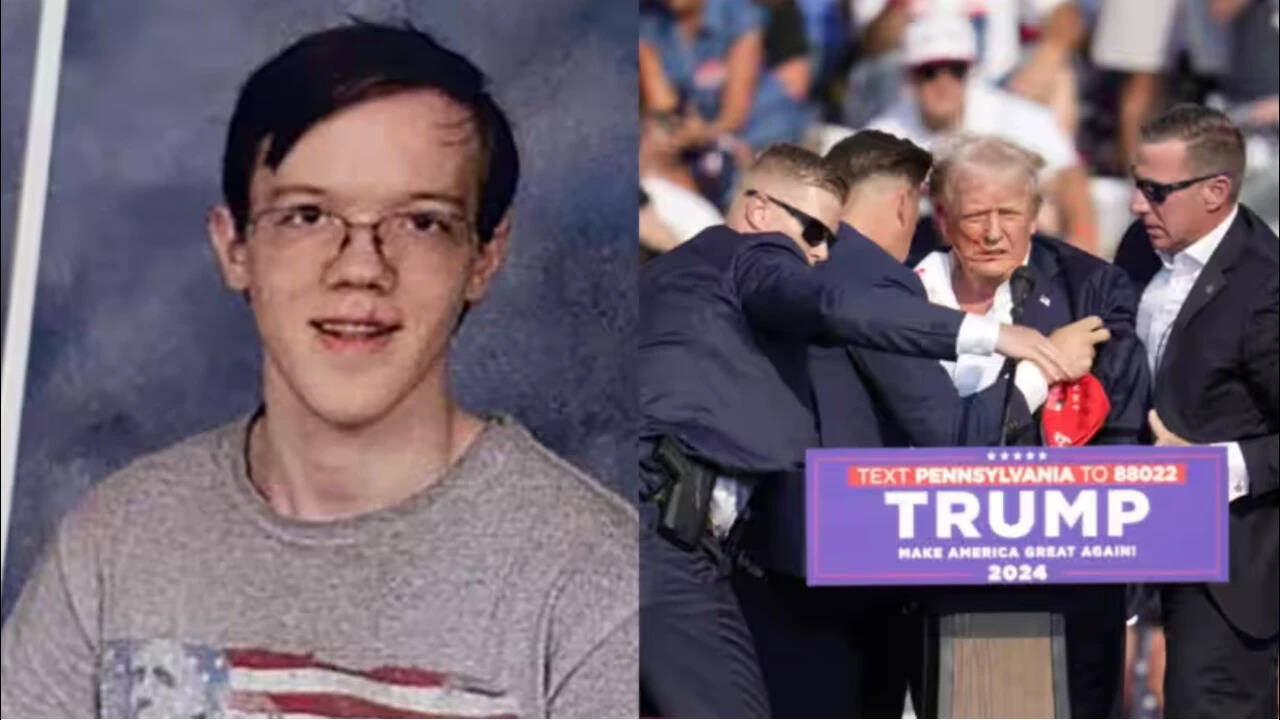
We want simple explanations for horrifying violence. We want a neat motive, a manifesto, or a clear ideological line drawn in the sand. But real life rarely cooperates. Newly released FBI interview files concerning Thomas Matthew Crooks paint a picture that is far more unsettling than any tidy political profile. It describes an isolated, digitally absorbed ghost who slipped through every crack imaginable.
When investigators spoke to the shooter's father, Matthew Crooks, they didn't unearth a radicalized political fanatic shouting slogans. Instead, they revealed a young man who was practically invisible from day one. "When Thomas was born he did not scream and he was always quiet from that point on," his father told federal agents. That chilling detail sets the tone for a file full of quiet detachment, technical obsession, and emotional vacuum.
If you are trying to understand how a 20-year-old managed to pull off an assassination attempt on Donald Trump at a July 2024 campaign rally in Butler, Pennsylvania, looking at his upbringing provides no comforting answers. It only raises more difficult questions about modern alienation.
The Quiet Loneliness of Thomas Matthew Crooks
Growing up, Crooks didn't fit standard social boxes. His father noted they never formed a strong bond. He rarely laughed, showed very little emotion, and talked to himself frequently as he aged. Teachers struggled to communicate with him in high school, and his social isolation deepened year after year.
Yet, he wasn't failing. He performed well academically because he drove himself hard out of a fear of failing to get into college. He toyed with different futures, even looking into nuclear submarines in the military simply because he thought the job looked cool. There was no grand ambition here. There was only drifting competence paired with intense detachment.
People who knew him—or rather, people who shared space with him—saw a quiet kid who kept to himself. But behind closed doors, a very different kind of domestic life was unfolding. One defined by screens, tools, and a growing obsession with ballistics.
From Clumsy Shots to Technical Precision
Crooks didn't pick up a rifle and instantly hit targets. When he first started visiting a local gun club around the time of the pandemic, his father actually considered him a poor shot. He couldn't even hit the paper at first.
Patience changed that. He spent years practicing, experimenting with long-range shooting, and studying how to zero prism sights. His technical curiosity wasn't limited to traditional firearms. He built a gaming computer, tinkered with a Raspberry Pi to set up a security camera, and even experimented with a 3D printer. He tried manufacturing a Glock 19 frame out of carbon-fiber plastic using household tools.
When he began buying firearm components online, he grew paranoid about security. He used aliases like "Bob Dole" for deliveries because his father's bank account had once been compromised by fraudulent charges. He thought fake names would keep his purchases untraceable, completely ignoring the fact that the underlying financial accounts remained tied to him. He introduced his father to encrypted email services and privacy tools, living a life increasingly partitioned behind digital walls.
The Political Maze That Led Nowhere
Investigators tore through his digital footprint looking for a definitive political trigger, but the documents show a fragmented ideology.
One person interviewed by the FBI mentioned that Crooks discussed various political figures, including Donald Trump, Joe Biden, and Marco Rubio. His father stated that Crooks identified broadly as a Republican who opposed welfare programs and "woke" culture, but he didn't deeply immerse himself in party politics. He preferred mocking politicians at a distance.
At the same time, records showed a $15 donation to the Progressive Turnout Project in 2021—a detail that surprised his family. He didn't believe the 2020 election was stolen and was reportedly shocked by the January 6 Capitol riot.
Ultimately, the FBI files refuse to offer a neat political justification for why he opened fire from a rooftop that July afternoon, grazing Trump, killing a rally attendee, and wounding two others before Secret Service agents killed him seconds later. His family was left staring at the same blank wall investigators hit.
What This Means for Spotting Future Threats
The real takeaway from these newly unsealed documents isn't about political parties or security failures at the rally site. It is about the terrifying reality of invisible radicalization.
When someone retreats entirely inward, stops talking to their family, spends years mastering long-range shooting alone in a basement, and funnels their entire reality into the internet, warning signs stop looking like traditional threats. They look like a quiet kid who is just a bit weird.
If we want to prevent future tragedies, we have to look past political labels and start paying attention to profound social isolation. Pay attention to the quiet ones who disappear behind screens. Sometimes, the most dangerous people are the ones who make no sound at all until it is far too late.


