If you think the real von Trapp family climbed over the Alps into Switzerland with backpacks and guitars, you've fallen for Hollywood's favorite fabrication. The truth is far more mundane, yet infinitely more interesting. They simply walked out the back door of their Austrian villa, crossed the train tracks, and boarded a regular passenger train to Italy.
That friction between cinematic myth and historical reality sits at the core of a brand-new cultural attraction in Austria. The Sound of Music Salzburg museum just opened its doors on the historic grounds of Hellbrunn Palace, right where parts of the beloved 1965 film were shot. It is a long-overdue permanent home for an Oscar-winning global phenomenon that attracts hundreds of thousands of annual visitors to Salzburg.
Let's look at what this new exhibition actually gets right, and why separating the real family from Julie Andrews' silver-screen counterpart matters.
Busting the Myths Behind the Captain and the Kids
Hollywood needed a strict, cold-hearted patriarch to give Christopher Plummer's character an emotional arc. The real Georg von Trapp was nothing like that. According to museum archives and family history, the decorated Austro-Hungarian submarine commander was an affectionate, deeply burdened father who cared profoundly for his children. He didn't rule his home like a naval vessel.
Then there are the children themselves. If you ask Elisabeth von Trapp—granddaughter of Georg and Agathe, who frequently guides tours in Salzburg—she will gladly set the record straight on her own bloodline. Her father, Werner von Trapp, was actually depicted in the film under the fictionalized name Kurt.
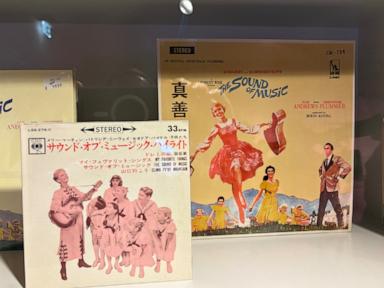
The new museum houses nearly 450 original objects, including rare costumes, set props, vintage cinema posters, and historical sound recordings. It doesn't try to hide the fiction. Instead, it places the Rodgers & Broadway musical and the silver-screen adaptation directly alongside the actual archives of the Trapp Family Singers.
Inside the World's Only 360-Degree Gazebo Experience
You can't talk about the film without talking about the glass pavilion where Liesl and Rolf sing "Sixteen Going on Seventeen." While the original, historic gazebo sits nearby in the Hellbrunn park as a guarded landmark, the museum has constructed something entirely unique for visitors.
They built a true-to-scale replica of the gazebo attached to an immersive 360-degree cinematic projection room. You step inside, and the walls vanish. You're suddenly standing inside a hyper-realistic 3D recreation of that iconic cinematic scene. It is a sensory trip that avoids the cheap tourist-trap feel you might expect from a pop-culture museum.
The Darker Chapter Hollywood Left Out
The cinematic escape happens against a backdrop of sweeping strings and picturesque mountain vistas. Real life was darker. After the family fled Austria, their former villa in Salzburg's Aigen district fell into the hands of high-ranking Nazi leadership, serving as a summer residence for Heinrich Himmler during World War II.
Even Julie Andrews noted an unsettling, heavy atmosphere when she visited the property years later, remarking on the dark energy permeating those walls. The museum gives this historical context the weight it deserves, reminding fans that a feel-good musical was born from a very real European tragedy.
What You Need to Know Before You Go
If you are planning a trip to Austria to check out the exhibition, manage your expectations on logistics. The museum is located in a beautifully restored 17th-century baroque building right at the entrance to Fürstenallee near Hellbrunn Palace.
Keep these practical points in mind:
- Standard admission gives you full access to the 450-piece artifact collection and the 360-degree gazebo room.
- Standard city sightseeing bus passes or regular tour packages often exclude museum entry, so you may need to book your time slot separately.
- Plan for about two hours if you want to properly read the historical documents alongside the film memorabilia without rushing.
Stop treating the movie as a documentary. Go see the museum, look at the real history of a displaced family trying to survive, and appreciate how Hollywood managed to turn real trauma into cinematic gold.