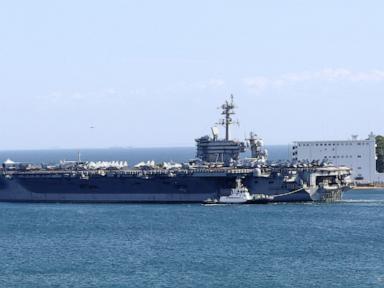
Tens of thousands of troops are currently mobilizing across the western Pacific for a massive display of allied combat readiness. Japan and the United States just launched their latest round of joint military exercises, and the focus is squarely on defending remote island chains. If you've been following security trends in East Asia, you know this isn't just routine training. It's a clear signal sent straight to Beijing as regional friction intensifies.
Let's look at what's actually happening on the ground and why military planners are shifting focus so aggressively toward the southwestern island chain.
Inside the Keen Sword Exercises
The latest iteration of these bilateral drills involves roughly 56,000 personnel—about 45,000 from Japan's Self-Defense Forces and 12,000 from the U.S. military. They aren't just playing war games in safe, central zones. Troops are operating right on Japan's fragile outer frontier, including places like Yonaguni Island, which sits just miles from Taiwan.
What Makes This Deployment Different
You're seeing advanced hardware move into positions that would have seemed unthinkable a decade ago. For the first time during these drills, American mobile rocket systems like the Navy and Marine Expeditionary Ship Interdiction System (NMESIS) are heading directly to Yonaguni. Meanwhile, Japanese forces are deploying new long-range anti-ship capabilities, signaling a major doctrine shift away from purely defensive posturing toward active deterrence.
On Monday, troops kicked off live-fire drills on Oki-Daito, a small uninhabited island southeast of Okinawa. The message is unmistakable. Both nations are preparing for worst-case amphibious scenarios where securing isolated bits of land determines who controls the maritime approaches.
The Strategic Reality Behind the Island Strategy
Why the intense focus on tiny, isolated islands? Look at a map. Japan's southwestern chain acts as a choke point, often referred to by military strategists as the first island chain. If a conflict breaks out over Taiwan or shipping lanes in the South China Sea, controlling these islands means controlling access to the open Pacific.
Tokyo views China's rapidly expanding naval and air patrols as an existential threat. In response, Japan has spent the last few years fortifying these remote outposts with interceptor batteries, radar installations, and missile units. They aren't waiting for a crisis to start building infrastructure; they are hardening the frontier today.
Local Pushback and Diplomatic Friction
Of course, stationing thousands of heavily armed troops and advanced missile batteries on peaceful fishing islands comes with baggage. Local residents and municipal leaders aren't thrilled about turning their backyards into potential frontlines.
When the aircraft carrier USS Theodore Roosevelt recently docked in Yokosuka before heading out to support the exercises, local officials immediately voiced concerns about safety protocols and community impact. When you scale up military readiness this fast, friction with local civilian populations is inevitable.
What Comes Next for the Alliance
The drills will run for over a week, incorporating forces from several partner nations alongside the U.S. and Japan. Expect more sharp warnings from Beijing, which routinely condemns these exercises as provocative moves that destabilize the region.
The alliance is betting that visible, high-stakes preparation is the only way to deter miscalculation. As long as regional tensions keep climbing, expect these remote islands to remain the most heavily contested real estate in the Pacific. Keep an eye on how upcoming defense budgets allocate resources for further island fortifications, because this buildup is only getting started.
Japan, US launch major military drills with new long-range missiles
This article provides an in-depth look at the 2026 Keen Sword military exercises involving 56,000 U.S. and Japanese troops, detailing the deployment of advanced long-range missile systems to remote islands amid rising regional tensions.