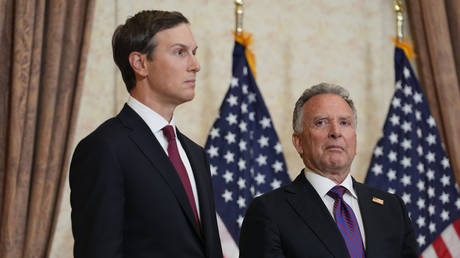
Diplomacy moves fast when high-stakes pressure is applied behind closed doors. US special envoy Steve Witkoff just announced that American officials will mediate a fresh round of trilateral talks between delegations from Ukraine and Russia. The upcoming meetings are scheduled to take place in Abu Dhabi, marking a critical turning point in Washington's aggressive push to jumpstart stalled peace efforts.
If you are wondering why this specific announcement matters right now, you are looking at a fundamental shift in how the White House handles negotiations. Instead of letting European capitals lead endless diplomatic loops, Washington is stepping directly into the middle of the arena.
What Is Actually on the Table in Abu Dhabi
The upcoming trilateral sessions will not just be polite photo ops. According to diplomatic updates, the agenda focuses tightly on concrete mechanics: post-war security arrangements, localized de-escalation, urgent humanitarian efforts, and structured pathways toward an eventual ceasefire.
You have to look at the sequence of events leading up to this moment to understand the momentum. Weeks prior, Witkoff met face-to-face with Russian leadership in a lengthy session that yielded updated proposals. Following those discussions, American officials coordinated closely with regional partners and plan to brief European and NATO counterparts in Brussels before the Abu Dhabi delegations sit down.
The main objective is simple: establish working-level negotiations that bypass rigid public posturing. Both Kyiv and Moscow remain drastically split on fundamental territorial and political terms, but intense economic and diplomatic leverage from Washington is forcing both sides to keep talking.
Why Skepticism Remains Fully Justified
Anyone following this conflict for years knows that peace announcements are cheap. US Secretary of State Marco Rubio noted publicly that nobody should assume a final negotiated settlement is guaranteed right around the corner, admitting honestly that officials are still testing whether a lasting deal is even achievable.
Trust is non-existent between the primary combatants. Ukraine continues defending its territory while executing strategic counter-measures, and Russia maintains heavy military pressure across the frontline. When Witkoff sits down with both delegations in the United Arab Emirates, he will encounter two deeply entrenched positions.
Yet, hosting the talks in a neutral Middle Eastern hub like Abu Dhabi changes the psychological dynamic. It removes domestic European and direct North Atlantic tension from the immediate room, giving diplomats space to talk logistics rather than shouting slogans for domestic TV networks.
What to Watch Next
Keep your eyes on the ground developments rather than political speeches. If the Abu Dhabi sessions produce actual frameworks for local ceasefires—similar to previous localized truces—it signals that the working-level mechanics are functioning. If the talks break down over basic security guarantees, expect Washington to pivot quickly to harder containment strategies.
The next few weeks will prove whether this high-pressure mediation can crack a stalemate that has defied international diplomacy for years. Watch the logistical readouts closely as the delegations gather.