New Zealand built its entire modern economy and infrastructure on predictable, temperate weather patterns that no longer exist. When government scientists released the Our Atmosphere and Climate 2026 report, the numbers laid bare an uncomfortable truth: greenhouse gas concentrations have hit unprecedented highs, locking the nation into a rapid transformation that threatens its iconic alpine landscapes, marine ecosystems, and coastal communities.
If you think this is just another distant scientific warning, look at the data. New Zealand's annual average temperature has climbed 1.36 degrees Celsius since records began in 1909. Seven of the ten warmest years in the country's recorded history occurred within the last decade alone. That baseline shift is already pulling the rug out from under centuries-old natural systems.
The Shrinking Giants of the Southern Alps
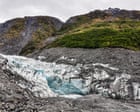
Glaciers are the canaries in the coal mine for alpine ecosystems, and New Zealand's famous ice rivers are fading fast. The country holds roughly 3,000 glaciers, but their total volume collapsed from 56 cubic kilometres in 1997 down to just 30 cubic kilometres by 2023.
The modelling for the remainder of this century is stark. Under a conservative low-emissions scenario, glaciers will likely shed between 14% and 86% of their remaining volume by 2100. Under a high-emissions trajectory, total wipeout is on the table—a complete loss of up to 100% of glacial ice.
When those glaciers disappear, it is not just a blow to tourism or scenic vistas. It alters freshwater hydrology, impacts hydroelectric generation capacity, and transforms high-altitude catchments forever.
Atmosphere and Ocean Pressures Collide
The atmospheric data released by the Ministry for Cities, Environment, Regions and Transport (Mcert) and Stats NZ paints a grim picture. Carbon dioxide concentrations in New Zealand's atmosphere have jumped 30% since monitoring started in 1972, while methane levels hit new record highs in 2025.
That heat has to go somewhere, and the oceans are absorbing the brunt of it. New Zealand's surrounding marine waters are heating up 34% faster than the global average. Marine heatwaves are no longer anomalies; they are the new normal.
In 2025, those soaring ocean temperatures triggered mass sea sponge bleaching, widespread die-offs of southern bull kelp, large-scale fish strandings, and tragic penguin mortality events. Marine life cannot adapt at the speed the water is warming. Coastal ecosystems are fraying at the edges.
Extreme Weather Becomes the Baseline
Ask anyone living in Napier, Auckland, or the surrounding regions if extreme weather feels normal now. They will tell you yes. Recent years brought devastating blows like Cyclone Gabrielle and severe flooding that cost billions of dollars, displaced families, and claimed lives.
The latest assessment warns that heatwaves will spike in frequency, duration, and intensity. Days exceeding 25 degrees Celsius will become far more common by 2050, pushing urban populations toward heat stress, increased health risks, and economic strain.
Infrastructure designed for a stable climate is buckling under the weight of these extremes. Roads wash out, stopbanks fail, and coastal erosion eats away at residential property. Māori communities face deep cultural loss as access to ancestral, culturally significant sites diminishes due to rising seas and environmental degradation.
Moving Past Denial
Climate change in New Zealand is an urgent human and economic crisis, not an abstract policy debate. The country grew up believing its isolated island geography and roaring southern winds offered a natural shield against global disruptions. They don't.
Ignoring the reality of record emissions and vanishing ice won't protect the agricultural backbone, coastal towns, or fragile native species. Communities, businesses, and policymakers must face these projections head-on, redesign infrastructure for intense extremes, and accelerate real emission reductions before the countdown runs out.