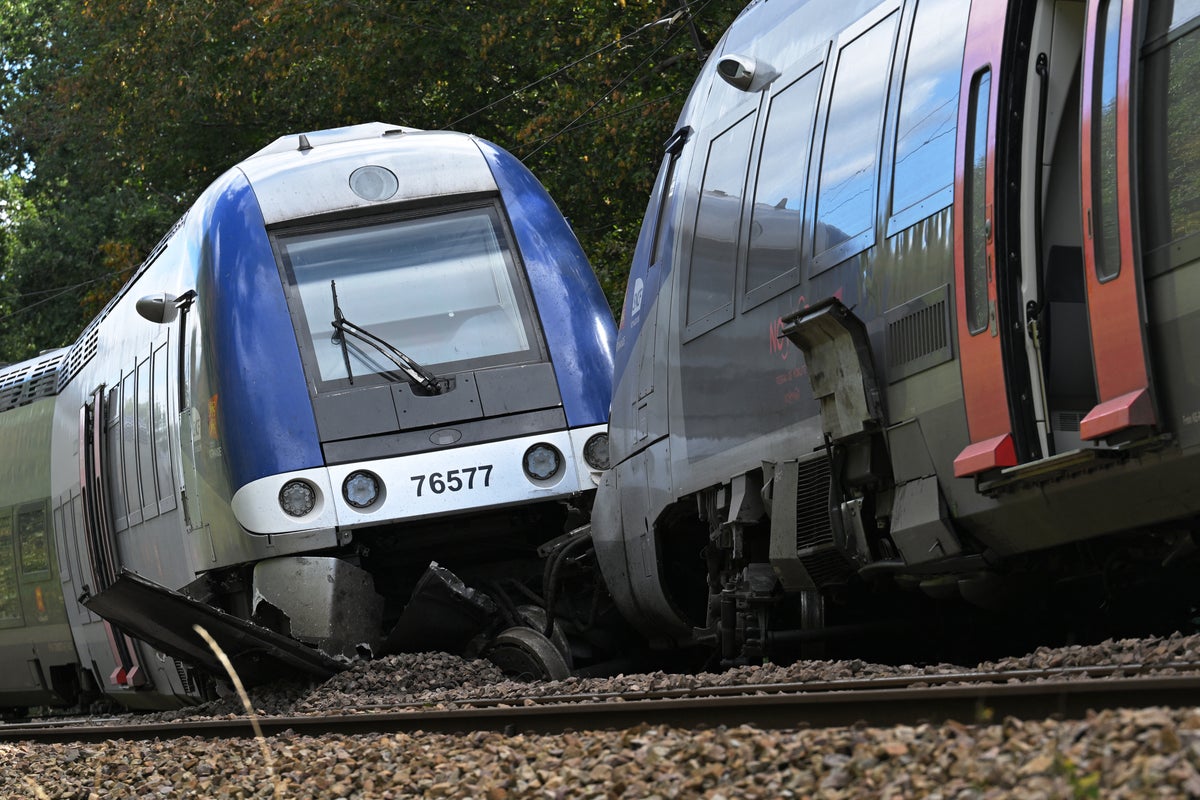
Forty-four people got hurt when a regional express train derailed in Normandy, and investigators aren't calling it an accident.
If you're wondering what actually happened on that Friday evening between Rouen and Caen, let's break down the facts. A TER train carrying 186 passengers went off the tracks near Cléon. One carriage flipped onto its side while four others left the rails completely. An 18-year-old woman was evacuated by helicopter in critical condition, and dozens of others suffered injuries ranging from shock to broken bones.
Why are authorities instantly looking at a malicious act? Because a heavy piece of steel rail—estimated to weigh between 250 and 300 kilograms—was found sitting right on the tracks where it didn't belong.
The Clues Left Behind on the Tracks
Rouen prosecutor Sébastien Gallois and regional leaders pointed out a glaring detail. A train had passed that exact spot just an hour earlier without incident, and no scheduled maintenance had taken place in between.
Hervé Morin, president of the Regional Council of Normandy, didn't mince words. He noted that it's practically impossible for a massive fragment of rail to just materialize on an active line by coincidence. Investigators are treating a deliberate crime as the primary line of inquiry.
Passengers described sheer terror inside the cabins. Louis, a 24-year-old traveler on board, recalled the terrifying moments when the train began to shake violently before the impact intensified. Because the train was moving at a brisk pace—running on a section rated for up to 120 kilometers per hour—shattered windows and flying ballast stones turned the interior into a hazard zone, even for carriages that stayed upright.
The Immediate Emergency Response
Local officials activated a mass-casualty response plan immediately. Around 130 to 140 firefighters, multiple medical teams, and dozens of emergency vehicles rushed to the scene near the Renault factory in Cléon.
SNCF Réseau suspended rail traffic and cut power to secure the area, causing heavy disruptions on lines connecting Rouen, Caen, and Le Havre. By the next morning, infrastructure crews had begun clearing the wreckage as passenger services slowly resumed under tight scrutiny.
What This Means for European Rail Security
Railway safety in Europe usually relies on automated signaling and routine track inspections. But incidents like this expose the vulnerability of open rail networks to deliberate interference.
We've seen similar suspicious activities elsewhere in Europe recently, including explosive devices found on freight lines in Poland linked to foreign intelligence operations. While French prosecutors remain cautious and are waiting for final forensic reports, the presence of such a heavy obstruction raises serious security questions for national transport authorities.
If you commute on regional networks, don't expect immediate structural overhauls, but do expect heightened surveillance and tighter security patrols along critical French corridors. The investigation continues as police examine physical evidence and driver toxicology tests, which came back completely clean.
Passenger train derails in France leaving at least 44 injured
This video provides an on-the-ground look at the emergency response and aftermath of the Normandy train derailment.
http://googleusercontent.com/youtube_content/1