War leaves behind a very specific kind of debris. It is jagged, heavy, and engineered to destroy life. But in the southern Lebanese village of Roumin, visual artist Lina Jouni looks at that exact destruction and sees raw material.
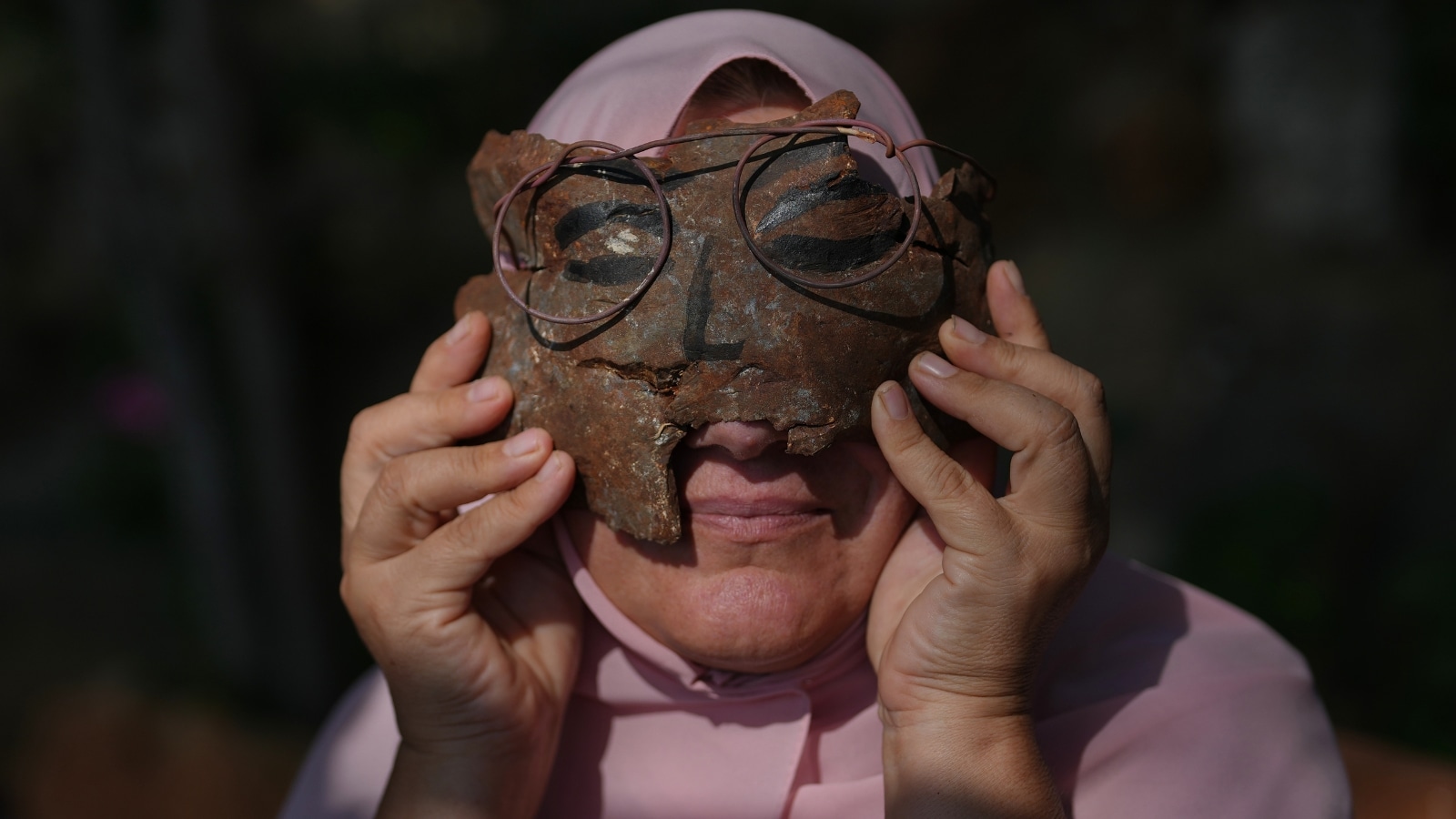
Since 2024, Jouni has scavenged through the rubble of homes obliterated by Israeli military strikes, gathering fragments of iron and steel. Back in her workshop, she takes a hammer, pliers, and a welder to those dangerous shards, reshaping them into intricate sculptures, decorative keychains, traditional houses, cedar trees, and city skylines.
It is a grueling physical process. More than that, it is an act of pure defiance.
"The horrible material that was meant to kill or hurt me, inside or around my home, I turned into something beautiful," Jouni explains. She transforms these deadly remnants into harmless art objects simply "just to spite it."
Finding Beauty in the Rubble of Roumin
Roumin sits in southern Lebanon, a region bearing the heavy scars of ongoing conflict. When homes collapse under military bombardment, the physical wreckage blankets neighborhoods. Most people flee or try to clear away the hazardous debris as fast as possible. Jouni walks straight into it.
She combs through the shattered concrete and twisted metal frames to collect missile and bomb shrapnel. These metal pieces are sharp enough to tear flesh and heavy enough to crush bones. Handling them requires caution, patience, and a steady hand.
Instead of letting these fragments remain symbols of death and trauma, she reclaims them. She bends the jagged edges. She welds disparate pieces together. She coaxes delicate shapes out of industrial violence.
Her portfolio includes striking likenesses of the Lebanese cedar tree, expressive faces wearing glasses, local architecture, and abstract cityscapes. Every single curve and weld tells a story of survival.
The Long Tradition of Reclaiming War Waste in Lebanon
Jouni is not the first creator in the country to look at battlefield debris and see creative potential. Lebanon’s turbulent history has repeatedly forced artists to reckon with the physical residue of conflict. Decades ago, artists like Leila Bacho similarly gathered war shrapnel following past invasions, turning twisted metal into poignant reminders of endurance and psychological survival.
There is a grim irony in this artistic lineage. It highlights a recurring cycle where generations of creators in the region find themselves picking up the pieces of destroyed infrastructure to make a statement.
When you spend your life surrounded by the machinery of war, you either let it break you or you find a way to break it down. Turning a missile fragment into a keychain or a sculpture doesn't erase the violence. It strips the weapon of its primary function. It neuters the shrapnel.
Why Turning Shrapnel Matters
Art born from conflict often gets dismissed as sentimental. That misses the point entirely.
When an artist takes shrapnel and hammers it into a domestic scene or a national symbol, a psychological shift happens. The object transitions from an instrument of terror into a monument of human persistence. It forces observers to confront the raw physical reality of what bombs leave behind, stripped of political rhetoric or sanitized news broadcasts.
You can't look at a sculpture crafted by Jouni without thinking about the living room wall it likely pierced or the roof it shattered before landing in the dirt. By forcing those fragments into public view in a completely new shape, she strips the original weapon of its final victory. The weapon was designed to end a life. Instead, it ends up framed on a table as a testament to someone who refused to stop creating.
The Physical Labor Behind the Art
Creating metal sculptures is brutal work. It is hot, loud, and dangerous. Jouni works with heavy industrial scraps that resist being reshaped. Every piece requires raw physical force.
You need to hammer cold steel. You need to grind down razor-sharp edges that could easily slice open a hand. This is not clean, gallery-bound conceptual art born in a quiet climate-controlled studio. It is gritty craftsmanship executed right where the damage occurred.
That local grounding gives the work its weight. Jouni didn't import expensive materials. She used what fell from the sky onto her doorstep.
Looking Forward
The work continues because the reality on the ground demands it. As long as conflicts generate jagged iron fragments across southern Lebanon, artists like Jouni will face a choice about what to do with the wreckage.
She chooses to hammer it into shape. She chooses to make something that outlasts the explosion.
Next time you look at a news report about destroyed towns, look past the smoke and the falling concrete. Look at what happens afterward. Somewhere in a quiet room in Roumin, a hammer strikes a piece of hot steel, turning a weapon into a tree.