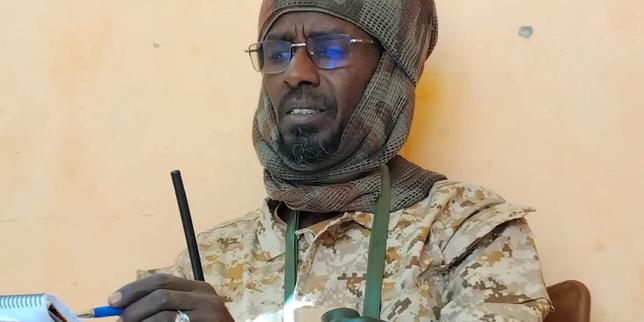
Power struggles in the Sahel rarely stay confined to local borders. When Ousmane Dillo steps into the French National Assembly, he isn't just a political figure making diplomatic rounds. He represents a violent rupture within Chad's ruling elite, a bitter feud carrying regional consequences, and an active push for international accountability.
If you've followed Central African politics over the last few years, the name Dillo evokes immediate tension. Following the killing of his brother, Yaya Dillo Djerou, the political landscape in N'Djamena shifted dramatically. Now, Ousmane Dillo is operating on multiple fronts. He is navigating European legal systems, rallying the diaspora, and maintaining military ties across borders, notably in war-torn Sudan.
The strategy is clear. He wants legal recognition of state-sponsored violence, a rejection of financial settlements that sweep state crimes under the rug, and a systematic path toward regime change.
The Battlegrounds of an Opposition Figure
Ousmane Dillo's trajectory defies simple categorization. He splits his focus between high-stakes courtroom battles in Europe and militant positioning in the borderlands.
During a notable appearance at the French National Assembly in September 2026, Dillo stood alongside legal counsel and political allies to demand international arrest warrants and thorough investigations. The family’s legal team, relying on firms like Kimia Avocats, has formally knocked on the doors of the Paris parquet and United Nations bodies. They refuse the traditional African political custom of accepting blood money, known locally as the diya, offered by authorities to close investigations.
Rejecting financial compensation changes the game. It strips the regime of plausible deniability. It turns a localized assassination into a matter of universal jurisdiction.
Beyond Paris: The Sudanese Vector
You cannot understand Dillo's influence without looking east. The chaotic civil war in Sudan acts as a massive staging ground for cross-border alliances.
Reports and statements place Dillo in connection with Zaghawa fighters and military factions operating inside Sudan. This creates a complex geopolitical puzzle. The borders separating Chad from Sudan are porous, tribal lines cross them effortlessly, and military loyalties shift by the week. By establishing a foothold and aligning with forces across the border, Dillo transforms from a grieving relative into a tangible military threat to President Mahamat Déby.
N'Djamena watches these movements closely. The government faces a nervous military establishment and rising internal dissent. When an opposition leader pivots between European legislative halls and regional combat zones, the stakes multiply.
Why the French Legal Strategy Matters
Critics often dismiss foreign opposition lawsuits in Paris as symbolic theater. They argue that universal jurisdiction rarely results in actual convictions of sitting African heads of state or high-ranking generals.
They miss the point.
Legal filings serve as travel restrictions, diplomatic embarrassments, and financial pressure points. Even if a courtroom victory takes years, the immediate consequence is loss of legitimacy. When European prosecutors open preliminary investigations, foreign capitals think twice before rolling out red carpets for regime officials. Dillo understands that suffocating the regime's international mobility is just as important as gathering rifles on the border.
The confrontation is moving past rhetoric. Dillo has made public statements indicating his intent to return and challenge the current administration head-on. Whether that return triggers a wider military confrontation or gets bogged down in regional security crackdowns depends entirely on how much pressure the opposition can sustain from both the courts of Paris and the frontlines of the Sahel.
The pressure is mounting, and the status quo in N'Djamena is running out of time.