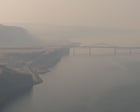
Skies across Seattle and Portland are currently choked with a toxic gray haze, turning afternoon sunlight into an eerie, blood-orange glow. If you step outside right now, your eyes sting within seconds. You taste ash in the back of your throat.
Right now, the Pacific Northwest is dealing with some of the worst air quality on the planet. Swiss air quality tracker IQAir put Seattle and Portland at the absolute top of its global pollution rankings. Sensors across central Washington and Oregon are flashing past 200, landing squarely in the "very unhealthy" bracket.
People are trapped indoors. Windows stay slammed shut. Air purifiers hum at maximum speed in every corner.
The Reality Behind the Smoke
This isn't an isolated accident. It is the brutal culmination of an extreme fire season fueled by severe drought and relentless heatwaves.
At the start of August, conditions deteriorated so quickly that the National Weather Service issued Washington's first-ever "particularly dangerous situation alert" for fire weather. More than 1,000 fires have scorched roughly 425,000 acres across the state since the year began. That makes it the most aggressive fire spread Washington has seen since 2021.
Around Spokane, fast-moving blazes like the Old Trails, Fairview, and Autumn Lane fires have destroyed hundreds of structures. Tens of thousands of residents faced mandatory evacuations. Whole neighborhoods were reduced to ash and blackened chimneys before emergency crews could swing the momentum.
Firefighters Gain Ground As Weather Shifts
Crews are finally catching a break. Cooler weather over the last couple of days allowed firefighters to build solid containment lines around the perimeters of the major Spokane area fires.
Winning containment doesn't mean the danger is gone. It just means the monster has a temporary leash.
The relief is short-lived. Meteorologists predict temperatures will spike back up from the comfortable 80s into the upper 90s Fahrenheit. Humidity is dropping, and strong winds are returning. That combination turns dormant hotspots into re-ignited blowtorches overnight.
What You Should Do If You Are Living in the Region
If you are currently sitting under this blanket of smoke, don't wait for officials to tell you to take it seriously. Air quality index readings above 100 are bad for everyone, not just those with pre-existing conditions.
- Seal your home: Keep your doors and windows completely shut. If you have an HVAC system, set it to recirculate rather than pulling outside air into your house.
- Upgrade indoor filtration: Run HEPA air purifiers in the rooms where you spend the most time. If you don't have a commercial purifier, a box fan strapped with a high-MERV furnace filter can work in a pinch.
- Skip the N95 shortcuts: Cloth masks do nothing against microscopic wildfire smoke particles. If you must step outside for essential tasks, wear a properly fitted N95 or KN95 respirator.
- Monitor local tracking: Keep an eye on the Washington Department of Ecology or local clean air agencies for real-time updates on when the wind might shift your direction.
The smoke might clear temporarily in western valleys by Friday, but eastern areas will grapple with this haze much longer. Stay inside. Protect your lungs. Keep watch on local alerts.