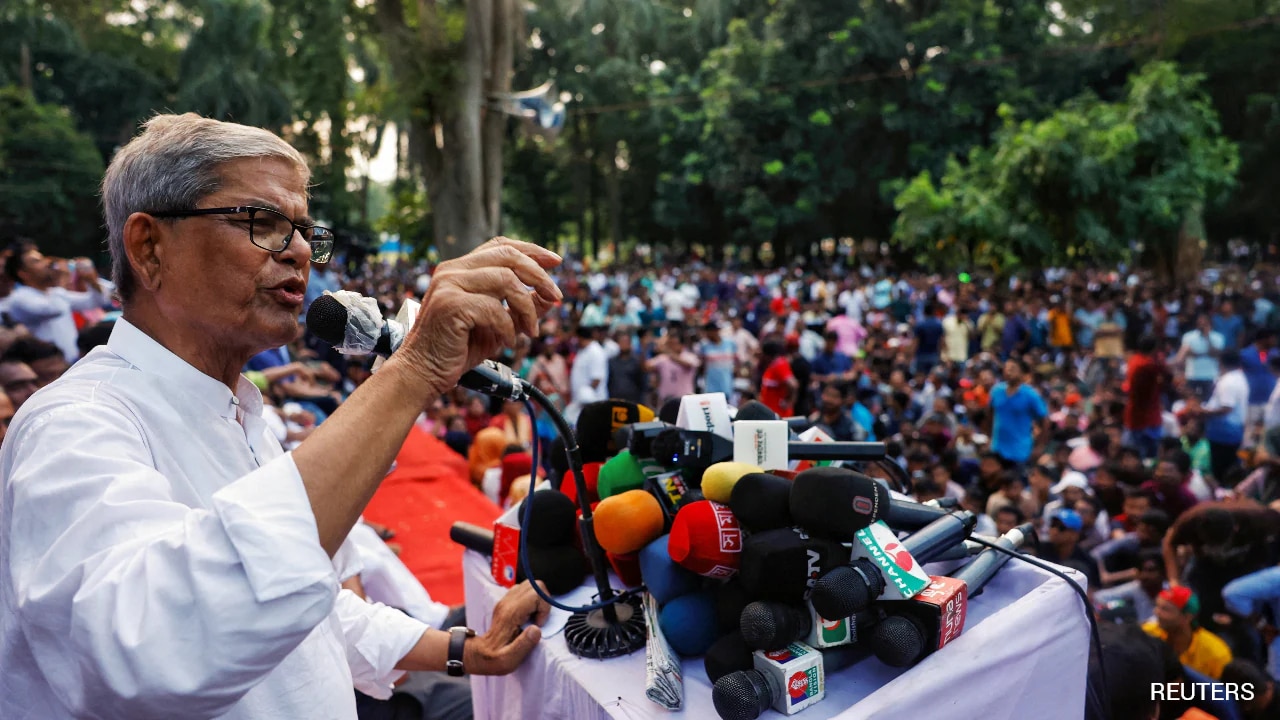
Political trajectories rarely follow a straight line, but few career arcs match the sheer endurance of Mirza Fakhrul Islam Alamgir. When someone transitions from leading campus protests in the late 1960s to taking the oath at Bangabhaban, it tells you a lot about how political survival works in South Asia. Most casual observers look at the Bangladesh Nationalist Party (BNP) and only see high-profile national figures. They miss the grueling decades of underground organizing, classroom lectures, and municipal elections that built the machinery behind the headlines.
Let's look at how a quiet economics professor navigated decades of turmoil to become a central pillar of the nation's governance.
The Classroom Roots That Defined a Politician
Long before he managed party strategy or sat in ministerial cabinets, Alamgir was deeply embedded in academia. Born in Thakurgaon in 1948, politics was basically part of his DNA—his father, Mirza Ruhul Amin, was an active legislator. Yet, the younger Alamgir didn't immediately dive headfirst into partisan parliamentary games.
Instead, he went through the university grinder at Dhaka University, studying economics and jumping straight into the heat of the 1969 mass uprising against the Ayub Khan regime. He headed the Dhaka University unit of the East Pakistan Students Union. Those campus days weren't just about shouting slogans; they were a crash course in mobilization.
When the 1971 Liberation War shook the region, Alamgir didn't sit on the sidelines. He acted as a key organizer for left-wing resistance networks before eventually crossing the border into India.
Trading Protest Banners for Lecture Halls
Most firebrand student leaders either get co-opted early or vanish into obscurity. Alamgir took an entirely different route. In 1972, right after the war ended, he stepped away from active militant politics and joined the civil service education cadre.
He taught economics at Dhaka College. Imagine sitting in a lecture hall in the mid-1970s listening to a professor who had just helped organize a liberation movement. He later moved to Thakurgaon Government College and took on administrative auditing roles through the Directorate of Inspection and Audit.
This phase matters because it gave him a grounded, middle-class perspective that pure career politicians rarely possess. He understood state bureaucracy from the inside. He worked within government commissions and even served as a secretary to key administrators during the Ziaur Rahman era.
Breaking Into Electoral Politics From the Grassroots
If you want to understand why veterans respect Alamgir, you have to look at 1986. That was the year he walked away from a secure government job to test his luck in local politics.
Two years later, he ran as an independent candidate for the Thakurgaon municipal chairmanship—and won. Winning a local body election in rural Bangladesh without a massive party machine behind you takes grit. It forces you to look voters in the eye and solve immediate municipal grievances.
That local victory acted as his launchpad. By the early 1990s, as the country erupted in protests to dismantle the military regime of Hussain Muhammad Ershad, Alamgir officially aligned with the BNP. He didn't parachute into a leadership role; he started by heading the party unit in his home district of Thakurgaon.
Surviving the Opposition Trenches
Opposition politics in Bangladesh is brutal. Offices get raided, leaders face endless waves of court cases, and staying united requires iron discipline. For years, Alamgir acted as the institutional glue for the BNP.
When long-time party leaders passed away or faced severe pressure, the responsibility of keeping the coalition functional fell squarely on his shoulders. He became the acting secretary-general in 2011 before taking over the role permanently in 2016.
For over a decade, he was the public face of the party's resistance. He held press conferences after midnight, negotiated with fractured opposition allies, and tried to keep grassroot activists motivated through wave after wave of political crackdowns. Critics often underestimated his resilience, treating him as a soft-spoken academic rather than a hardened political operator. That was always a mistake.
Moving to the Highest Constitutional Office
The political landscape shifted dramatically, opening doors for veteran leaders to step into roles of institutional stability. The parliamentary vote that elevated Alamgir to the presidency marked a watershed moment. It wasn't just a routine transition; it represented a bridge between decades of bitter partisan warfare and the search for national consensus.
Having served previously as an elected Member of Parliament for Thakurgaon-1 and holding key portfolios like Agriculture, Civil Aviation, and Local Government during the early 2000s, he brings actual legislative and administrative competence to the office. He knows how ministries operate because he has run them.
History will judge how his tenure unfolds, but his journey proves one undeniable truth: longevity in politics belongs to those who can pivot from the streets to the classroom, and from local town halls to the national stage, without losing their base.
Mirza Fakhrul Islam Alamgir biography overview
This video provides additional biographical context on Mirza Fakhrul Islam Alamgir's political career and his rise within the Bangladesh Nationalist Party.
http://googleusercontent.com/youtube_content/1


