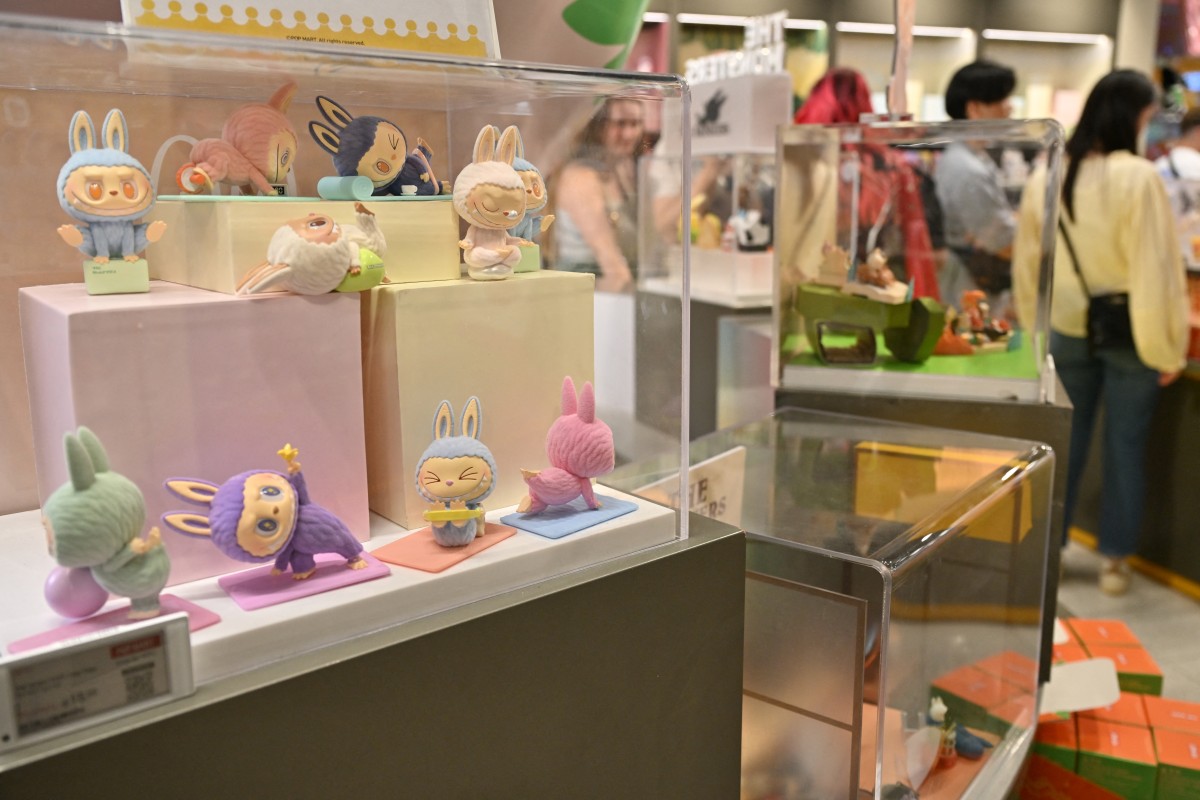
Pop Mart’s stock took a dive today, and if you’ve been watching the toy maker’s meteoric rise, it probably doesn’t come as a surprise. The market hates uncertainty, and Pop Mart just served up a massive plate of it. While their revenue climbed 23.8% to 17.17 billion yuan in the first half of 2026, the real story is what’s happening beneath those top-line numbers. Investors saw those ex-China sales figures in Asia and the Americas—down 9.7% and 16.5% respectively—and didn't wait to hit the sell button.
Basically, the "Labubu boom" that turned the company into a global sensation is hitting a wall. Citi analysts saw the writing on the wall, cutting their price target and highlighting inventory and logistics nightmares. When a company that grew at triple-digit speeds in 2025 suddenly admits that its 20% growth target for 2026 is becoming a struggle, the stock price reaction is almost always brutal.
The end of easy growth
For a long time, Pop Mart was the darling of the retail sector. Their blind boxes, featuring characters like Labubu and Molly, weren't just toys; they were cultural currency. They sold out globally. They dominated social media feeds. They were supposed to be the "new" kind of retail company that didn't need to play by old-school rules.
But here’s the reality check: global expansion is hard. It’s not just about shipping boxes of vinyl figures to new countries. You need real estate, you need supply chains that don't choke, and most importantly, you need to convince people in the Americas that a fuzzy, snaggle-toothed monster is worth their hard-earned cash in a tightening economy.
The numbers don't lie. While China is still doing the heavy lifting with a 47.3% jump in revenue, the international "growth engine" is sputtering. You can’t build a valuation based on exponential global expansion if the actual sales in those markets are heading in the opposite direction.
The IP trap
Pop Mart lives and dies by its Intellectual Property. The Monsters franchise, which includes Labubu, was their golden goose, accounting for a massive chunk of their revenue last year. But relying on a few hit characters is a dangerous game.
Here is the problem: fads die. Even great designs lose their "must-have" status. Pop Mart knows this, which is why they are pushing hard into plush toys and trying to diversify with new hits like Twinkle Twinkle. But diversifying isn't the same as replacing a blockbuster. Investors are worried that the excitement around Labubu is cooling off before the next big thing has truly taken its place.
When you look at the financials, you see a gross margin contraction. It dropped to 69.7%. That’s still impressive, but it shows that the costs of pushing into those new markets are biting into profits. It’s no longer about just turning on the lights and watching money pour in. Now, they have to fight for every customer.
What happens next
Management is trying to calm the nerves. They’ve announced a massive share buyback plan—spending between 2 and 5 billion yuan to scoop up their own stock. It’s a classic move. It says, "We have cash, and we think the stock is cheap." But buybacks are a temporary band-aid. They don't fix the underlying issue of slowing international demand or the fact that their operational costs are ballooning.
If you’re holding Pop Mart stock, you’re betting on a turnaround. You’re betting that the international operational "adjustment phase" they mentioned is just a hiccup. Maybe they figure out their logistics. Maybe the next character launch creates a frenzy that makes us forget about the Americas slump.
However, consider this: 2026 isn't 2025. The high base from last year makes year-over-year comparisons look ugly, no matter how well they do. The easy money has been made. From here on out, they have to prove they can scale in a way that’s actually profitable, not just flashy.
If you are looking for a sign, watch their inventory levels in the next two quarters. If they keep discounting to move product, the premium brand image dies. If they hold the line on prices but sales stay flat, growth is dead. Either way, the era of blind-box retail being a "sure thing" is over. Keep your eyes on the next set of international expansion reports. That’s where the real story will be written.