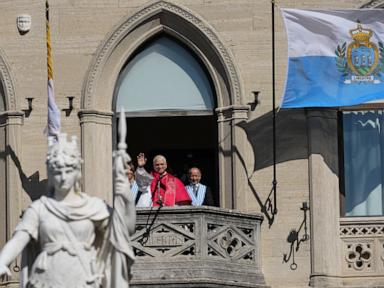
Tiny nations often get overlooked on the global stage, but Pope Leo XIV just put one right in the spotlight. During a recent visit, the pontiff hailed the Republic of San Marino as a living blueprint for political freedom and civic responsibility.
If you are wondering why a microstate with a population of roughly 35,000 caught the Vatican's attention, the answer lies in its unique governance structure and deep-rooted traditions. San Marino isn't just a picturesque tourist destination tucked inside Italy; it is a functional laboratory for power-sharing that modern superpowers could learn a lot from.
The Power-Sharing Secret Behind the World's Oldest Republic
San Marino traces its origins all the way back to the fourth century, making it the oldest surviving republic on earth. How has it survived this long without collapsing into autocracy or corruption?
The structural design is brilliant. The nation is governed by a 60-member parliament, but executive authority is split right down the middle. They elect two captains regent every six months to serve jointly as heads of state.
Think about that for a second. Power changes hands twice a year, and it is always shared between two people. This rigid system was intentionally built to prevent the dangerous concentration of authority. Pope Leo pointed to this arrangement as an antidote to modern political systems that prioritize self-interest and raw dominance over human dignity.
A Direct Warning to Modern Superpowers
Pope Leo didn't just hand out compliments; he used the microstate as a contrast to the rest of the world. Global politics right now feels messy, fractured, and hyper-partisan. Leaders chase immediate economic wins or ideological dominance while leaving ordinary citizens behind.
The pope warned against political and economic models that place power above the human person. He described a world wounded by conflicts, social isolation, and a growing fear of outsiders. Against that bleak backdrop, San Marino represents an alternative—a place where community survival depends on mutual respect and shared responsibility rather than brute force.
Navigating Modern Tensions and Traditional Values
You can't talk about San Marino today without acknowledging the friction between its traditional Catholic identity and recent social shifts. Back in 2021, voters in this heavily Catholic enclave shocked observers by passing a referendum to legalize abortion during the first twelve weeks of pregnancy, completely overturning a historic ban.
During his address, Pope Leo didn't shy away from traditional church stances. He called for public life to uphold the dignity of every human being from conception to natural death. Even so, he framed his message around the necessity of keeping human dignity at the center of all social and economic policy, warning against false forms of liberation that ultimately abandon the vulnerable.
What Larger Nations Can Actually Learn
It is easy to dismiss San Marino as an anomaly. Critics might argue that running a tiny enclave of 35,000 people is nothing like managing a complex global superpower with tens of millions of citizens.
Yet, the underlying principles remain identical. Scale doesn't change the value of transparency, nor does it eliminate the need for decentralized authority. When political systems become too big to fail, they usually become too bloated to care. San Marino proves that communities function best when citizens actually know their neighbors and share the burden of governance.
If you want to understand where modern politics is failing, look at how easily institutional power eclipses public service. Then look at a hilltop republic that has kept the same basic democratic impulse alive for more than sixteen centuries.
Check your local civic structures, support decentralized community initiatives that fight social isolation, and demand genuine accountability from leaders who treat authority as a privilege rather than a weapon.


