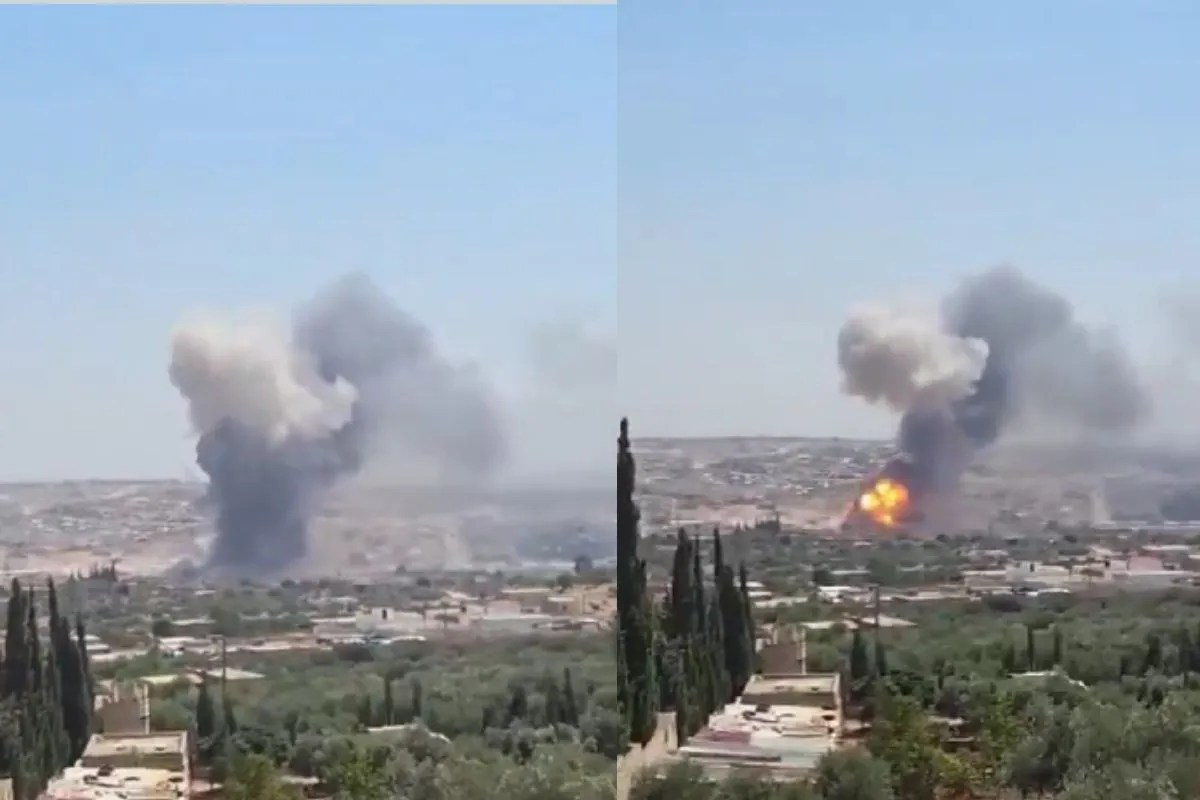
When an ammunition warehouse goes up in flames near a civilian population center, the immediate casualty count tells only part of the story. Fourteen people died and eleven others were wounded when a massive explosion ripped through a temporary weapons storage facility near the town of Sarmada in northwestern Syria's Idlib province.
If you look past the breaking news alerts, this disaster highlights a ticking time bomb scattered across the region: the dangerous legacy of over a decade of civil war and unmanaged ordnance stockpiles.
The Deadly Reality Behind Temporary Storage Sites
The site near Sarmada wasn't an official, heavily fortified military base. Instead, it operated as a temporary collection point meant to gather leftover weapons and remnants of war before moving them elsewhere. Local authorities and defense ministries often use these ad-hoc facilities to clear residential zones, but storing volatile munitions close to commercial centers creates a massive hazard.
Local eyewitnesses, like neighborhood mechanic Ahmad Faour, pointed out the obvious flaw long before the disaster struck. Storing tons of unstable explosives near populated villages and public shops invites catastrophe. When the initial blast went off, it triggered a series of secondary detonations that hampered firefighting efforts and sent thick plumes of black smoke billowing across the Turkish border region.
Why These Explosions Keep Happening
You can't simply pack up a war zone and expect everything to stay safe. Years of conflict left millions of tons of unexploded ordnance, abandoned ammunition, and makeshift storage units scattered throughout northwestern Syria.
- Lack of Proper Infrastructure: Formal military logistics networks collapsed long ago, forcing local security units to rely on makeshift warehouses.
- Improper Handling: Moving degraded, decades-old munitions without strict safety protocols frequently causes accidental ignition.
- Proximity to Civilians: Many depots end up near residential neighborhoods because safe, isolated land is scarce or contested.
The Syrian Defense Ministry confirmed that several of its own personnel working at the site were among the casualties, while local health directors rushed the wounded to nearby hospitals. Specialized civil defense teams spent hours picking through the rubble because secondary explosions made the zone too unstable for immediate entry.
What Needs to Change Now
Fixing this crisis requires more than just mourning the dead. Authorities must shift away from temporary, poorly managed collection points and prioritize immediate neutralization or secure, remote transport of hazardous materials. As long as dangerous ordnance sits in makeshift warehouses near populated streets, the risk of another catastrophic blast remains dangerously high.
Massive Syria Explosion: Weapons Depot Blows Up In Idlib, 14 Dead
This video provides an overview of the explosion and the ongoing rescue operations in Idlib province.


