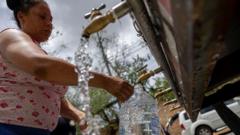
Waking up to dry pipes is becoming a cruel routine for hundreds of thousands of people in Puerto Rico. If you live in San Juan or the surrounding municipalities, you already know the sinking feeling of turning on the faucet and getting nothing. The government has officially instituted a brutal 48-hour rotating water rationing schedule, leaving more than 180,000 customer accounts scrambling for buckets, jugs, and tanker trucks.
This isn't just about a lack of rain. It's a compounding disaster born from extreme weather, crumbling utility networks, and decades of political neglect.
The Driest July in Over a Century
Mother Nature isn't cutting the island any slack. San Juan recorded its driest July in more than 120 years, paired with scorching heat waves that turned soil to dust. According to the U.S. Drought Monitor, roughly 68 percent of Puerto Rico is currently trapped in moderate to severe drought conditions.
Reservoirs are rapidly approaching dead pool levels. Governor Jenniffer González-Colon admitted that officials have rarely seen water levels this depleted. Meteorological experts note that it will take multiple tropical systems—not just one stray storm—combined with heavy winter precipitation to pull the territory out of this emergency. Meanwhile, forecasts show rainfall over the next few weeks will likely hover at half the historical average.
Why the Infrastructure is Failing You
Blaming the weather is easy, but it ignores the elephant in the room. Puerto Rico's water delivery system is broken at a structural level.
Decades of deferred maintenance, chronic underinvestment, and delayed federal funds have left the island vulnerable. The numbers are staggering. The local water authority loses roughly 65 percent of all treated water before it ever reaches a consumer's tap. Leaky underground pipes and ancient mains hemorrhage millions of gallons daily.
Communities in San Juan had already logged over 100 days of intermittent outages earlier this year before formal rationing even started. For many neighborhoods, dry taps are an old adversary. Protestors have taken to the streets holding unwashed laundry and empty containers, demanding accountability and the resignation of utility heads who fail to fix the grid.
Living on a 48-Hour Clock
The human cost of this crisis is heavy. Families are forced to organize their entire lives around a binary toggle: 48 hours with water, 48 hours without.
People are storing massive 55-gallon drums in kitchens and living rooms just to flush toilets and cook basic meals. Hospitals and elderly care facilities are supposed to get priority through emergency tanker deployments, but neighborhood distribution points overseen by the National Guard are chaotic and stretched thin.
With 40 percent of the population living below the federal poverty line, buying bottled water or installing private cisterns isn't an option for everyone. Tourism hubs are being shielded where possible to protect the local economy, but residents bear the brunt of the sacrifice.
How to Prepare and Adapt
If you are navigating the rationing zones or planning travel to the island right now, you have to shift into crisis logistics mode. Do not wait for the municipal taps to sputter out.
- Harness safe storage: Keep food-grade plastic containers filled during your active 48-hour water windows. Prioritize drinking water separate from utility water used for cleaning.
- Monitor local updates: Rely on regional stations like WAPA-TV for real-time schedule shifts, because officials have warned that 48-hour shutoffs could easily stretch to 72 hours if reservoir levels drop further.
- Conserve aggressively: Treat every drop as a finite asset. Reuse greywater for plants or sanitation where feasible, and report neighborhood pipe leaks immediately to pressure local authorities into patching primary distribution lines.
There is no clear end date in sight. Until significant storms finally arrive, survival on the island means respecting the fragility of every single drop.
Drought forces Puerto Rico residents to ration water
This video provides an on-the-ground look at how residents in San Juan are coping with the severe water restrictions and utilizing government-supplied tanker trucks during the crisis.
http://googleusercontent.com/youtube_content/1