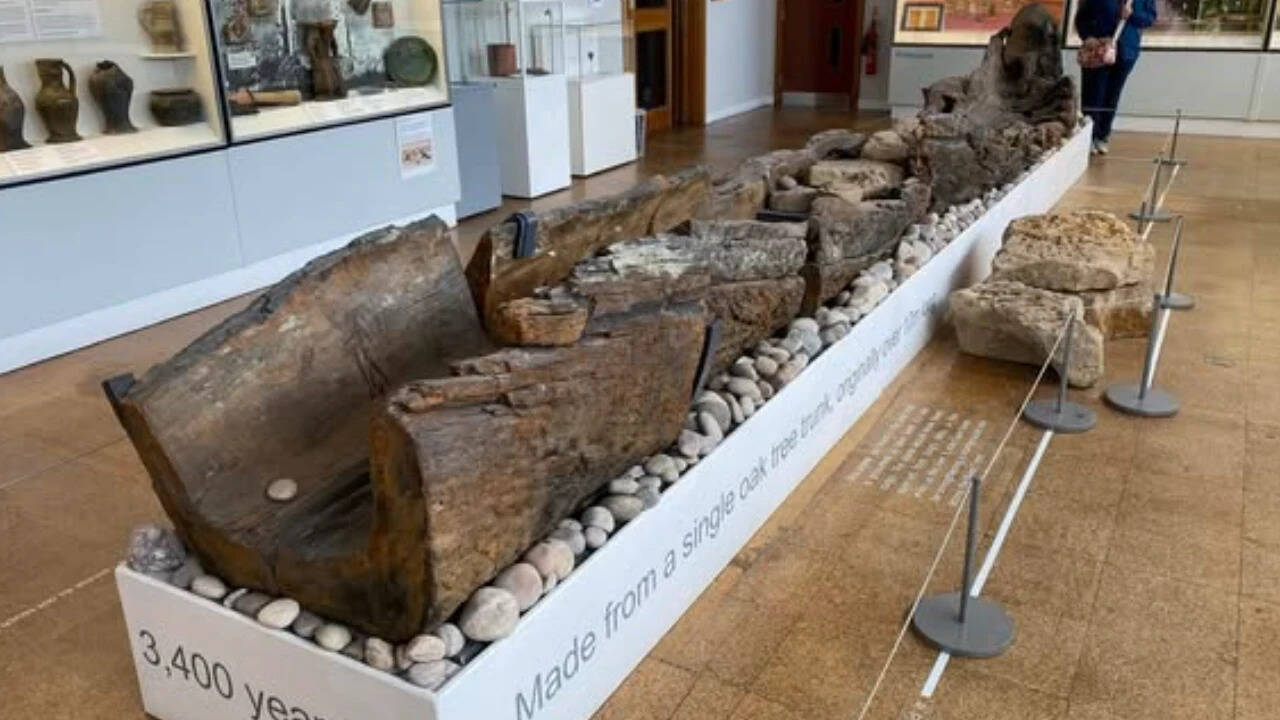
History isn't always written on parchment. Sometimes, it's dragged out of a gravel pit by heavy machinery.
Back in 1998, workers at a commercial quarry near Shardlow in Derbyshire struck something massive buried five meters deep in the silt of the River Trent. It wasn't a rock. It was a giant watercraft carved from a single oak tree trunk, dating back roughly 3,400 years to the middle of the Bronze Age.
That single artifact—and the decades of grueling archaeological work following its discovery—changed how we understand prehistoric life in Britain. Most people assume ancient communities lived in isolation, struggling merely to survive day by day. The reality buried in the Trent Valley paints a completely different picture. These people engineered their environment, built massive trade networks, and treated rivers as sacred spaces.
Why the Trent Valley is an Archaeological Goldmine
You can't talk about British prehistory without looking at the geography. The River Trent didn't just flow; it shifted, flooded, and remade its floodplain over millennia.
That constant movement turned out to be a preservation superpower. When the weather in northwestern Europe grew drastically wetter around 3,400 years ago, increased storms and heavy flooding buried wooden structures, tools, and organic waste beneath thick layers of sand and gravel. Starved of oxygen, those materials stopped rotting.
Commercial gravel extraction has inadvertently become the most effective tool for finding these treasures. Archaeologists from organizations like York Archaeology didn't just show up with trowels one day; they established long-term monitoring agreements with quarry operators. Every time a digger scoops into the earth, researchers are there to inspect the exposed layers.
This partnership uncovered more than just a random canoe. It revealed an entire landscape of human activity spanning thousands of years, from Bronze Age watercraft to Iron Age roundhouses like the one found at Hoveringham.
The Engineering Reality of a Bronze Age Log Boat
Let's address a common misconception: people often think ancient boats were crude rafts lashed together with vines.
The Shardlow log boat measures over ten meters long and about a meter wide. Crafting something of that scale requires an enormous amount of raw material and specialized labor. To get an oak tree that long and straight, you need a virgin forest—what experts call "wildwood"—where trees compete for light in a dense canopy. You simply cannot grow oak trees of that size in modern Britain.
When this boat sank, it wasn't empty. It carried roughly half a tonne of sandstone blocks quarried a few kilometers upstream at Kings Mills. Those stones were destined to reinforce a causeway crossing the river.
Think about that logistical chain. Prehistoric communities weren't just floating around catching fish. They were quarrying heavy stone, loading it onto massive wooden vessels, and managing civil engineering projects to keep their transport routes operational.
Rivers as Ancient Highways and Sacred Altars
Waterways functioned as the primary highways of the ancient world. Before organized road systems existed, rivers moved people, heavy cargo, and cultural ideas faster than any overland route.
Yet, the Trent was more than a commercial shipping lane. To Bronze Age people, water held profound spiritual weight.
Quarrying operations across the valley have yielded an astonishing number of bronze weapons, including swords, spears, and axes. They weren't lost by accident. Depositing valuable metalwork into deep water or river channels was a deliberate ritual act. Communities offered these items to gods or ancestors, a tradition that echoes down to modern practices like tossing coins into wishing wells.
When you combine the physical evidence of the log boats with environmental data like pollen samples and animal remains, the picture snaps into focus. Researchers can track how humans cleared forests for agriculture, how the river responded with massive floods, and how local populations adapted their settlement patterns to survive.
What Current Exhibitions Reveal About Our Past
Decades of meticulous work in the Trent Valley are finally reaching the public eye. Initiatives like the Prehistoric Lives in the Trent Valley exhibition at the University of Nottingham Museum bring together artifacts that spent millennia hidden beneath the gravel. Curators are pairing physical items—like the Shardlow boat fragments and recovered spearheads—with paleoenvironmental records to show the direct relationship between human choices and river behavior.
If you want to understand how modern archaeology actually works, look past the polished museum displays. It starts in active commercial quarries, where scientists and industrial workers race against time to save history before the gravel truck rolls away.
Check your local museum schedules for regional archaeology exhibits or local festival events during the summer season to see these prehistoric woodworking techniques up close. Support heritage trusts that fund rescue excavations in your area, because every industrial project near an ancient river valley holds the potential to rewrite another chapter of our shared past.