For years, the war in Ukraine followed a brutal yet predictable rhythm. Air-raid warnings would light up Telegram channels late in the evening. Drones and missiles moved across the night sky while citizens weighed whether to stay put or head down into the metro shelters. When morning came, daylight usually brought a temporary pause, allowing people to grab coffee, open businesses, and send kids to school under a deceptive sense of safety.
That rhythm is gone.
Russia has fundamentally altered its targeting strategy, launching relentless, round-the-clock air assaults on Kyiv. Instead of reserving strikes for the cover of darkness, attacks now cascade through the morning and afternoon hours. The capital is enduring record numbers of air-raid alerts, sometimes forcing residents into shelters over a dozen times a single day. This shift isn't just a military escalation. It's a calculated psychological and economic squeeze designed to grind down civilian endurance before winter sets in.
The Reality of 24-Hour Air-Raid Alerts
When sirens wail ten to thirteen times a day, the mechanics of modern urban life simply break down. Businesses enforce strict evacuation protocols, meaning a routine trip to the bank or a grocery run turns into an exhausting loop of entering a store, hearing the alarm, evacuating, and returning only to evacuate again.
Commuters face absolute chaos. Overland transit systems, including metro lines crossing the Dnipro River, must halt operations during active alerts. Passengers are regularly forced off trains, leaving them stranded on tracks or walking through open fields while air defenses rumble overhead and fast-moving, jet-powered drones streak across the skyline.
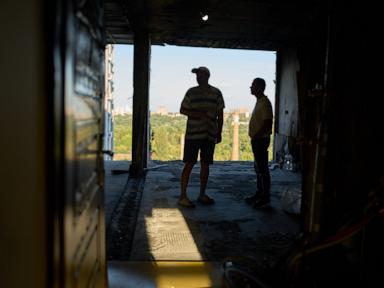
The psychological toll is heavy. Many residents like Ivan Datsiv, an IT worker whose apartment in the Podil district was heavily damaged when a drone tore through the floor, have stopped running to shelters entirely. When alarms sound continuously, the choice becomes living permanently in a basement or accepting the risk. People are choosing normalcy, even when a blown-out window frame looks out onto a children's playground where kids still try to play.
Why Moscow Shifted Tactics Now
This relentless daytime pressure is driven by two distinct military developments. First, Russia has ramped up the deployment of advanced, jet-powered attack drones. These newer models fly at speeds near 370 mph—roughly three times faster than the older, propeller-driven Shahed drones—making them significantly harder for mobile fire groups and air defense units to intercept in time.
Second, the strategic objective has expanded beyond terrorizing the population. Analysts point to a deliberate push to cripple Ukraine's economy. By targeting commercial hubs, warehouses, and logistical arteries during working hours, the strikes disrupt supply chains, stunt educational institutions, and force businesses to lose countless operational hours.
The human cost is visible everywhere. Parents struggle with childcare as kindergartens scramble to move children to underground bunkers. Couples still hold weddings amidst the sirens, refusing to let the conflict steal their milestones, while others wait in long lines for bureaucratic paperwork only to have an alert reset their place entirely.
Adapting to an Exhausting Normal
Facing unprecedented disruption, the Ukrainian government has worked to implement a more nuanced, two-tier warning system. The goal is to separate immediate localized threats from generalized regional alerts so that workers, students, and transit networks can maintain some continuity instead of halting the entire city for every distant launch.
Yet, the anxiety remains palpable. As autumn deepens, the overarching fear is that these continuous day-and-night drone raids are merely the opening phase of a broader campaign aimed at freezing out the capital by targeting critical energy infrastructure once winter arrives.
People keep moving forward because stopping feels like losing. Mornings are greeted with the realization that normalcy must be carved out wherever it can fit, because in Kyiv today, tomorrow is never guaranteed.