The world is looking away while another catastrophe unfolds in Sudan. In El Obeid, the capital of North Kordofan state, half a million people are trapped. They are dodging remote-controlled death from above while international diplomacy spins its wheels.
If you've been wondering why human rights groups are sounding red alerts over this specific city, the reality on the ground is grim. The United Nations has made it clear that El Obeid faces an imminent risk of mass atrocities, echoing the horrors seen previously in Darfur.
Let's break down what is actually happening behind the headlines.
The Geography of a Trap
El Obeid isn't just another dot on a map. It sits squarely on a strategic corridor connecting central Sudan, Khartoum, and the western Darfur region. That location makes it a prized military target.
Since the civil war between the Sudanese Armed Forces (SAF) and the Rapid Support Forces (RSF) erupted in April 2023, this city has weathered constant tension. Now, the situation has mutated into a brutal war of attrition.
The city remains under SAF control, but the RSF has encircled it. Supply lines are choked. Key transport routes face constant attack. When the SAF briefly pushed RSF fighters off the highway connecting El Obeid to Khartoum, it offered a brief glimmer of hope. That hope vanished almost instantly as retaliatory drone strikes began hammering civilian infrastructure.
The Drone War Reality
Drones have completely rewritten the rules of civilian survival in Sudan. They are cheap, hard to intercept, and devastatingly precise against fixed infrastructure.
Data compiled by organizations like the International NGO Safety Organisation shows that North Kordofan has recorded an alarming volume of drone attacks. These aren't striking military barracks. They are hitting the daily necessities of life:
- Power substations and electrical grids
- Water treatment plants and distribution points
- Local markets and fuel stations
- Schools and medical facilities
UN human rights chief Volker Türk labeled this crisis a red alert that demands the immediate attention of global heads of state. In the first four months of the year alone, armed drones accounted for over 80 percent of civilian deaths nationwide, killing at least 880 people. In the Kordofan region alone, drone strikes by both warring factions have claimed more than 1,000 lives since January.
A Dual Terror for Women and Families
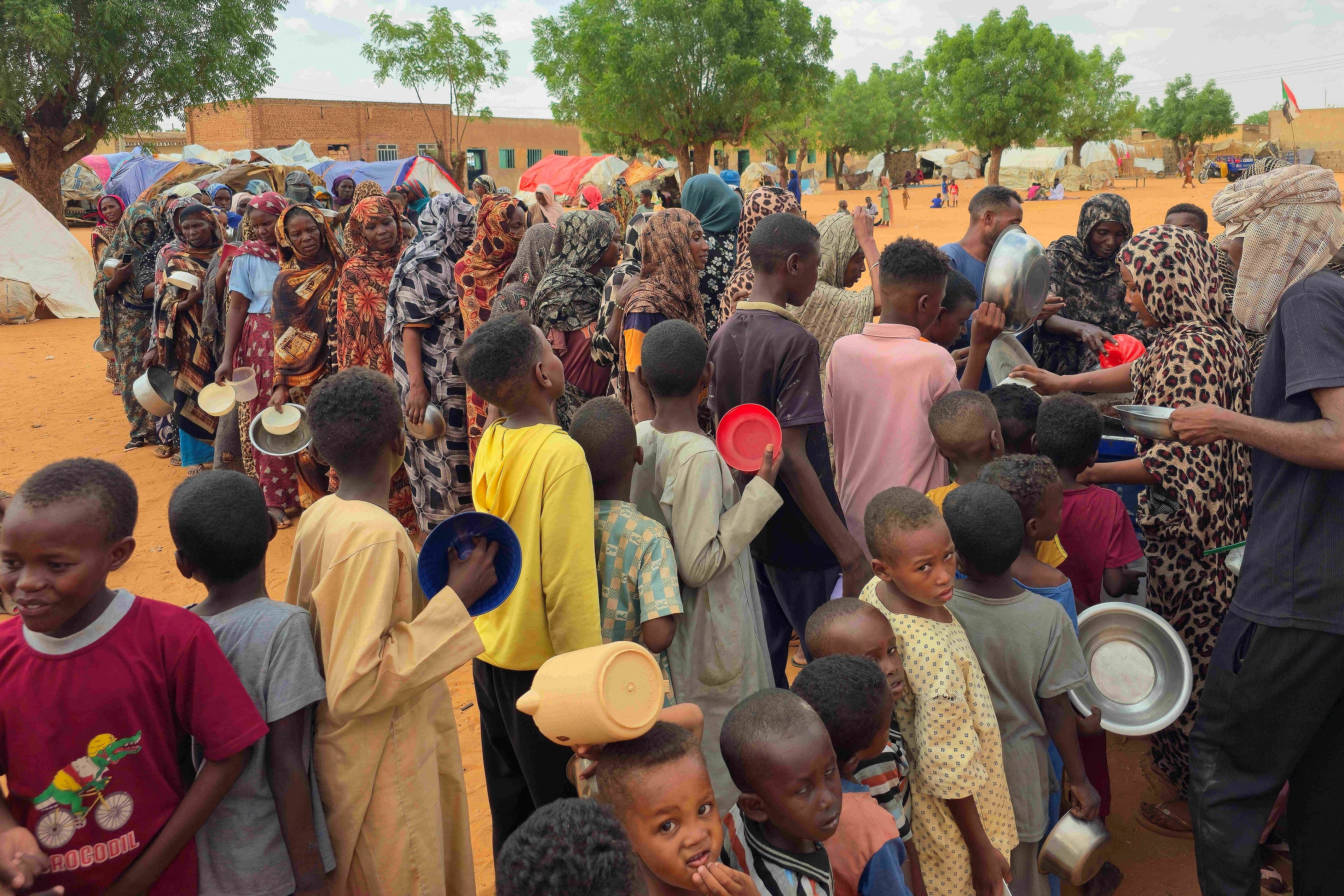
Daily existence in El Obeid has broken down into impossible choices. The collapse of power grids and water stations means citizens must wait hours in massive queues just to secure basic hydration.
According to UN Women, women and girls face a horrifying dual terror. Venturing out in daylight to collect water risks a deadly drone strike. Waiting until nightfall to find cover brings a high risk of sexual violence and abuse.
Meanwhile, food prices have skyrocketed into absurdity. Gasoline commands black market prices that push basic transportation out of reach for ordinary families. With the rainy season peaking, public health hazards are multiplying. Cholera outbreaks are already stalking vulnerable populations in neighboring regions, and medical groups warn that El Obeid's remaining functional clinics are hanging by a thread.
Why the World Isn't Watching
Sudan's conflict has generated the largest displacement crisis on earth, forcing more than 13 million people from their homes. Yet international media coverage and diplomatic bandwidth remain heavily skewed toward other global flashpoints.
Communication blackouts, extreme danger for local reporters, and severe humanitarian access restrictions make independent verification difficult. International bodies like the UN Quintet—bringing together the African Union, the Arab League, the European Union, and regional partners—continue diplomatic pushes and high-level talks. Envoy Pekka Haavisto is actively engaging regional stakeholders to secure de-escalation pathways.
Diplomacy takes time. The people inside El Obeid do not have time.
Protecting civilian populations requires immediate, unfettered humanitarian access, concrete enforcement mechanisms to stop strikes on hospitals and water stations, and emergency funding that actually reaches local responders on the ground.
Support humanitarian networks working inside Sudan through verified channels, track the updates provided by human rights monitors, and refuse to let this siege slip into silence.


