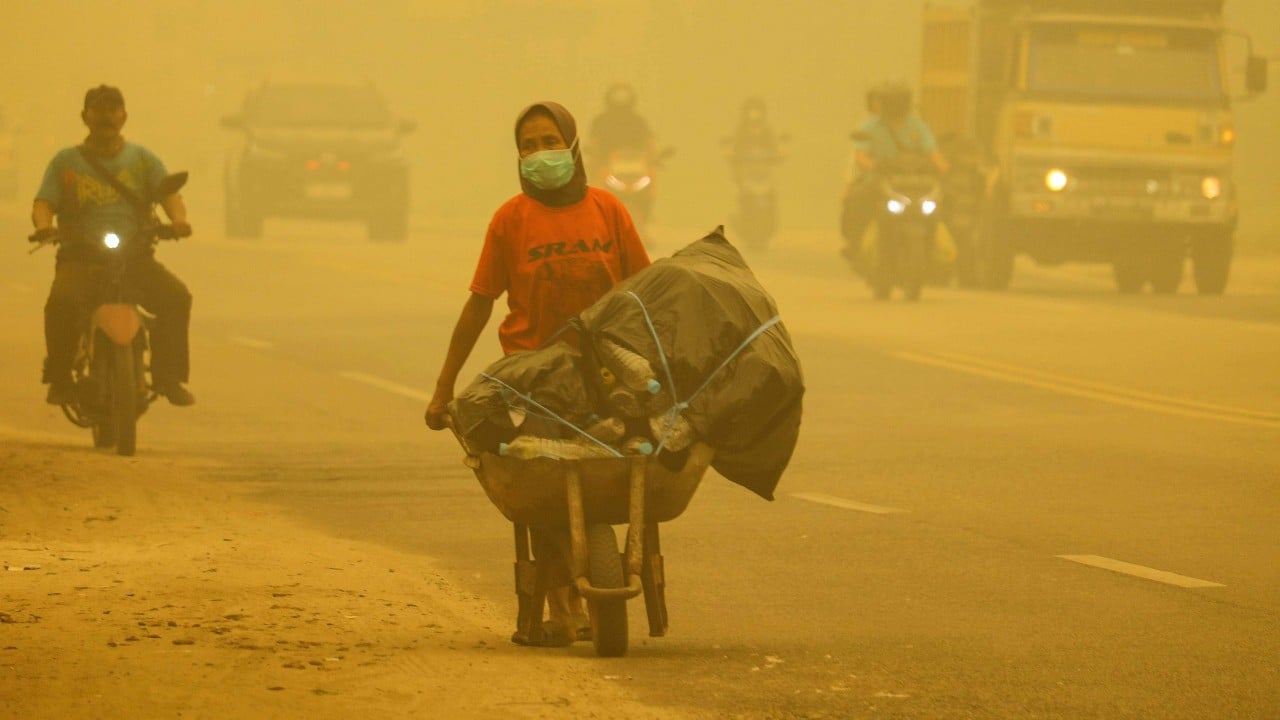
Every dry season, millions of people across Southeast Asia brace for the same environmental nightmare. Skies turn a bruised orange, air quality plummets to hazardous levels, and schools close as thick, choking smoke blankets the region. For decades, this annual crisis has sparked finger-pointing between Jakarta and Singapore. That diplomatic friction is finally shifting toward a coordinated corporate manhunt.
Singapore and Indonesia have agreed to establish a joint task force designed to target the companies behind the forest and peatland fires. Instead of endless diplomatic spats over who is to blame, the focus has moved to financial intelligence, cross-border evidence sharing, and tracking corporate money trails.
Following the Money Behind the Smoke
Smoke crosses borders easily, but so does capital. That realization is the backbone of this new bilateral mechanism. Indonesian Foreign Minister Arrmanatha Nasir and Singaporean Foreign Minister Vivian Balakrishnan announced the initiative during talks in Jakarta, emphasizing that no corporate entity should hide behind international boundaries when profiting from land-clearing fires.
The task force will pool financial data and intelligence to track down firms operating across Sumatra, Kalimantan, and beyond. Singapore has already begun flexing its legal muscles, issuing preventive notices under its Transboundary Haze Pollution Act to multiple corporations with suspected links to the blazes. Meanwhile, Indonesian authorities are investigating dozens of companies tied to illegal slash-and-burn agricultural practices.
This isn't just about handing out warning letters. Both governments are looking at asset recovery and severe legal penalties to create real deterrence. When companies realize that burning forests carries a heavy financial and legal price across multiple jurisdictions, the calculus changes.
Moving Past Diplomatic Friction
Relations between neighbors aren't always smooth. Recent tensions over energy exports and gas cuts tested bilateral patience just as the haze crisis intensified. Rather than letting these disputes stall environmental action, both nations established a direct ministerial and senior officials' hotline to manage friction efficiently.
Direct communication channels mean that trade disagreements or policy differences won't paralyze emergency responses. When crises hit, speed matters. Opening a secure, high-level line of communication cuts through bureaucratic delays that previously left citizens waiting weeks for a unified response.
What Real Accountability Looks Like
Public pressure has reached a boiling point. Civil society groups, student protests in Kalimantan and Sumatra, and frustrated citizens across the region have demanded permanent solutions rather than temporary excuses. Clean air is a basic necessity, not a negotiable luxury.
For this joint task force to succeed where past agreements stumbled, execution must match rhetoric. Companies engaged in palm oil and pulp production must know that corporate structures cannot obscure ultimate ownership. Cross-border transparency ensures that corporate boardrooms in financial hubs can be held just as accountable as the operators on the ground.
The real test of this new partnership won't be signed communiques or press conferences. It will be whether the smoke clears for good.