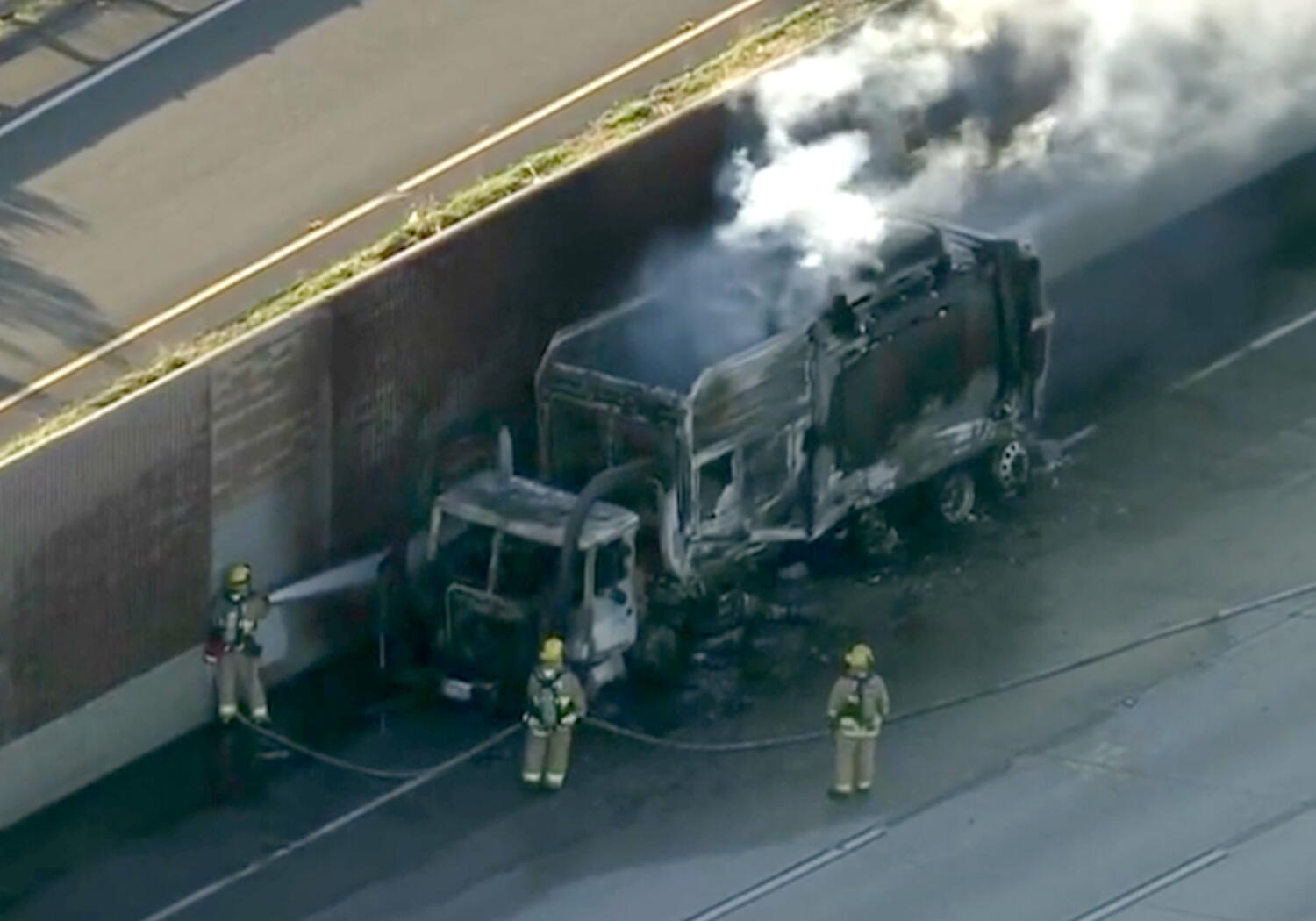
If you live in Southern California, you already know the drill. A single mechanical failure or stray spark can turn a routine Tuesday commute into an hours-long parking lot. That is exactly what happened when a Los Angeles city sanitation truck caught fire on southbound Interstate 5, bringing afternoon traffic to a grinding halt in the San Fernando Valley.
The incident kicked off around 3:15 p.m. near Osborne Street in Pacoima. According to preliminary updates from the California Highway Patrol, the driver noticed smoke, pulled over, and grabbed a fire extinguisher. But trash loads are notoriously difficult to contain once combustion takes hold deep inside the compaction chamber. Within minutes, thick black smoke billowed across the lanes, forcing a complete shutdown of southbound I-5 and triggering an immediate SigAlert just after 3:30 p.m.
The Ripple Effect of Freeway Fires
Drivers stuck behind the blockade know the frustration all too well. When a heavy commercial vehicle catches fire on a major artery like the Golden State Freeway, authorities can't just wave traffic through. The risks are too high.
- Hazardous Materials: Municipal waste trucks carry unpredictable loads. Household chemicals, lithium-ion batteries, and pressurized containers frequently end up in standard bins, turning a routine garbage fire into a series of toxic mini-explosions.
- Structural Integrity: Intense heat from burning diesel and compacted refuse can warp asphalt and damage concrete bridges or overhead structures, requiring immediate inspection before lanes reopen.
- Emergency Equipment Access: Fire engines and hazardous material units need space to operate. Shutting down all lanes is often the only way to keep crews safe from fast-moving traffic.
About an hour after the initial chaos, highway patrol officers managed to reopen two southbound lanes, but the backlog had already stretched for miles. Commuters trying to navigate alternative routes through local Pacoima streets found themselves trapped in gridlock as thousands of diverted vehicles flooded surface streets.
Why Garbage Trucks Are Fire Magnets
Most people assume truck fires happen because of poor engine maintenance. While mechanical issues do play a role, the real culprit is usually hiding inside the hopper.
Lithium-ion batteries discarded improperly in household trash bins are ticking time bombs. When the truck's hydraulic packer crushes the load, these batteries puncture, short-circuit, and ignite surrounding paper and plastic. Sanitation workers deal with hidden fires far more often than the public realizes. Most of the time, they manage to dump the load on a safe shoulder before things get out of hand. When it happens right in the middle of a freeway connector or active lane, avoiding a massive transit disaster comes down to split-second reactions.
How to Survive LA Transit Nightmares
You can't control when a city truck goes up in flames, but you can stop wasting hours staring at taillights. Relying on standard GPS apps during a major SigAlert usually routes you into the exact same surface street gridlock as everyone else.
If you find yourself trapped behind a major freeway incident, pull up live traffic camera feeds or monitor California Highway Patrol logs directly rather than following blind automated detours. Keep an emergency stash of water in your car, maintain at least a half-tank of fuel during peak commuting hours, and when authorities issue a major corridor warning, find a local coffee shop or workspace to wait out the initial two-hour surge instead of charging straight into the bottleneck.