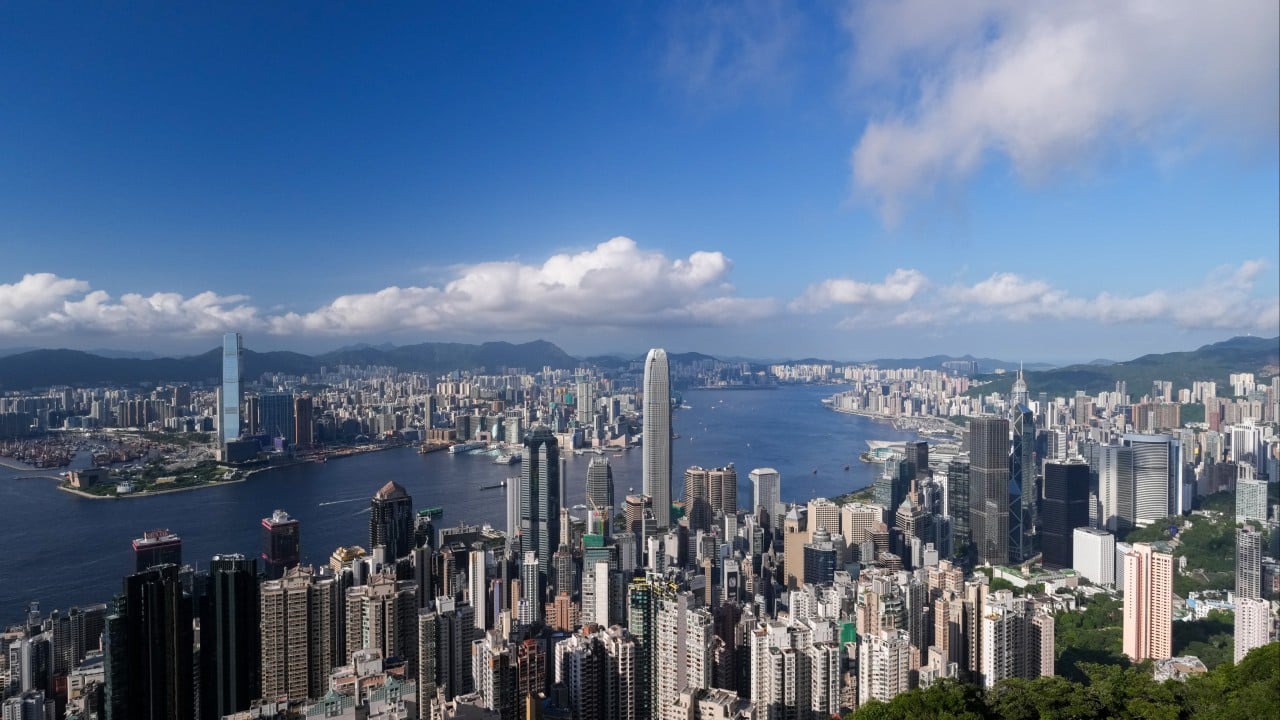
The debate over whether Hong Kong is finished refuses to die. Every few months, a prominent Western economist pops up to declare that the financial hub has lost its soul, and local officials scramble to push back.
The latest round kicked off when Stephen Roach, the former Morgan Stanley Asia chairman and Yale faculty member, published another piece arguing that the city of old is gone. He claimed that Hong Kong has transformed into just another mainland city, heavily dependent on Beijing and Chinese initial public offerings.
Hong Kong's government didn't stay quiet. Acting Financial Secretary Michael Wong fired back with an op-ed accusing critics of letting anti-China bias cloud their judgment. He pointed to hard numbers: a 5.9 percent GDP growth spike in the first quarter of 2026 and a massive rebound in public listings.
So who is actually right? The truth sits somewhere uncomfortable. Both sides are spinning valid pieces of a much larger, messier puzzle.
The Real Argument Behind the Headlines
When Roach writes that Hong Kong has changed, he isn't entirely wrong on the surface facts. The political atmosphere shifted dramatically after the 2019-20 protests and the implementation of national security laws. Walk down Central or Admiralty today, and you will hear plenty of Mandarin alongside Cantonese. The expat community has thinned out in certain mid-level management brackets, replaced in large part by incoming talent from the north.
Roach argues that this structural shift means Hong Kong is no longer a distinct international connector. He points out that the recent resurgence in initial public offerings—where the city raised billions through major mainland firms like CATL and others—proves the hub is just a domestic playground for Chinese issuers.
To Western observers, that sounds like an open-and-shut case. But it ignores how global financial centers actually survive. Cities evolve. They don't stay frozen in amber as British colonial outposts forever.
Why Hong Kong Government Statistics Tell a Different Story
Wong and local defenders have a point when they look at the balance sheets. You cannot dismiss a 5.9 percent year-on-year GDP surge or a 53.4 percent jump in total export value just because you dislike the political trajectory.
Money talks, and right now, capital is still moving through the territory. Consider the metrics from the ground:
- Over 80 initial public offerings raised billions in the first half of the year alone.
- Single-family offices operating in the city have climbed past 3,380.
- External trade numbers are clearing historic hurdles not seen in nearly five years.
If the city were truly dead, international family offices and institutional investors wouldn't be parking hundreds of billions of dollars in local funds. They do it because the core plumbing—the common law system, free capital movement, and deep liquidity—remains operational.
The Trap of Absolute Narratives
The problem with Roach's "Hong Kong is over" thesis is that it treats economic vitality as a binary switch. Either a city is a completely autonomous Western-style liberal enclave, or it is a dead subsidiary of Beijing.
That framework is too simplistic. Hong Kong has always ridden the coattails of its hinterland. Decades ago, it boomed by acting as the factory floor gateway for Deng Xiaoping's economic opening. Today, it acts as the primary offshore financial valve for mainland corporate giants looking for international capital.
Calling it "Xianggang" and writing it off as just another tier-one mainland city misses the distinct legal and tax boundaries that still separate it from Shenzhen or Shanghai. At the same time, local officials pretending that political changes haven't altered the city's international character are living in a bubble.
What Investors Actually Care About
If you are trying to do business or allocate capital in Asia, you have to cut through the political theater on both sides.
Western critics often underestimate the sheer momentum of Asian liquidity. While traditional Western expats may feel alienated by the new legal and social reality, capital allocators care about execution speed, deal flow, and legal enforceability on contracts. As long as international funds can still enter and exit freely, money will flow where the returns live.
Hong Kong is changing its skin. It is shedding its past identity to become something more tightly integrated with the Greater Bay Area and broader Asian trade corridors. That transition brings real friction, regulatory compliance headaches, and geopolitical exposure, but it is far from an extinction event.
Stop looking for the ghost of 1997. Look at the balance sheets instead. The city isn't finished; it is just working under a completely new rulebook.