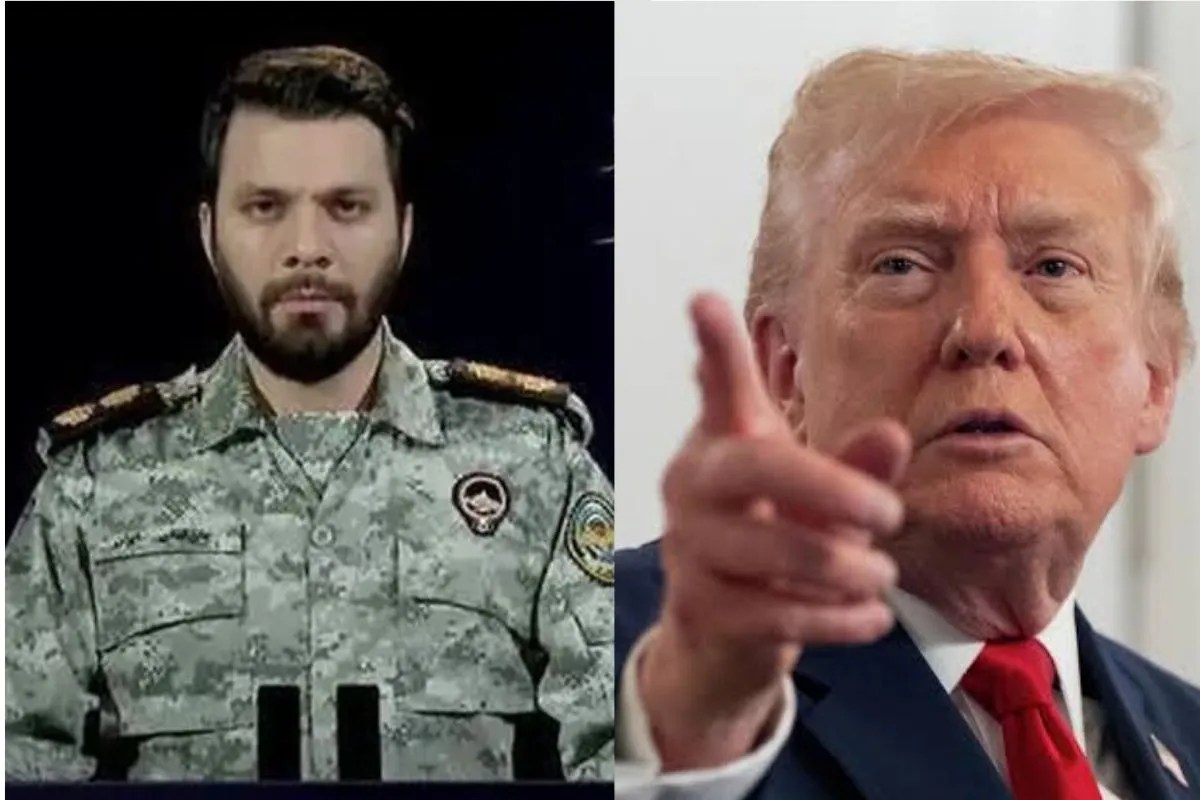
The global economy is currently holding its breath. Why? Because the most vital shipping lane on the planet, the Strait of Hormuz, has become a high-stakes chessboard between Washington and Tehran. When Donald Trump recently claimed the U.S. has "total control" of the waterway and dubbed the naval blockade a "Wall of Steel," he wasn't just talking about ships. He was signaling a hardening of a conflict that’s been boiling since February 2026.
Tehran didn't wait long to fire back. Iranian officials quickly dismissed the claim as "lies" and "fabrications," insisting that the waterway remains under their watchful eye. If you think this is just empty rhetoric, you’re missing the bigger picture.
Who really holds the keys to Hormuz
The reality on the water is messy. For months, the Strait of Hormuz has been a theater of war. Iran’s military maintains that no vessel passes through without their supervision, while the U.S. Navy continues to enforce a blockade on Iranian ports, intercepting or redirecting tankers.
It’s essentially a tug-of-war where both sides claim the other is failing. When Trump posts on Truth Social that Iran’s military is "decimated" and "fleeing," he’s playing to a domestic audience that wants to hear about American strength. Meanwhile, when Iranian officials like Ebrahim Zolfaghari talk about "complete management," they are speaking to their own people to project defiance.
Honestly, the truth is likely somewhere in the middle. The U.S. maintains a massive naval presence that forces tankers to follow its rules, but Iran’s proximity and paramilitary reach make the region incredibly dangerous for anyone who isn't prepared for a skirmish.
Why this matters for your wallet
You might be thinking, "This is happening thousands of miles away, why should I care?" Here is the answer: energy security. Nearly 20% of the world’s oil and a significant portion of liquefied natural gas (LNG) flow through this narrow passage.
When ships stop moving or insurance premiums skyrocket due to "war-risk" fears, the price of fuel goes up. If it costs more to move oil, it costs more to manufacture goods, transport food, and even keep your lights on. The 2026 crisis has already caused delays and forced shipping companies to reroute vessels, adding thousands of miles to their journeys. That’s not just a logistics problem—it’s an inflationary pressure that hits everyone eventually.
The diplomatic stalemate
Talks between the two sides have stalled, and for good reason. Tehran is demanding war reparations for the conflict that broke out in February, while Washington is busy trying to choke off Iran's economic lifeline through sanctions and the blockade.
Iran’s parliament has even gone as far as stating that U.S. and Israeli ships are barred from the waterway. Whether they can actually enforce that against a U.S. carrier strike group is a different question, but the threat alone keeps the market in a state of constant anxiety.
What to watch for next
Don't expect a quick resolution. This isn't a dispute that gets solved with a single meeting. Watch for these signals:
- Insurance Premiums: If "war-risk" surcharges start to stabilize, it usually means the shipping industry thinks the immediate threat of a major escalation has dipped.
- Oil Price Fluctuations: Markets hate uncertainty. Sudden spikes in crude prices are a direct response to every angry tweet or military announcement from either side.
- Alternative Routes: Keep an eye on reports about pipelines or non-Hormuz trade corridors. If nations start diversifying their energy paths, it signals that the world is preparing for a long-term closure or restricted access to the strait.
Stay informed by looking past the headlines. When you see a claim about "total control," remember that in international waters, power is rarely absolute. It's usually just the loudest person in the room trying to convince everyone else that they’re in charge.
The reality of the Strait of Hormuz in 2026
This video provides a clear breakdown of why this specific waterway is so vital to global energy and the economic fallout of the 2026 tensions.


