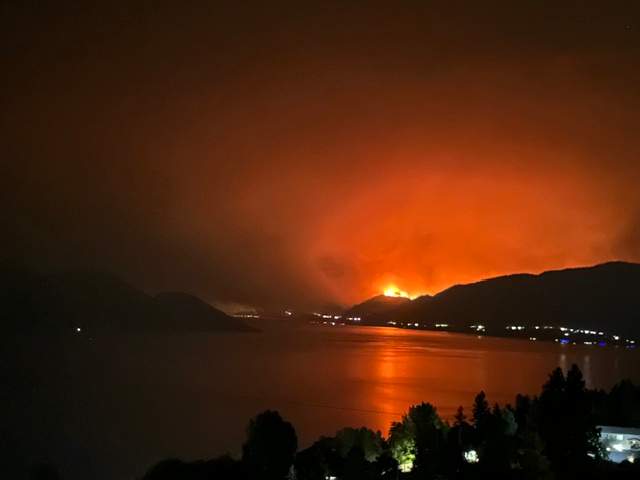
When a wildfire swallows more than 100 square kilometres in barely twenty-four hours, normal evacuation playbooks instantly stop working. That is the harsh reality British Columbia faced when the Bald Range fire exploded near Summerland. Officials are calling the behavior unprecedented. When seasoned emergency responders admit they are dealing with conditions never seen before, you know the gravity of the situation.
The Anatomy of an Unstoppable Blaze
The fire sparked just fifteen kilometres west of Summerland, catching thousands off guard. Driven by erratic, gusty winds and extreme dry fuel, it didn't just burn; it raced. The BC Wildfire Service classified it as rank 5 behavior. That means an organized, high-intensity flame front with rapid spread rates and terrifying long-range spotting.
Embers were jumping nearly a kilometre ahead of the main line. Imagine standing a safe distance away, only to watch new spot fires erupt behind you. That speed trapped residents instantly, cutting off highway routes like Highway 97 before families could pack a bag.
When Helicopters Become the Only Way Out
Roads vanished behind walls of smoke and heat. Dozens of people found themselves entirely cut off behind fast-moving fire lines. Emergency crews had to launch emergency helicopter rescues under hazardous visibility, pulling at least 55 people to safety on the first night alone.
Stories from the ground highlight the absolute chaos. Residents in areas like Faulder scrambled desperately to pull pets from vehicles as flames licked the paint. Livestock owners worked against the clock to move animals out of harm's way before the smoke closed in completely.
Why These Fire Conditions Differ From the Past
Cliff Chapman of the BC Wildfire Service pointed out that the southern third of the province has reached an explosive threshold. Years of compounding dry conditions mean that the moment a fire sparks and the smoke lifts, the response window shrinks to almost zero.
It is no longer just about high temperatures. It is about atmospheric instability and fuel dryness indexes that defy historical forecasting models. Premier David Eby declared a provincial state of emergency as evacuation orders forced the entire district of Summerland—roughly 12,000 residents—to flee alongside parts of Peachland.
What This Means for Future Emergency Preparedness
If you live anywhere near a wildland-urban interface, traditional evacuation alerts are no longer a polite warning. They are a command to leave immediately. When fires grow by thousands of hectares in a single afternoon, waiting to see which way the wind blows is a fatal gamble.
Keep your vehicle fueled. Have a grab-and-go bag packed with critical documents, medications, and pet supplies. Monitor local emergency alerts through official channels like the BC Wildfire Service app or municipal updates. When conditions change this fast, your survival depends entirely on preemptive action.


