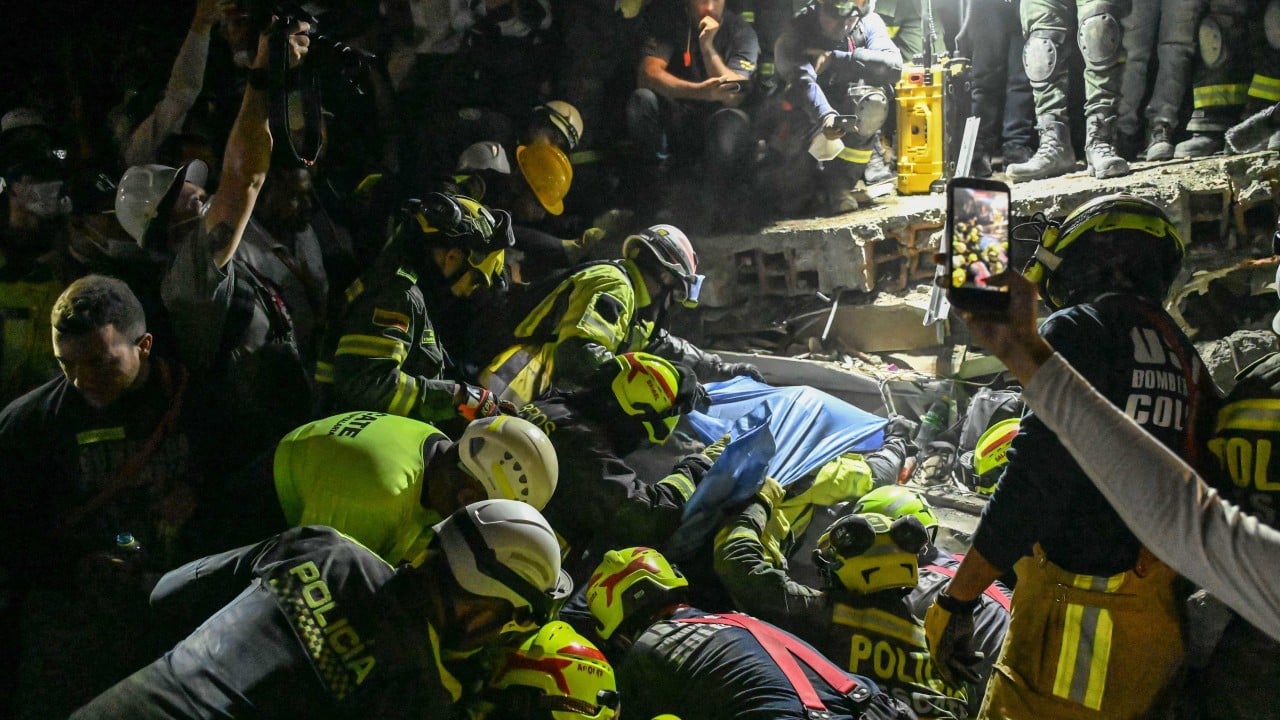
Hope arrived wrapped in a blue blanket.
When rescue crews in Pereira pulled 32-year-old Daniela Largo from the concrete dust, the eruption of cheers cut through hours of crushing silence. It was a rare victory. Across western Colombia, a devastating 7.4-magnitude earthquake—the nation's strongest in a century—shattered neighborhoods and left a mounting death toll of over 200 people.
If you are following the disaster coverage, you already know the grim numbers. But statistics rarely capture the grueling reality of what happens when a major city's infrastructure collapses in seconds. Let's look past the breaking news tickers and examine how survival actually works on the ground when the dust settles.
The Critical Window and the Power of Local Hands
Disaster response literature always talks about the golden 72-hour window. Professionals know that finding survivors alive drops exponentially after three days. But in cities like Pereira and Cali, professional rescue teams didn't start the clock alone.
Take Largo's rescue. Her mother, Sandra Milena Perez, noted that hope was completely fading until a sharp-eared local resident heard muffled cries beneath the wreckage. Neighbors didn't wait for heavy machinery; they formed human chains and started moving concrete slabs with their bare hands.
Professional equipment takes time to deploy. Cranes and K-9 units are essential, but raw civic action drives the earliest saves. When an entire block pancakes, the people living next door are your actual first responders.
Why Catastrophic Quakes Strain Healthcare Fast
A massive tremor doesn't just destroy homes; it breaks the safety net meant to catch the injured. Hospitals in the coffee-growing region faced structural damage and an immediate flood of trauma patients.
- Emergency rooms filled up within minutes of the initial tremor.
- Blood donation lines wrapped around city blocks as communities scrambled to help.
- Rural access points, particularly in the impoverished Choco region near the epicenter, relied on treacherous boat or air transport just to triage the wounded.
When healthcare systems buckle under sudden mass-casualty events, survival depends heavily on improvisation. Doctors treated patients outside on pavements while aftershocks continued to rattle damaged wards.
The Logistics Nightmare in Forgotten Zones
Media attention naturally flows toward major urban centers like Cali and Pereira. However, the true test of a nation's emergency response lies in its neglected peripheries.
Choco features regions accessible only by dense jungle routes or winding rivers. Infrastructure was already fragile before the earth split. Add active territorial disputes by armed groups to the mix, and moving aid or heavy rescue gear becomes intensely complicated. President Abelardo de la Espriella faced an immediate crisis right after taking office, deploying military engineers and police units to secure supply lines and open up isolated towns.
Money helps, too. International aid, such as the initial emergency package pledged by the United States, targets immediate shelter and food distribution. Yet, distributing resources evenly across remote river communities remains a massive logistical hurdle.
What You Can Learn From Rapid Disaster Response
Disasters expose structural flaws instantly. If you live in an earthquake-prone zone, looking at Colombia's crisis offers stark reminders:
- Keep emergency paths clear: Blocked streets delay heavy machinery from reaching collapse sites.
- Build community networks: Local neighbors saved lives long before state actors arrived with specialized gear.
- Expect aftershocks: The main tremor is only the beginning. Over 100 aftershocks kept families sleeping in public parks out of fear.
Recovery will take years, long after international cameras leave the region. For now, every silence called by rescue workers holding up a single fist represents a desperate gamble against the ruins.
The search continues beneath the fractured concrete.
Over 200 people killed in Colombia earthquake
This video provides on-the-ground news coverage and visual context regarding the destructive impact of the 7.4-magnitude earthquake across Colombian cities.
http://googleusercontent.com/youtube_content/1


