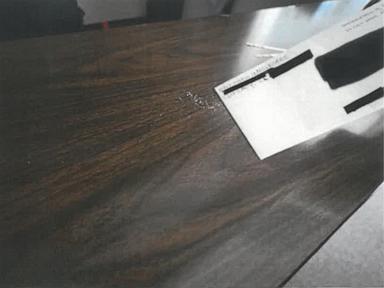
Commit federal crimes with a shred of operational cunning, and investigators might actually have to break a sweat. Do not do that. Scribble your actual home address right on the back flap of envelopes filled with suspicious white powder mailed directly to federal lawmakers, and you will save the Department of Justice a mountain of paperwork.
That is precisely what Matthew Unglesbee managed to pull off. According to federal court documents, the 36-year-old resident of Quincy, Illinois, decided to mail envelopes containing a white granular substance—which tests later revealed to be plain table salt—to three members of the House and one U.S. senator. Instead of attempting any form of basic anonymity, he proudly slapped his own return address on the mailings.
Federal agents didn't need a complex digital forensic team or weeks of surveillance to crack the case. They just read the envelope.
The Anatomy of a Blunder
The entire fiasco began to unravel long before postal carriers even delivered the letters to congressional offices. According to court filings, an anonymous tipster overheard Unglesbee talking shop in a local restaurant. He was apparently discussing his plans to mail suspicious substances to politicians, bragging or chatting about a trend he had caught on the news.
That tip reached the FBI on October 16. By the time the envelopes started arriving at congressional offices days later—including one received on October 23 at a senator's office—investigators already knew who to look for. When federal agents pulled the physical mail pieces, they found Unglesbee’s name and return address staring right back at them.
Inside those envelopes, recipients found notes featuring taunts like "HA HA" or "HAH enjoy the gift," accompanied by the white granular substance. While the material turned out to be harmless sodium chloride, the legal consequences are entirely serious. Unglesbee now faces federal charges for perpetrating a hoax and sending threatening communications through the mail.
Why Salt Scares Make Real Federal Cases
People often misunderstand how the legal system treats fake terror threats. They assume that if the powder turns out to be flour, sugar, or table salt, the charges evaporate.
They do not.
Federal prosecutors treat mailing unknown substances with extreme severity because of the operational chaos it triggers. When a congressional office receives a package with suspicious powder, standard security protocols kick in immediately. Hazmat teams deploy in full gear. Buildings face lockdowns. Staff members undergo emergency decontamination procedures.
According to the criminal complaint, Unglesbee admitted to investigators that he knew exactly what he was starting. When interviewed at his home by FBI agents, he allegedly acknowledged that recipients would take the mailings seriously because "anthrax is dangerous" and would force hazmat teams in white suits to respond. He claimed he thought it was a joke, but federal prosecutors noted he fully understood that the politicians receiving the letters would perceive them as real threats.
That distinction matters immensely in a courtroom. A prank defense falls apart instantly when the defendant explicitly admits they knew the target would fear for their safety.
The Rest of the Evidence at Home
If the return address and the restaurant tip weren't enough to seal the case, a search of Unglesbee’s home provided the finishing touches.
Federal investigators executed a search warrant at his Quincy residence and recovered a fifth envelope. This one was left unmailed, but it was already addressed to yet another member of Congress at their Washington, D.C., office.
Investigators point to this pattern as clear evidence of premeditation. The ongoing investigation involves local field offices, the U.S. Postal Inspection Service, and U.S. Capitol Police, all coordinating to clamp down on a broader wave of suspicious mail incidents reported nationwide earlier in the month. While Unglesbee denied involvement in those other specific regional mailings, his own independent letters were enough to land him behind bars pending a detention hearing in federal court in Springfield, Illinois.
Public safety officials have made their stance clear. Ryan Presley, the special agent in charge of the FBI's Springfield field office, emphasized that the department remains entirely focused on keeping public institutions safe from intimidation. When people try to disrupt the democratic process with cheap stunts and household condiments, the federal response tends to be swift, heavy, and thoroughly documented.
Next time, leave the salt in the kitchen.